

Back to articles
Outbreaks & Epidemiology
Animal Research
Bats
Camelid
Chat
Chicken
Civet
Coronavirus
COVID-19
Deltacoronavirus
Feline infectious peritonitis
IBV
MERS
One Health
Pandemic
Pangolin
Pork
Rabies
Remdesivir
SARS
SARS-CoV-2
TCoV
Turkey
Virus
Zoonosis
COVID-19: Can research on coronaviruses in animals shed light on how to manage the current situation?
MR
Mia Rozenbaum
04/30/2020
7 min read
0 comments
Share:
Although COVID-19 did not emerge until late 2019, coronaviruses have been a source of suffering for animals throughout history. Veterinarians have been working for years to find solutions to combat this family of pathogenic organisms. This work, which predates the current pandemic, has enabled a rapid response to SARS-CoV-2 on several fronts. Here’s why.
 Coronaviruses comprise a large group of viruses that affect several animal species
, some of which can also infect humans or are specific to humans. The diseases they cause are varied but primarily affect the respiratory and digestive systems.
In recent years, animal coronaviruses have jumped to humans
. This was the case with SARS, transmitted by civets; MERS, introduced by camelids; and, much more recently, SARS-CoV-2—the virus responsible for COVID-19—which is believed to have been carried by pangolins.
Thus, history repeats itself. It is becoming crucial to better understand and study this family of pathogenic organisms, in both humans and animals, to gain a better grasp of the diversity of hosts and the various forms of the disease, and thereby anticipate future epidemics.
Coronaviruses comprise a large group of viruses that affect several animal species
, some of which can also infect humans or are specific to humans. The diseases they cause are varied but primarily affect the respiratory and digestive systems.
In recent years, animal coronaviruses have jumped to humans
. This was the case with SARS, transmitted by civets; MERS, introduced by camelids; and, much more recently, SARS-CoV-2—the virus responsible for COVID-19—which is believed to have been carried by pangolins.
Thus, history repeats itself. It is becoming crucial to better understand and study this family of pathogenic organisms, in both humans and animals, to gain a better grasp of the diversity of hosts and the various forms of the disease, and thereby anticipate future epidemics.
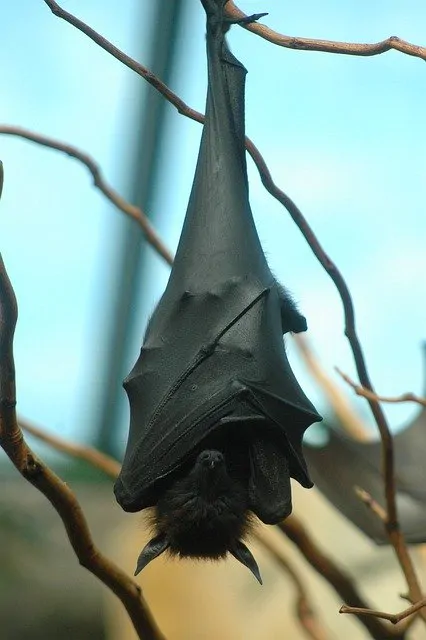
 First, advanced knowledge of animal coronaviruses enabled the rapid identification of the origins of COVID-19. Sequencing of SARS-CoV-2 revealed a 96% nucleotide similarity to that of a bat virus
(Bat CoV RaTG13) and 99% identity with the genome of a coronavirus detected in a pangolin. These results therefore suggest that one of the ancestors of COVID-19 originated in a bat species and likely passed through a pangolin—yet to be identified—before adapting to humans.
This epidemiological correlation reminds us that coronaviruses are capable of jumping between species. Their ability to rapidly alter their genetic material makes them susceptible to adapting to new hosts and varying in their pathogenicity. But be careful—this is not the case for all coronaviruses. Cat coronaviruses remain confined to cats, whereas those found in bats are more mobile
. Why? What makes them unique? How do they manage to switch hosts?
Animal health professionals have been studying the mechanisms of species barrier crossing for years and are examining them closely. This includes the animal health laboratories in Maisons-Alfort, the rabies and wildlife laboratories in Nancy, and those in Ploufragan, Plouzané, and Niort, which focus on the genetic evolution of these pathogenic organisms.
They are involved in the research and characterization of new strains of avian and swine coronaviruses. Researchers are particularly interested in the role of proteins from birds (chicken coronavirus (IBV) and turkey coronavirus (TcoV)) and cats, which are necessary for the replication of coronaviruses, as well as their interactions with viruses infecting French wildlife.
This research provides insight into the potential risk these diseases pose to humans—and not without good reason.
Indeed, after demonstrating the transmission of a porcine deltacoronavirus in avian and human cell models, a recent study from Ohio State University highlights the rapid spread of this pig virus among chickens and turkeys
. Within a few days, the virus can spread throughout a chicken coop.
While it is ethically challenging to test transmission in humans, this research suggests that cellular conditions may serve as a good indicator of transmission at the population level. Indeed, if the human cell culture model is as predictive as it is in chickens, humans are certainly also susceptible to this porcine deltacoronavirus. Given that the virus binds to the same type of receptor in many different host species, the risk is very real.
First, advanced knowledge of animal coronaviruses enabled the rapid identification of the origins of COVID-19. Sequencing of SARS-CoV-2 revealed a 96% nucleotide similarity to that of a bat virus
(Bat CoV RaTG13) and 99% identity with the genome of a coronavirus detected in a pangolin. These results therefore suggest that one of the ancestors of COVID-19 originated in a bat species and likely passed through a pangolin—yet to be identified—before adapting to humans.
This epidemiological correlation reminds us that coronaviruses are capable of jumping between species. Their ability to rapidly alter their genetic material makes them susceptible to adapting to new hosts and varying in their pathogenicity. But be careful—this is not the case for all coronaviruses. Cat coronaviruses remain confined to cats, whereas those found in bats are more mobile
. Why? What makes them unique? How do they manage to switch hosts?
Animal health professionals have been studying the mechanisms of species barrier crossing for years and are examining them closely. This includes the animal health laboratories in Maisons-Alfort, the rabies and wildlife laboratories in Nancy, and those in Ploufragan, Plouzané, and Niort, which focus on the genetic evolution of these pathogenic organisms.
They are involved in the research and characterization of new strains of avian and swine coronaviruses. Researchers are particularly interested in the role of proteins from birds (chicken coronavirus (IBV) and turkey coronavirus (TcoV)) and cats, which are necessary for the replication of coronaviruses, as well as their interactions with viruses infecting French wildlife.
This research provides insight into the potential risk these diseases pose to humans—and not without good reason.
Indeed, after demonstrating the transmission of a porcine deltacoronavirus in avian and human cell models, a recent study from Ohio State University highlights the rapid spread of this pig virus among chickens and turkeys
. Within a few days, the virus can spread throughout a chicken coop.
While it is ethically challenging to test transmission in humans, this research suggests that cellular conditions may serve as a good indicator of transmission at the population level. Indeed, if the human cell culture model is as predictive as it is in chickens, humans are certainly also susceptible to this porcine deltacoronavirus. Given that the virus binds to the same type of receptor in many different host species, the risk is very real.
 Past research on animal coronaviruses also helps accelerate the discovery and use of diagnostic and serological methods. Since late 2019, the Ploufragan-Plouzané-Niort laboratory
has been developing molecular and serological diagnostic methods for avian and porcine coronaviruses.
It aims to develop, for the first time in Europe, a specific serological test (ELISA) for detecting humoral antibodies against TCoV in order to better understand its prevalence in France. These same methods are also being considered for a serological test specific to SARS-CoV-2
in humans.
Overall, knowledge of coronaviruses will enable the development of faster and less expensive diagnostic techniques. This is the goal of the ANSES Rabies and Wildlife Laboratory
in Nancy, which—in collaboration with Vetagrosup on bats and ENVT on hedgehogs— is studying coronaviruses present in wildlife and their implications for diagnostic applications.
Past research on animal coronaviruses also helps accelerate the discovery and use of diagnostic and serological methods. Since late 2019, the Ploufragan-Plouzané-Niort laboratory
has been developing molecular and serological diagnostic methods for avian and porcine coronaviruses.
It aims to develop, for the first time in Europe, a specific serological test (ELISA) for detecting humoral antibodies against TCoV in order to better understand its prevalence in France. These same methods are also being considered for a serological test specific to SARS-CoV-2
in humans.
Overall, knowledge of coronaviruses will enable the development of faster and less expensive diagnostic techniques. This is the goal of the ANSES Rabies and Wildlife Laboratory
in Nancy, which—in collaboration with Vetagrosup on bats and ENVT on hedgehogs— is studying coronaviruses present in wildlife and their implications for diagnostic applications.
The Study of Coronaviruses in Animals
Before the emergence of SARS 20 years ago, coronaviruses were primarily a veterinary concern. In veterinary medicine, infections caused by these viruses are common. Today, they have a significant economic impact, particularly in farms raising young ruminants, pigs, chickens, and turkeys. Consequently, the Ploufragan-Plouzané-Niort laboratory has been working for several years on the isolation, antigenic characterization, the adaptation of cell culture, and the pathotyping of new isolates of avian coronaviruses such as infectious bronchitis virus (IBV) and turkey coronavirus (TCoV). Similarly, the Virology Research Unit (ENVA-INRAE-ANSES) at the Animal Health Laboratory in Maisons-Alfort has launched a research project on the molecular determinants of pathogenicity of the feline coronavirus, which can cause a fatal disease in cats called feline infectious peritonitis (feline infectious peritonitis). Research into these viruses and the tools to combat them was therefore developed long before humans became involved in the issue. But what have we learned from animal studies that could help us in the current crisis?The Importance of These Studies for Understanding Cross-Species Transmission
Avenues for Combating SARS-CoV-2
It is also thanks to a porcine coronavirus that the Ploufragan-Plouzané-Niort laboratory aims to better understand the pathogenicity and immune responses induced by this coronavirus, as well as its various transmission routes. A better understanding of the virus and the pathophysiological differences between species makes it easier to identify therapeutic targets that protect certain species more effectively than others. But therapeutic approaches can also, quite simply, be borrowed from animals. Since coronaviruses have been present in animal populations for much longer than COVID-19, veterinarians have had more time to explore potential solutions. And indeed, certain drugs that are effective in animals also appear to show promise in humans. This is the case with the antiviral Remdesivir, which targets specific stages of RNA virus replication, such as coronavirus infections. In cats, this molecule appears to be effective against feline infectious peritonitis (FIP), which is caused by a feline coronavirus. Until recently, the chances of recovery for cats with FIP were virtually zero, as no treatment had proven effective. But remdesivir appears to be effective against coronaviruses—or at least certain coronaviruses. The feline pathogen is not the only one to be weakened by the drug. According to animal studies, the SARS and MERS viruses also appear to be susceptible to the drug. Remdesivir is, in fact, one of the most promising treatments for combating emerging viruses in humans, including COVID-19. Clinical trials and animal trials are currently underway.A foundation for developing tools to identify COVID-19
From Humans to Animals
However, research does not proceed in only one direction. Advances made in humans can, of course, be applied to animals. And already, drugs and therapeutic solutions, such as Remdesivir, are benefiting everyone. With this spirit of reciprocity in mind, a research team from ENVA has proposed a European project titled “Muse Cov: Multi-Scale Eco-evolution of Coronaviruses: from surveillance toward emergence prediction ,” with the goal of assessing whether COVID-19 circulates among animals and comparing it to existing coronaviruses. It is truly in these situations of zoonotic pandemics that the One Health concept takes on its full meaning and scope. There is a real need to move forward together with wildlife and the environment for the sake of our shared health.Read next
Outbreaks & Epidemiology
10/07/2026
H5N1 should now be treated as a permanent systemic risk, not a succession of outbreaks
Outbreaks & Epidemiology
10/07/2026
African swine fever progresses faster in wild boar than in domestic pigs
Outbreaks & Epidemiology
10/05/2026
Commentaires
No comments yet.
Sign in to comment