

Back to articles
Research & Diagnostics
ANSES
Bernard Vallat
FAO
Food safety
One Health
Veterinary services
WHO
WOAH
World Health Day
World Health Day: Spotlight on food safety… and veterinary services, Too!
B
bertrand-neveux
04/07/2015
4 min read
0 comments
Share:
The 2015 World Health Day is dedicated to food safety. It was launched today in France at the Rungis International Market, in the presence of all French and global stakeholders involved in the “One Health” approach.
 Margaret Chan, Director-General of the World Health Organization (WHO), officially opened the event alongside Bernard Vallat, her counterpart in animal health (WOAH); Agriculture Minister Stéphane Le Foll; the directors-general of the French Ministry of Health and ANSES; Benoit Vallet and Marc Mortureux, as well as Berthe Tekola, Director of the FAO’s Animal Health and Animal Production Division. It must be said that the stakes are high: more than 200 diseases are caused by bacteria, viruses, or even chemicals present in our food. Foodborne and waterborne diarrheal diseases alone kill two million people worldwide each year
. The growth of tourism spares no one, not even those from safe countries.
Margaret Chan, Director-General of the World Health Organization (WHO), officially opened the event alongside Bernard Vallat, her counterpart in animal health (WOAH); Agriculture Minister Stéphane Le Foll; the directors-general of the French Ministry of Health and ANSES; Benoit Vallet and Marc Mortureux, as well as Berthe Tekola, Director of the FAO’s Animal Health and Animal Production Division. It must be said that the stakes are high: more than 200 diseases are caused by bacteria, viruses, or even chemicals present in our food. Foodborne and waterborne diarrheal diseases alone kill two million people worldwide each year
. The growth of tourism spares no one, not even those from safe countries.
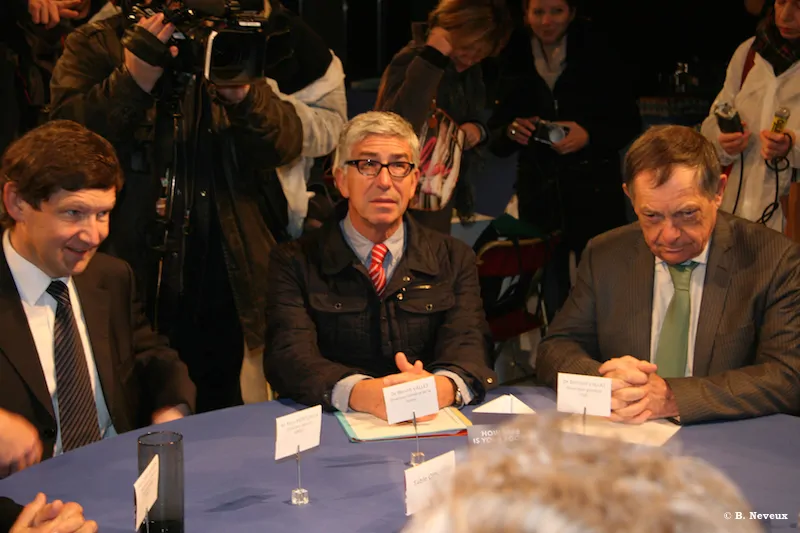 And yet, as Bernard Vallat pointed out, “some 120 countries still lack legislation that meets international standards,”
whether those published by the WOAH or those of the FAO and WHO’s Codex Alimentarius
. “Countries that lack veterinary services to monitor food quality pose significant risks to their own populations as well as to those in transit, such as tourists. ”
The FAO also regrets that food safety is not a priority everywhere in the world, even though outreach programs, surveillance systems, and technical tools exist, with the three main institutions (WOAH, FAO, and WHO) covering all aspects. Furthermore, global demographics pose a major challenge, as resources are not infinite in the face of a constantly growing population.
And yet, as Bernard Vallat pointed out, “some 120 countries still lack legislation that meets international standards,”
whether those published by the WOAH or those of the FAO and WHO’s Codex Alimentarius
. “Countries that lack veterinary services to monitor food quality pose significant risks to their own populations as well as to those in transit, such as tourists. ”
The FAO also regrets that food safety is not a priority everywhere in the world, even though outreach programs, surveillance systems, and technical tools exist, with the three main institutions (WOAH, FAO, and WHO) covering all aspects. Furthermore, global demographics pose a major challenge, as resources are not infinite in the face of a constantly growing population.
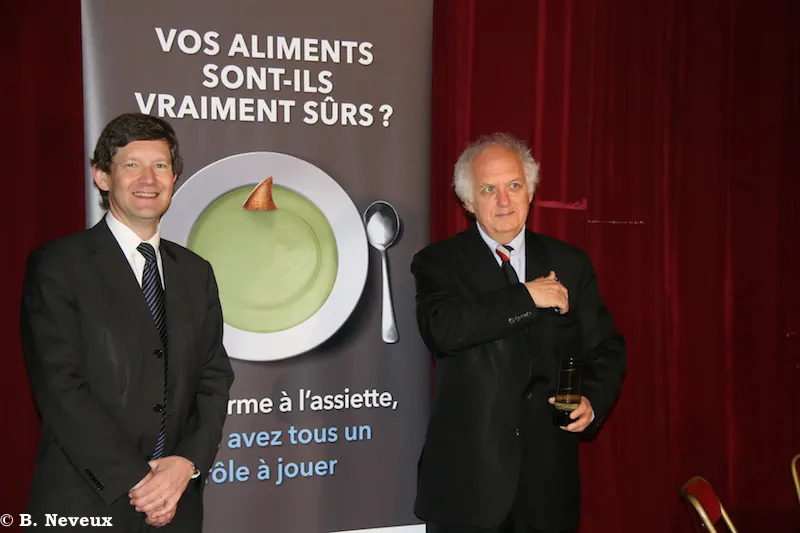 On the ANSES side, Marc Mortureux emphasized that one-third of foodborne illness cases are due to poor practices in consumers’ homes
. “We are working on a global level to promote the transfer of expertise through global networks.”
In addition, ANSES uses its communication channels to raise consumer awareness about measures that are sometimes basic but often overlooked—ranging from handwashing to maintaining the cold chain and adhering to expiration dates, among others.
But the French model also needs to improve. Stéphane Le Foll wants to strengthen the fight against improper antibiotic use (which, in his view, requires reducing their consumption) and to take greater account of international trade and the health standards of exporting countries. And while it is commonly said that healthy food requires healthy animals, as Bernard Vallet pointed out, “animal health security is also linked to plant health security; the risks associated with antimicrobial resistance must not overshadow those of chemical origin, and plant health issues must also be addressed. The development of a European network is desirable, and WHO Europe has a role to play in this.”
Thus, to maintain—and even strengthen—food safety, Stéphane Le Foll concluded by emphasizing the need to improve traceability and to develop preventive measures and controls. Biodiversity, a different approach to agriculture, and a new economic model are the cornerstones of France’s renewed agricultural strength. Did he get the message loud and clear from the representatives of the international organizations present, who emphasized the responsibility of policymakers worldwide, given that the tools already exist? The ball is definitely in their court.
WHO Awareness Guide: click here
On the ANSES side, Marc Mortureux emphasized that one-third of foodborne illness cases are due to poor practices in consumers’ homes
. “We are working on a global level to promote the transfer of expertise through global networks.”
In addition, ANSES uses its communication channels to raise consumer awareness about measures that are sometimes basic but often overlooked—ranging from handwashing to maintaining the cold chain and adhering to expiration dates, among others.
But the French model also needs to improve. Stéphane Le Foll wants to strengthen the fight against improper antibiotic use (which, in his view, requires reducing their consumption) and to take greater account of international trade and the health standards of exporting countries. And while it is commonly said that healthy food requires healthy animals, as Bernard Vallet pointed out, “animal health security is also linked to plant health security; the risks associated with antimicrobial resistance must not overshadow those of chemical origin, and plant health issues must also be addressed. The development of a European network is desirable, and WHO Europe has a role to play in this.”
Thus, to maintain—and even strengthen—food safety, Stéphane Le Foll concluded by emphasizing the need to improve traceability and to develop preventive measures and controls. Biodiversity, a different approach to agriculture, and a new economic model are the cornerstones of France’s renewed agricultural strength. Did he get the message loud and clear from the representatives of the international organizations present, who emphasized the responsibility of policymakers worldwide, given that the tools already exist? The ball is definitely in their court.
WHO Awareness Guide: click here
A global health policy that’s too lax
During her inaugural address, Margaret Chan emphasized the virtuous cycle of high-quality food safety: “It is a matter not only of a nation’s reputation and that of an industry, but also of the health of its citizens and, ultimately, of a country’s economy. ”The French Model: Between Excellence and Vulnerability
Consequently, it is easy for France to promote its high standards of food safety around the world. Margaret Chan made no secret of the fact that the decision to launch this health day in the heart of the world’s largest market was deliberate, as it is “one of the safest,” highlighting the presence and work of veterinary services both in Rungis and throughout France. A presence that was initially quite difficult for professionals in Rungis to accept, but which they are now making the most of by highlighting this partnership in international discussions. Stéphane Le Foll noted that he has maintained staffing levels for veterinary services this year as part of his health policy for food safety.Read next
Research & Diagnostics
10/09/2026
WHO sets new diagnostic targets for Echinococcus granulosus in humans, dogs and sheep
Research & Diagnostics
10/09/2026
Nipah virus in wastewater: promising for early warning?
Research & Diagnostics
10/01/2026
Commentaires
No comments yet.
Sign in to comment