

Back to articles
Research & Diagnostics
Balanoposthitis
Cancer
Carcinoma
Equine
Horse
Inflammation
Papillomavirus
Smegma
Squamous cell carcinoma
Equine Mucocutaneous Squamous Cell Carcinoma: Improvements in Management
MR
Mia Rozenbaum
05/28/2020
2 min read
0 comments
Share:
Mucocutaneous squamous cell carcinoma is a common type of cancer in horses. A new study improves our understanding and treatment of the disease.
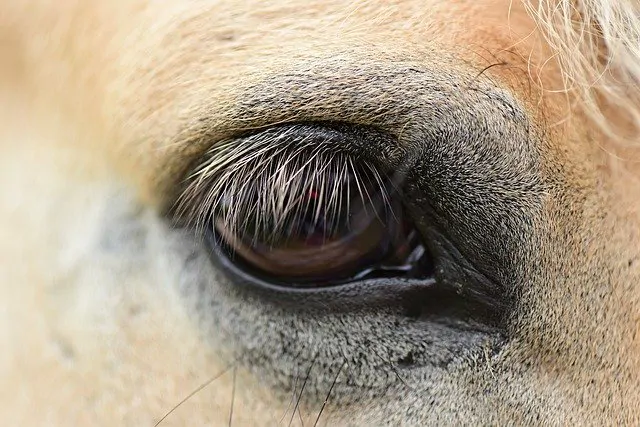 Affecting the genitals, eyes, or the skin around the eyes of horses, mucocutaneous squamous cell carcinomas (MSCCs) are the second most common skin tumors in horses and the second most common tumors overall.
The success of treatment varies, and unfortunately, euthanasia is often recommended for welfare reasons. The accumulation of smegma, overexposure to ultraviolet rays, chronic irritation, balanoposthitis, and genetic predispositions are thought to cause the disease, but according to a new study, these are not the only factors.
New research sheds light on the condition and could improve care for both horses and humans.
While chronic inflammation is a known risk factor for cancer development, researchers from the RVC, King’s College London (KCL), the University of Edinburgh, and University College London (UCL) have sought to link it to infection with equine papillomavirus type 2 and the development of penile squamous cell carcinoma.
Using both “traditional” anatomical histopathology evaluation and artificial intelligence technology, the researchers believe that the immune response to equine papillomavirus type 2 is a contributing factor to the progression of penile squamous cell carcinoma.
In humans, the link between human papillomavirus, cervical and penile cancer, and chronic inflammation has been established. However, this is the first time a positive correlation between these three factors has been identified in horses.
When considered in relation to human pathology, the identification of cancer-related signaling molecules in this study could lead to a better understanding and more effective treatment of this cancer in both horses and humans.
Affecting the genitals, eyes, or the skin around the eyes of horses, mucocutaneous squamous cell carcinomas (MSCCs) are the second most common skin tumors in horses and the second most common tumors overall.
The success of treatment varies, and unfortunately, euthanasia is often recommended for welfare reasons. The accumulation of smegma, overexposure to ultraviolet rays, chronic irritation, balanoposthitis, and genetic predispositions are thought to cause the disease, but according to a new study, these are not the only factors.
New research sheds light on the condition and could improve care for both horses and humans.
While chronic inflammation is a known risk factor for cancer development, researchers from the RVC, King’s College London (KCL), the University of Edinburgh, and University College London (UCL) have sought to link it to infection with equine papillomavirus type 2 and the development of penile squamous cell carcinoma.
Using both “traditional” anatomical histopathology evaluation and artificial intelligence technology, the researchers believe that the immune response to equine papillomavirus type 2 is a contributing factor to the progression of penile squamous cell carcinoma.
In humans, the link between human papillomavirus, cervical and penile cancer, and chronic inflammation has been established. However, this is the first time a positive correlation between these three factors has been identified in horses.
When considered in relation to human pathology, the identification of cancer-related signaling molecules in this study could lead to a better understanding and more effective treatment of this cancer in both horses and humans.
Read next
Research & Diagnostics
10/09/2026
WHO sets new diagnostic targets for Echinococcus granulosus in humans, dogs and sheep
Research & Diagnostics
10/09/2026
Nipah virus in wastewater: promising for early warning?
Research & Diagnostics
10/01/2026
Commentaires
No comments yet.
Sign in to comment