

Back to articles
Research & Diagnostics
Appaloosa
Belgian breed
Cancer
Carcinoma
Clydesdale
Eyepiece
Haflinger
Horse
Paint Horse
Percheron
Pinto
Sarcoid
Shire
Squamous cell carcinoma
Tumor
Xeroderma pigmentosum
Equine squamous cell carcinoma: a genetic risk factor identified in several horse breeds
V
Vetitude
06/03/2017
4 min read
0 comments
Share:
Squamous cell carcinoma is the most common eye tumor in horses and the second most common form of cancer affecting equines after sarcoid. According to a recent genetic study conducted by the University of California, Davis, it is now possible to identify equines at risk of developing squamous cell carcinoma of the eye and its adnexa, and to make breeding decisions accordingly.
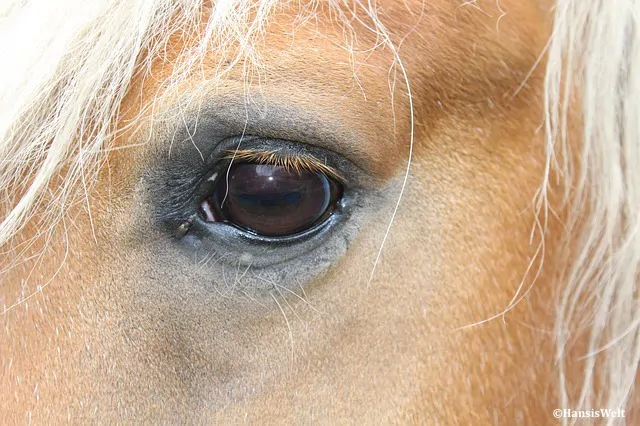 In an article published in the *International Journal of Cancer*, American scientists announced the discovery of a genetic mutation in horses that appears to affect the ability of the DDB2 protein (damage-specific DNA-binding protein 2) to fulfill its role in protecting DNA. Normally, this binding protein monitors DNA alterations, detects damage caused by ultraviolet radiation, and then recruits other proteins to perform nucleotide excision repair of the damaged DNA.
Exposure to ultraviolet rays in sunlight is a key factor in the development of squamous cell carcinoma. UV radiation acts as a carcinogen; it alters DNA structure and can lead to mutations that affect the activity of repair proteins.
Several equine breeds (Haflinger, Appaloosa, Shire, Clydesdale, Paint Horse, Pinto, etc.) are predisposed and show a higher incidence of limbal squamous cell carcinomas, a form of the disease that originates at the junction between the conjunctiva and the sclera before spreading to the cornea. The researchers identified a genetic risk factor for this type of cancer in Haflinger horses, as well as in Belgian Draft and Percheron horses—an important first step toward the development of targeted diagnostic tests. In a previous retrospective study conducted by Rebecca Bellone and Mary Lassaline, approximately 26% of equines affected by this tumor were Haflingers.
The identified missense mutation, which is strongly associated with limbal squamous cell carcinoma, alters the protein’s structure so that it no longer recognizes DNA damage caused by UV radiation. According to the study, this is a risk factor for the development of equine ocular carcinoma because, since the cells cannot repair the damage, genetic mutations accumulate and promote the onset of cancer.
Ocular squamous cell carcinoma leads to decreased vision or even loss of the affected eye. In advanced cases, the tumor can be locally invasive and spread to the orbit and then to adjacent cavities, leading to euthanasia of some horses. This recent research paves the way for a wide range of applications to better identify at-risk horses. First, it will be possible to screen each horse individually; these horses will then undergo targeted examinations, receive greater vigilance regarding UV exposure, and benefit from early diagnosis, allowing for the removal of the tumor and the preservation of the affected eye. Second, based on this screening, breeders will be able to make informed decisions regarding breeding. The UC Davis veterinary laboratory has already developed a genetic test to identify at-risk equines based on the results of this study. The test detects whether a horse carries the described genetic mutation or two copies of this mutation, which puts it at the highest risk for cancer.
Beyond animal health, this study may also have implications for human health. The p53 tumor suppressor gene, found to be associated with equine ocular squamous cell carcinoma, is also linked in humans to xeroderma pigmentosum, a rare genetic disorder characterized by extreme sensitivity to UV radiation, pigmentary abnormalities in sun-exposed skin, an increased risk of developing skin cancers, and even ophthalmic and neurological complications. However, this disease is caused by a mutation in the DDB2 protein. This parallel between humans and animals remains to be explored in order to understand why this mutation affects the eyes of horses and the skin of humans.
In an article published in the *International Journal of Cancer*, American scientists announced the discovery of a genetic mutation in horses that appears to affect the ability of the DDB2 protein (damage-specific DNA-binding protein 2) to fulfill its role in protecting DNA. Normally, this binding protein monitors DNA alterations, detects damage caused by ultraviolet radiation, and then recruits other proteins to perform nucleotide excision repair of the damaged DNA.
Exposure to ultraviolet rays in sunlight is a key factor in the development of squamous cell carcinoma. UV radiation acts as a carcinogen; it alters DNA structure and can lead to mutations that affect the activity of repair proteins.
Several equine breeds (Haflinger, Appaloosa, Shire, Clydesdale, Paint Horse, Pinto, etc.) are predisposed and show a higher incidence of limbal squamous cell carcinomas, a form of the disease that originates at the junction between the conjunctiva and the sclera before spreading to the cornea. The researchers identified a genetic risk factor for this type of cancer in Haflinger horses, as well as in Belgian Draft and Percheron horses—an important first step toward the development of targeted diagnostic tests. In a previous retrospective study conducted by Rebecca Bellone and Mary Lassaline, approximately 26% of equines affected by this tumor were Haflingers.
The identified missense mutation, which is strongly associated with limbal squamous cell carcinoma, alters the protein’s structure so that it no longer recognizes DNA damage caused by UV radiation. According to the study, this is a risk factor for the development of equine ocular carcinoma because, since the cells cannot repair the damage, genetic mutations accumulate and promote the onset of cancer.
Ocular squamous cell carcinoma leads to decreased vision or even loss of the affected eye. In advanced cases, the tumor can be locally invasive and spread to the orbit and then to adjacent cavities, leading to euthanasia of some horses. This recent research paves the way for a wide range of applications to better identify at-risk horses. First, it will be possible to screen each horse individually; these horses will then undergo targeted examinations, receive greater vigilance regarding UV exposure, and benefit from early diagnosis, allowing for the removal of the tumor and the preservation of the affected eye. Second, based on this screening, breeders will be able to make informed decisions regarding breeding. The UC Davis veterinary laboratory has already developed a genetic test to identify at-risk equines based on the results of this study. The test detects whether a horse carries the described genetic mutation or two copies of this mutation, which puts it at the highest risk for cancer.
Beyond animal health, this study may also have implications for human health. The p53 tumor suppressor gene, found to be associated with equine ocular squamous cell carcinoma, is also linked in humans to xeroderma pigmentosum, a rare genetic disorder characterized by extreme sensitivity to UV radiation, pigmentary abnormalities in sun-exposed skin, an increased risk of developing skin cancers, and even ophthalmic and neurological complications. However, this disease is caused by a mutation in the DDB2 protein. This parallel between humans and animals remains to be explored in order to understand why this mutation affects the eyes of horses and the skin of humans.
Read next
Research & Diagnostics
10/09/2026
WHO sets new diagnostic targets for Echinococcus granulosus in humans, dogs and sheep
Research & Diagnostics
10/09/2026
Nipah virus in wastewater: promising for early warning?
Research & Diagnostics
10/01/2026
Commentaires
No comments yet.
Sign in to comment