

Back to articles
Research & Diagnostics
Accredited veterinarian
Aethina tumida
Animal health control
Apiary
Apis mellifera
Bee
Bee swarm
Beehive
Beekeeper
Beekeeping
Beekeeping Industry
Beekeeping Sanitation Technicians
BNEVP
Bombus spp.
DDPP
DGAL
Direction générale de l'alimentation
ESA
GTV
Livestock Register
National Veterinary and Phytosanitary Investigation Brigade
Veterinarian
Veterinary Technical Groups
Bees and Bumblebees: Monitoring of the Aethina tumida parasite is being stepped up in France
V
Vetitude
05/08/2015
4 min read
0 comments
Share:
The protocol for monitoring infestations of bee and bumblebee colonies by the small hive beetle (Aethina tumida) has just been revised by the Direction générale de l'alimentation (DGAL)*. The goal is to implement early detection of any outbreaks so they can be eradicated and to determine the extent of the infestation. These national surveillance measures involve all stakeholders, including veterinarians.
The operations covered by the program are those raising Apis mellifera honeybees and Bombus spp. bumblebees, which are used for pollinating certain crops and may be traded internationally.
In France, the small hive beetle (Aethina tumida) is classified as a category 1 health hazard** due to its impact on the health of bee colonies and on the beekeeping industry’s economy. Although France remains free of the pest, it is particularly at risk due to the infestation in Italy (Calabria and Sicily) since September 2014. The need to strengthen surveillance measures is justified not only by the proximity to the risk area but also by the significant volume of European trade in queen bees and bee swarms originating from Italy.
The National Veterinary and Phytosanitary Investigation Brigade (BNEVP) has been tasked with identifying the commercial distribution channels for apid products; it will conduct inspections of wholesalers and distributors to identify any imports that do not comply with regulations.
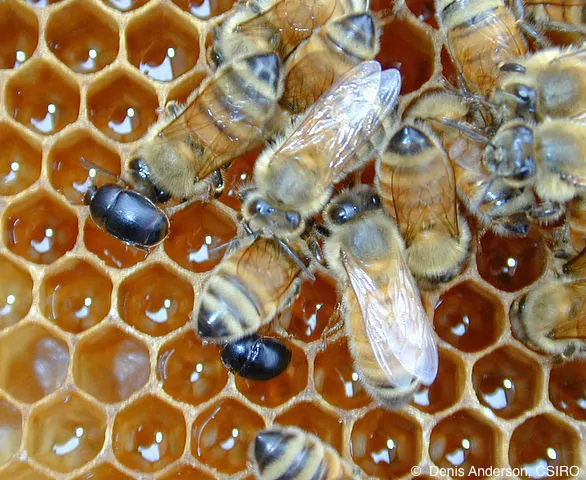 The movement of bee colonies and bumblebee colonies, as well as the importation of wax, used beekeeping equipment, and hive products, all pose major risks for the introduction of the parasite into France. In addition, the parasite may also come from infested third countries, either accidentally or as a result of legal or illegal imports of Apidae. The danger is constant and can even lurk in the soil of potted plants or in fruits, which may also contain beetle larvae.
Adult Aethina tumida beetles are capable of flying about ten kilometers to infest new colonies and can survive for up to 50 days in used honeycomb from hive frames, or even several months in the presence of ripe or rotten fruit.
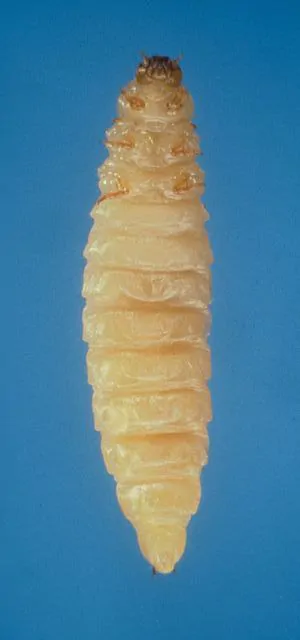
Their larvae migrate over more than 100 meters before burrowing into the soil, where they can persist for up to 12 weeks. Furthermore, the presence of wild swarms of the genera Apis
or Bombus
makes it difficult to control the infestation in a contaminated area.
The movement of bee colonies and bumblebee colonies, as well as the importation of wax, used beekeeping equipment, and hive products, all pose major risks for the introduction of the parasite into France. In addition, the parasite may also come from infested third countries, either accidentally or as a result of legal or illegal imports of Apidae. The danger is constant and can even lurk in the soil of potted plants or in fruits, which may also contain beetle larvae.
Adult Aethina tumida beetles are capable of flying about ten kilometers to infest new colonies and can survive for up to 50 days in used honeycomb from hive frames, or even several months in the presence of ripe or rotten fruit.
Their larvae migrate over more than 100 meters before burrowing into the soil, where they can persist for up to 12 weeks. Furthermore, the presence of wild swarms of the genera Apis
or Bombus
makes it difficult to control the infestation in a contaminated area.
 Suspected cases must be reported by the beekeeper or veterinarian to the DDPP. The prefect will then issue an order for the apiary to be placed under surveillance (APMS).
If an outbreak of Aethina tumida
is confirmed in one or more apiaries, the prefect will issue a declaration of infection (APDI). A restricted zone will then be established around the outbreak site, comprising the containment zone for the infested apiary or apiaries, the protection zone (5 km around the outbreak site), and the surveillance zone (10 km around the protection zone).
A new directive will soon be issued detailing the animal health control measures to be implemented in the event of a confirmed outbreak.
As the administrator of the program, the DGAL is responsible for regulating it, publishing instructions, planning the budget, allocating human and financial resources, organizing information systems, and providing training for accredited veterinarians and staff of central or decentralized services.
The Veterinary Technical Groups are responsible for informing their members about the risk of infestation by the small hive beetle and for offering veterinary training on how to collect samples.
The data collected through
this surveillance protocol will be analyzed by the Animal Health Epidemiological Surveillance Platform (ESA), which will then provide feedback to the various stakeholders.
* Service note DGAL/SDSPA/2015-406 dated April 28, 2015, http://www.plateforme-esa.fr/images/documents/abeilles/note_surveillance_2015-406_final.pdf
** Order of July 29, 2013, regarding the definition of category 1 and second-category health hazards for animal species.
Suspected cases must be reported by the beekeeper or veterinarian to the DDPP. The prefect will then issue an order for the apiary to be placed under surveillance (APMS).
If an outbreak of Aethina tumida
is confirmed in one or more apiaries, the prefect will issue a declaration of infection (APDI). A restricted zone will then be established around the outbreak site, comprising the containment zone for the infested apiary or apiaries, the protection zone (5 km around the outbreak site), and the surveillance zone (10 km around the protection zone).
A new directive will soon be issued detailing the animal health control measures to be implemented in the event of a confirmed outbreak.
As the administrator of the program, the DGAL is responsible for regulating it, publishing instructions, planning the budget, allocating human and financial resources, organizing information systems, and providing training for accredited veterinarians and staff of central or decentralized services.
The Veterinary Technical Groups are responsible for informing their members about the risk of infestation by the small hive beetle and for offering veterinary training on how to collect samples.
The data collected through
this surveillance protocol will be analyzed by the Animal Health Epidemiological Surveillance Platform (ESA), which will then provide feedback to the various stakeholders.
* Service note DGAL/SDSPA/2015-406 dated April 28, 2015, http://www.plateforme-esa.fr/images/documents/abeilles/note_surveillance_2015-406_final.pdf
** Order of July 29, 2013, regarding the definition of category 1 and second-category health hazards for animal species.
Several Routes of Parasite Spread
Widespread Surveillance
In addition to event-based surveillance—which relies on reports of suspected cases to the Departmental Directors in Charge of Population Protection (DDPP)—scheduled surveillance involves conducting systematic visits and investigations at beekeepers’ sites with high-risk apiaries. These visits are not the responsibility of animal health control authorities and may be conducted by veterinarians with expertise in beekeeping, by DDPP agents, or by beekeeping health technicians. They consist of a documentary review (checking the livestock register, invoices, the validity of the Traces certificate, etc.) and a visual inspection of the colonies (identifying clusters of eggs, larvae, or suspicious adult beetles, etc.).Read next
Research & Diagnostics
10/09/2026
WHO sets new diagnostic targets for Echinococcus granulosus in humans, dogs and sheep
Research & Diagnostics
10/09/2026
Nipah virus in wastewater: promising for early warning?
Research & Diagnostics
10/01/2026
Commentaires
No comments yet.
Sign in to comment