

Back to articles
Research & Diagnostics
Accredited veterinarian
Apiary
Apis mellifera
Asian hornet
Bee
Bee colonies
Bee swarm
Beehive
Beekeeper
Beekeeping
Biodiversity
Bourdon
Butterfly
Certi Api
Honey
Honey Farm
Hoverfly
Minister of the Environment
Pollination
Pollinator
Queen Rearing
Swarm Rearing
Ségolène Royal
Veterinarian
Wild bees
Beekeeping: The National Sustainable Development Plan Has Been Extended by Two Years
V
Vetitude
01/19/2016
5 min read
0 comments
Share:
Agriculture Minister Stéphane Le Foll decided yesterday to refocus and extend the Sustainable Beekeeping Development Plan—which was initially launched in 2013 for a three-year term—through 2017. Of the 115 actions originally planned, 77 have already been completed (67%). This leaves 30 to be carried out, as 8 were ultimately abandoned, primarily for regulatory reasons. Overall, while more than 90% of the planned actions have been initiated, the focus must now shift to those that have been less successful.
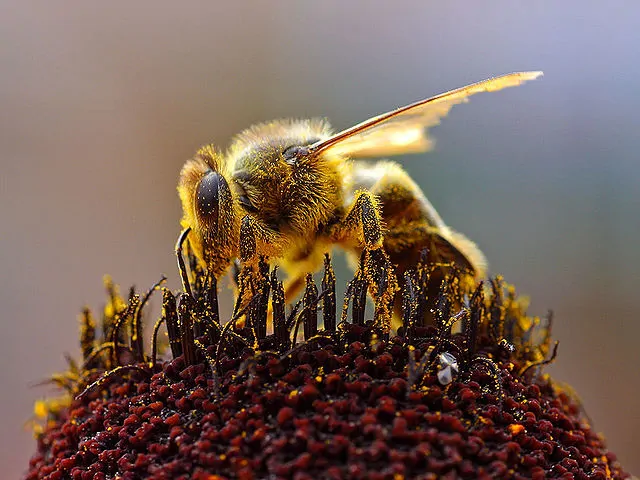 Structured around 17 priority areas* and broken down into 115 actions, the Sustainable Development Plan for Beekeeping has, for the past three years, sought to address the main challenges facing the beekeeping sector in France (colony health, increasing the bee population, sector organization, production development, etc.). Beyond economic considerations, its comprehensive approach to the challenges facing the French beekeeping sector aims to provide it with the tools necessary for its growth. According to the ministry, all priority areas related to the beekeeping production environment (health, predators, pollution, restoring biodiversity, and organizational support) have been implemented. Those related to training and the evolution of beekeeping professions are close behind. For the six areas that are least advanced, the tools are available; the challenge now is to mobilize stakeholders to ensure the sector’s development. Among these tools, a guide to best beekeeping practices for managing a bee colony and a honey processing facility was published in late 2014 by the Technical and Scientific Institute for Beekeeping and Pollination (Institut de l’abeille). The result of a collaborative effort among beekeeping, public health, veterinary, research, and administrative organizations, this guide is intended for all beekeepers—whether experienced, just starting out, or in training.
Initially, the goal of the Sustainable Beekeeping Development Plan was to make France one of the leading beekeeping nations in the European Union, even though France imports 25,200 metric tons of honey out of the 40,000 metric tons consumed each year (500 g per person per year). In fact, its 800,000 hives produce only 14,800 metric tons of honey per year. This plan also aimed to expand the French bee population amid widespread vulnerability among bee colonies. Today, refocused on the areas where progress has been slowest, the goal of the updated plan is to enable the beekeeping sector—which has strong growth potential—to organize itself around an industry association and continue to grow with a clear strategy, in order to meet the demand of French consumers, both in terms of production volume and in terms of origin and quality.
Thus, the updated plan will now be structured around four key areas:
Structured around 17 priority areas* and broken down into 115 actions, the Sustainable Development Plan for Beekeeping has, for the past three years, sought to address the main challenges facing the beekeeping sector in France (colony health, increasing the bee population, sector organization, production development, etc.). Beyond economic considerations, its comprehensive approach to the challenges facing the French beekeeping sector aims to provide it with the tools necessary for its growth. According to the ministry, all priority areas related to the beekeeping production environment (health, predators, pollution, restoring biodiversity, and organizational support) have been implemented. Those related to training and the evolution of beekeeping professions are close behind. For the six areas that are least advanced, the tools are available; the challenge now is to mobilize stakeholders to ensure the sector’s development. Among these tools, a guide to best beekeeping practices for managing a bee colony and a honey processing facility was published in late 2014 by the Technical and Scientific Institute for Beekeeping and Pollination (Institut de l’abeille). The result of a collaborative effort among beekeeping, public health, veterinary, research, and administrative organizations, this guide is intended for all beekeepers—whether experienced, just starting out, or in training.
Initially, the goal of the Sustainable Beekeeping Development Plan was to make France one of the leading beekeeping nations in the European Union, even though France imports 25,200 metric tons of honey out of the 40,000 metric tons consumed each year (500 g per person per year). In fact, its 800,000 hives produce only 14,800 metric tons of honey per year. This plan also aimed to expand the French bee population amid widespread vulnerability among bee colonies. Today, refocused on the areas where progress has been slowest, the goal of the updated plan is to enable the beekeeping sector—which has strong growth potential—to organize itself around an industry association and continue to grow with a clear strategy, in order to meet the demand of French consumers, both in terms of production volume and in terms of origin and quality.
Thus, the updated plan will now be structured around four key areas:
- research (notably through the dissemination and promotion among beekeepers and technical institutes of the results of studies on sustainable beekeeping);
- limiting bees’ exposure to risk factors affecting bee colony health (for example, by taking into account the diversity of chemical exposures other than those to plant protection products—particularly veterinary drugs— or by classifying the Asian hornet as a Category 1 health hazard);
- organizing and supporting the beekeeping sector (for example, by encouraging collective initiatives through the creation of economic and environmental interest groups, or by signing a “Miel de France” pact);
- training for beekeeping professions (including through the implementation of a competency certificate, “Certi Api,” to professionalize the beekeeping trade).
* The 17 priorities of the initial plan (2013–2015):
> Priority 1 : Objectively assess the health issues affecting bee colonies through a comprehensive, multifactorial approach. > Priority 2 : Reduce the impact of pesticides on the health of bee colonies. > Priority 3 : Combat bee diseases. > Priority 4 : Combat the Asian giant hornet. > Priority 5 : Establish a competitive French industry for breeding queen bees and swarms. > Priority 6 : Better understand and protect French beekeeping. > Priority 7 : Restore the biodiversity necessary for beekeeping. > Priority 8 : Maintain and develop the pollination services provided by bee colonies. > Priority 9 : Promote the role of bee colonies as indicators of damage to biodiversity and the environment. > Priority 10 : Provide better training for beekeepers and those working in the beekeeping sector. > Priority 11 : Encourage new beekeepers to enter the profession and support investments aimed at developing the production, processing, and marketing of honey and related products. > Priority 12 : Organize the beekeeping sector. > Priority 13 : Organize beekeeping production. > Priority 14 : Better organize the production of honey, royal jelly, and other hive products. > Priority 15 : Better organize the production of queen bees and swarms. > Priority 16 : Develop research and higher education in apidology. > Priority 17 : Contribute to the development of a comprehensive European plan for sustainable beekeeping.Read next
Research & Diagnostics
10/09/2026
WHO sets new diagnostic targets for Echinococcus granulosus in humans, dogs and sheep
Research & Diagnostics
10/09/2026
Nipah virus in wastewater: promising for early warning?
Research & Diagnostics
10/01/2026
Commentaires
No comments yet.
Sign in to comment