

Back to articles
Research & Diagnostics
Animal E-Health
Animal health
Denis Avignon
E-health
E-Health Summer University
Identification of Domestic Carnivores
Internet of Animals
IoA
IoT
Jean-Louis Hunault
Management Software
Medical Devices
National Food Conference
National Union of Private-Practice Veterinarians
SIMV
SNVEL
Software
Veterinary Council
Veterinary Drugs and Reagents Industry Association
Veterinary medicine
Veterinary profession
Vetfuturs
Animal Health E-Health Workshop: Livestock Farming and Veterinary Medicine in the Face of Opportunities… or Threats, Part 1 of 2
V
Vetitude
07/13/2017
6 min read
0 comments
Share:
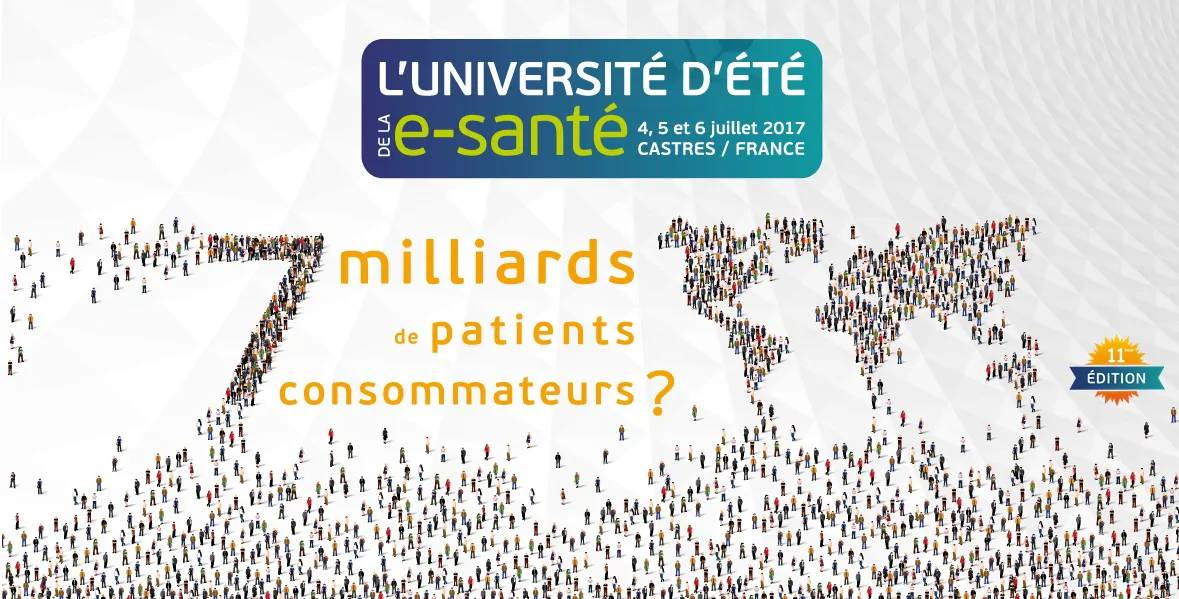
The Human e-Health Summer School was held in Castres from July 4 to 6 at the campus of the ISIS School of Engineering for Computer Science and Health Information Systems, founded in 2006. This 11th edition brought together healthcare professionals,
industry representatives, researchers, and others to discuss the applications of new technologies in the fields of health and well-being. For the second consecutive year, a thematic workshop was dedicated to animal health. This second edition confirms not only the value of digital innovation in animal health but also its strong potential for the veterinary profession. While this technological shift has yet to fully take hold, 2017 could be the year it comes into its own.
 The signs are clear. At the first workshop dedicated to animal health e-health in 2016, very few veterinarians were in attendance. Only a few local professionals and the Union of the Veterinary Medicines and Reagents Industry (SIMV) had made the trip to discover new digital solutions designed to benefit practitioners and animals.
Since that first event, digital technology has taken hold in veterinary practices (Vet Tech), and the Internet of Things
(IoT) has evolved into the Internet of Animals
(IoA). The 2017 event confirmed the success of this gathering: the Toulouse Veterinary School, several veterinary companies, veterinary practitioners, and industry representatives came together for a full day to discuss the advances and challenges of new technologies in animal health. And there is no shortage of them, as the SIMV and the Veterinary Council pointed out.
The signs are clear. At the first workshop dedicated to animal health e-health in 2016, very few veterinarians were in attendance. Only a few local professionals and the Union of the Veterinary Medicines and Reagents Industry (SIMV) had made the trip to discover new digital solutions designed to benefit practitioners and animals.
Since that first event, digital technology has taken hold in veterinary practices (Vet Tech), and the Internet of Things
(IoT) has evolved into the Internet of Animals
(IoA). The 2017 event confirmed the success of this gathering: the Toulouse Veterinary School, several veterinary companies, veterinary practitioners, and industry representatives came together for a full day to discuss the advances and challenges of new technologies in animal health. And there is no shortage of them, as the SIMV and the Veterinary Council pointed out.
 Vetfuturs
, a British initiative aimed at shaping the future of the veterinary profession and looking ahead to the coming decades, has been adopted by the Veterinary Council and the SNVEL. It was about time! As Denis Avignon, vice president of the Veterinary Council, emphasized, “Veterinarians will inevitably have to become more entrepreneurial in how they manage animal health. The environment in which they work is a particularly dynamic ecosystem.”
Vetfuturs therefore aims to give veterinarians a voice so that this consultation results in a vision that aligns as closely as possible with the expectations of society and animal owners—whether professionals or private individuals. It’s a delicate balance: failing to gather clients’ opinions would render the exercise ineffective, as would giving greater weight to the views of young people or future veterinarians over those of their more experienced counterparts.
Furthermore, time is of the essence: the roadmap addressing societal challenges must be defined by next November. Already today, the fierce battle raging over data and information shows that the internet is no longer merely a means of communication, as some continue to believe.
This is one of the strategic challenges facing the veterinary profession. In particular, the Internet is revolutionizing knowledge: veterinary practitioners will have to reclaim control of their own training, which is currently delegated to learned societies. Mastering blockchain (a transparent, secure, distributed database without centralized control) should restore this individual freedom to veterinarians, but they must still know how to manage it.
“The Veterinary Council is concerned about the inequalities that these technologies could create within the veterinary profession. Vetfuturs must shape a new veterinary profession in an environment that no one is familiar with.
Big
data and
blockchain are uncharted territory in veterinary medicine. Everything remains to be built.”
It is indeed acknowledged that the tools a company will use and the roles required to deliver its services in five years’ time do not yet exist. Time is flying by! The veterinary profession is falling behind, especially since it’s necessary to anticipate and blaze a trail rather than wait and follow. Risks exist, but so do opportunities to seize.
It would therefore be a major strategic mistake to lead veterinarians to believe that digital advancements are limited to areas such as communication, marketing, or even training. Unless, of course, the so-called prophets in this field are pursuing more personal interests. To be continued…
Vetfuturs
, a British initiative aimed at shaping the future of the veterinary profession and looking ahead to the coming decades, has been adopted by the Veterinary Council and the SNVEL. It was about time! As Denis Avignon, vice president of the Veterinary Council, emphasized, “Veterinarians will inevitably have to become more entrepreneurial in how they manage animal health. The environment in which they work is a particularly dynamic ecosystem.”
Vetfuturs therefore aims to give veterinarians a voice so that this consultation results in a vision that aligns as closely as possible with the expectations of society and animal owners—whether professionals or private individuals. It’s a delicate balance: failing to gather clients’ opinions would render the exercise ineffective, as would giving greater weight to the views of young people or future veterinarians over those of their more experienced counterparts.
Furthermore, time is of the essence: the roadmap addressing societal challenges must be defined by next November. Already today, the fierce battle raging over data and information shows that the internet is no longer merely a means of communication, as some continue to believe.
This is one of the strategic challenges facing the veterinary profession. In particular, the Internet is revolutionizing knowledge: veterinary practitioners will have to reclaim control of their own training, which is currently delegated to learned societies. Mastering blockchain (a transparent, secure, distributed database without centralized control) should restore this individual freedom to veterinarians, but they must still know how to manage it.
“The Veterinary Council is concerned about the inequalities that these technologies could create within the veterinary profession. Vetfuturs must shape a new veterinary profession in an environment that no one is familiar with.
Big
data and
blockchain are uncharted territory in veterinary medicine. Everything remains to be built.”
It is indeed acknowledged that the tools a company will use and the roles required to deliver its services in five years’ time do not yet exist. Time is flying by! The veterinary profession is falling behind, especially since it’s necessary to anticipate and blaze a trail rather than wait and follow. Risks exist, but so do opportunities to seize.
It would therefore be a major strategic mistake to lead veterinarians to believe that digital advancements are limited to areas such as communication, marketing, or even training. Unless, of course, the so-called prophets in this field are pursuing more personal interests. To be continued…
A More Strategic Animal Health E-Health Edition
Genuine Medical Devices
As Jean-Louis Hunault, president of the SIMV, emphasized, “e-health is already changing the veterinary industry’s approach. It allows us to collect, process, and draw conclusions from data that has never been as rich as it is today.” E-health has, in particular, enabled a major breakthrough in veterinary medicine: “The animal, which until now was silent to humans, can now express itself and convey messages to the breeder, the owner, and the veterinary practitioner. ” Care is becoming more individualized for Livestock, even in industrial farming. Similarly, in human medicine, virtual reality solutions exist to detect pain levels, for example. It is not without reason that regulations classify these IoT devices as medical devices, since they provide a genuine service—unlike the gadgets that are flooding the pet market. For Jean-Louis Hunault, the question remains as to how livestock producers will benefit from these tools and services. Precision farming is within their reach, but it requires a change in how work is organized and a financial investment. “With earnings of around €350 per month per farmer, the agriculture of the future faces a real obstacle in making the digital transition.” Will the National Food Conference, launched this month, be the last chance to turn things around?Toward a New Veterinary Model
According to Jean-Louis Hunault, the veterinary landscape of tomorrow will undeniably transform current practices. “Through this e-health initiative, the government has already begun to strengthen its health policies, with an initial focus on antimicrobial resistance. Telemedicine, insurance, monitoring of prescriptions for veterinary medicinal products, and pharmacovigilance will very clearly be driven by e-health.” Consequently, veterinary practice will also be impacted. The challenge lies in managing data flows. While collecting information will make it possible to better target poor practices—and thus raise overall standards—controlling these data flows is a critical element of the veterinary practice’s value chain. The National Union of Private-Practice Veterinarians (SNVEL) has clearly understood this: it’s no coincidence that the pioneer of microchipping in France for the electronic identification of domestic carnivores is now securing contracts for the leading veterinary clinic management software.Vetfuturs: Shape Your Own Future… or Let Others Do It
Read next
Research & Diagnostics
10/09/2026
WHO sets new diagnostic targets for Echinococcus granulosus in humans, dogs and sheep
Research & Diagnostics
10/09/2026
Nipah virus in wastewater: promising for early warning?
Research & Diagnostics
10/01/2026
Commentaires
No comments yet.
Sign in to comment