

Back to articles
Policy & Regulation
Amazing
AMV
Anaesthetic
ANMV
ANSM
CND
Commission on Narcotic Drugs
FVE
Ketamine
WHO
WVA
Ketamine: The WVA and the FVE Oppose Classifying It as a Narcotic
B
bertrand-neveux
03/09/2015
4 min read
0 comments
Share:
Unlike the two French drug regulatory agencies, the World Veterinary Association (WVA) and the Federation of Veterinarians of Europe (FVE) oppose the classification of injectable ketamine as a narcotic. Placing this anaesthetic under international control will limit its availability to veterinarians and physicians, particularly in remote areas.
 The 58th session of the Commission on Narcotic Drugs (CND) is scheduled to vote on March 13, on whether to schedule ketamine in Schedule I of the 1971 Convention on Psychotropic Substances, due to concerns about its use as a recreational illicit drug in many countries. To be adopted, this decision must receive the votes of at least 35 CND members.
In China’s view, ketamine—a psychotropic substance derived from phencyclidine—should be placed under international control. For its part, the WHO’s Expert Committee on Drug Dependence (ECDD) notes that this anaesthetic is widely used for medical purposes, in both human medicine and veterinary medicine, even in developing countries. While it acknowledges the concerns of certain states and United Nations agencies, it considers that the public health risk posed by the misuse of ketamine globally does not justify its registration with the Veterinary Council. The ECDD therefore recommends that it not be subject to international control. This position is supported by the veterinary organizations WVA and FVE, as well as by the World Medical Association (WMA).
The 58th session of the Commission on Narcotic Drugs (CND) is scheduled to vote on March 13, on whether to schedule ketamine in Schedule I of the 1971 Convention on Psychotropic Substances, due to concerns about its use as a recreational illicit drug in many countries. To be adopted, this decision must receive the votes of at least 35 CND members.
In China’s view, ketamine—a psychotropic substance derived from phencyclidine—should be placed under international control. For its part, the WHO’s Expert Committee on Drug Dependence (ECDD) notes that this anaesthetic is widely used for medical purposes, in both human medicine and veterinary medicine, even in developing countries. While it acknowledges the concerns of certain states and United Nations agencies, it considers that the public health risk posed by the misuse of ketamine globally does not justify its registration with the Veterinary Council. The ECDD therefore recommends that it not be subject to international control. This position is supported by the veterinary organizations WVA and FVE, as well as by the World Medical Association (WMA).
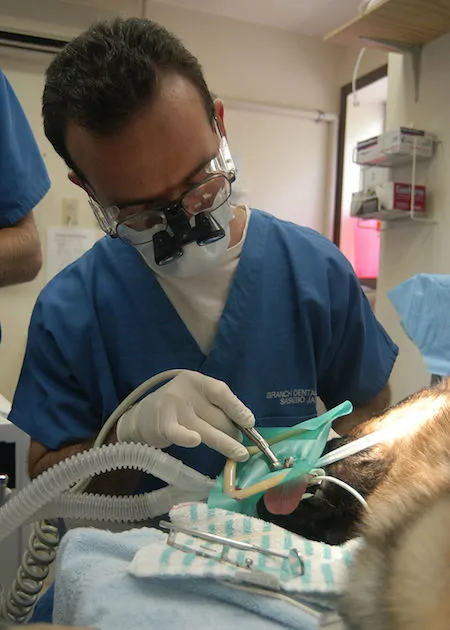 Ketamine is, in fact, an essential medication, particularly for anesthesia in veterinary medicine. It is the only readily available, simple, and suitable injectable anaesthetic for all animal species that is commonly used worldwide
. Compared to anaesthetic gases, which require expensive equipment and trained professionals, the administration of ketamine is inexpensive and safe.
However, since many low-resource countries lack alternative solutions, placing ketamine under international control would make the drug unavailable and force them to forgo certain essential surgical procedures. Such restrictions could affect the health of some two billion people, primarily in Africa, Asia, and Latin America. It is currently the only available anaesthetic and pain reliever in these regions. Thus, while not denying the harmful effects caused by the misuse of ketamine, restricting access to it appears far more serious for global health—both human and animal.
Ketamine is, in fact, an essential medication, particularly for anesthesia in veterinary medicine. It is the only readily available, simple, and suitable injectable anaesthetic for all animal species that is commonly used worldwide
. Compared to anaesthetic gases, which require expensive equipment and trained professionals, the administration of ketamine is inexpensive and safe.
However, since many low-resource countries lack alternative solutions, placing ketamine under international control would make the drug unavailable and force them to forgo certain essential surgical procedures. Such restrictions could affect the health of some two billion people, primarily in Africa, Asia, and Latin America. It is currently the only available anaesthetic and pain reliever in these regions. Thus, while not denying the harmful effects caused by the misuse of ketamine, restricting access to it appears far more serious for global health—both human and animal.
 France, through a draft decree, intends to classify ketamine as a narcotic
. Both the national agency for human medicines (ANSM) and the French Agency for Veterinary Medicinal Products (ANMV) have in fact recommended this course of action. Thus, the technical committee of the ANSM’s Centers for the Evaluation and Information on Drug Dependence, at its meeting on June 5, 2014, approved the inclusion of injectable solutions of this drug on the list of narcotics, given its pharmacological effects and the increase in cases of abuse. After being consulted by the ANSM, the French Agency for Food, Environmental and Occupational Health & Safety (ANSES) in turn issued a favorable opinion on December 21, 2014, recommending that advance information be provided to the veterinary profession, manufacturers, and distributors.
It is true that in France, the number of cases involving ketamine increased between 2009 and 2013. Most of these cases involved its use or possession/distribution as a narcotic, but several thefts from veterinary clinics and one from a central purchasing agency were also reported. However, in 2014, the use and trafficking of ketamine remained marginal compared to synthetic drugs or prescription medications.
This is in stark contrast to the situation in China, which is the source of illicit ketamine consumption worldwide, according to the United Nations Office on Drugs and Crime
(UNODC). It is either diverted from legal pharmaceutical manufacturing or produced illegally and then exported domestically and internationally.
The next Commission on Narcotic Drugs will have to make a decision, bearing in mind, however, that it cannot add a substance to a schedule without an explicit recommendation from the WHO. However, the WHO’s ECDD reviewed ketamine in 2006, 2012, and 2014… concluding each time that placing it under control was unjustified.
France, through a draft decree, intends to classify ketamine as a narcotic
. Both the national agency for human medicines (ANSM) and the French Agency for Veterinary Medicinal Products (ANMV) have in fact recommended this course of action. Thus, the technical committee of the ANSM’s Centers for the Evaluation and Information on Drug Dependence, at its meeting on June 5, 2014, approved the inclusion of injectable solutions of this drug on the list of narcotics, given its pharmacological effects and the increase in cases of abuse. After being consulted by the ANSM, the French Agency for Food, Environmental and Occupational Health & Safety (ANSES) in turn issued a favorable opinion on December 21, 2014, recommending that advance information be provided to the veterinary profession, manufacturers, and distributors.
It is true that in France, the number of cases involving ketamine increased between 2009 and 2013. Most of these cases involved its use or possession/distribution as a narcotic, but several thefts from veterinary clinics and one from a central purchasing agency were also reported. However, in 2014, the use and trafficking of ketamine remained marginal compared to synthetic drugs or prescription medications.
This is in stark contrast to the situation in China, which is the source of illicit ketamine consumption worldwide, according to the United Nations Office on Drugs and Crime
(UNODC). It is either diverted from legal pharmaceutical manufacturing or produced illegally and then exported domestically and internationally.
The next Commission on Narcotic Drugs will have to make a decision, bearing in mind, however, that it cannot add a substance to a schedule without an explicit recommendation from the WHO. However, the WHO’s ECDD reviewed ketamine in 2006, 2012, and 2014… concluding each time that placing it under control was unjustified.
Commentaires
No comments yet.
Sign in to comment