

Back to articles
Outbreaks & Epidemiology
Brucellosis
FAO
Food and Agriculture Organization
Foot-and-mouth disease
Goat
Peste des petits ruminants
Sheep
Veterinary services
WOAH
World Organisation for Animal Health
Peste des petits ruminants: Global Eradication Campaign Gains Momentum
V
Vetitude
04/29/2016
3 min read
0 comments
Share:
Now present in 76 countries—six more than a year ago—peste des petits ruminants continues to spread and decimate thousands of sheep and goats each year around the world. The World Organisation for Animal Health (WOAH) and the FAO have developed a 15-year global strategy for the control and eradication of the disease, launched in early April 2015. But in light of the disease’s spread, experts want to step up their efforts.
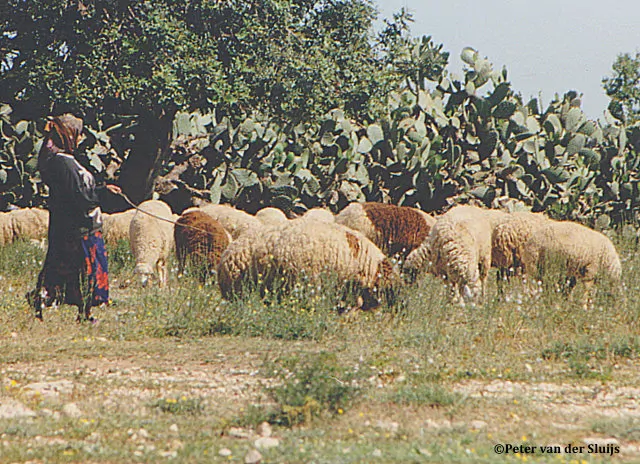 Peste des petits ruminants has reached Georgia, near the borders with Armenia and Azerbaijan: this newly affected country recently recorded its first case. At the same time, a new outbreak has struck the Maldives, demonstrating that even island nations are not immune to this highly contagious viral disease, which has been spreading for some twenty years in some of the world’s poorest regions, primarily in Africa, the Middle East, and Asia. Similarly, outbreaks have occurred in western Turkey and mainland China, following similar cases.
In unvaccinated herds, the virus can kill up to 90% of infected goats and sheep within a few days. The global control and eradication program developed by the WOAH and the FAO, based on the strategy defined in April 2015, recommends the implementation of several measures, including the vaccination of some 800,000 sheep and goats, leading up to the final eradication phase. The two organizations, which have established a joint secretariat, have completed the program’s assessment phase (consultations, counting, and mapping of herds and risk areas).
The vaccination campaign, scheduled to last fifteen years, should also help control other livestock diseases, such as brucellosis and foot-and-mouth disease. Quarantine zones have been established, and surveillance of animals in regions adjacent to the affected areas has been strengthened. Regional roadmaps are being developed, and technical tools are already available to veterinary services, epidemiologists, and other experts in the affected countries to help them design their national campaigns.
Although technically feasible—particularly thanks to the effectiveness of current vaccines—the global eradication of peste des petits ruminants nevertheless requires the establishment of delivery systems for agro-pastoral populations living in remote rural areas. The development of new vaccines, or a marker vaccine, could also reduce costs. Laboratory capacity for diagnosing the disease must also be strengthened.
The transition from the phase of control and risk management to that of disease eradication (no cases reported for at least 24 months) requires continuous and coordinated action by the countries concerned, as well as intensive and targeted vaccination programs aimed at protecting 80% of all livestock herds—that is, all animals over three months of age. This will be followed, by 2030, by the post-vaccination evaluation phase, which is essential for recognition of disease-free status.
Peste des petits ruminants causes estimated losses of 1.8 billion euros each year. Beyond the economic damage, sick animals pose an additional risk to food safety and the nutritional status of the approximately 300 million poor households that depend on sheep and goat farming in the affected regions.
See also our article: Peste des petits ruminants: 70 countries commit to eradicating it by 2030
Peste des petits ruminants has reached Georgia, near the borders with Armenia and Azerbaijan: this newly affected country recently recorded its first case. At the same time, a new outbreak has struck the Maldives, demonstrating that even island nations are not immune to this highly contagious viral disease, which has been spreading for some twenty years in some of the world’s poorest regions, primarily in Africa, the Middle East, and Asia. Similarly, outbreaks have occurred in western Turkey and mainland China, following similar cases.
In unvaccinated herds, the virus can kill up to 90% of infected goats and sheep within a few days. The global control and eradication program developed by the WOAH and the FAO, based on the strategy defined in April 2015, recommends the implementation of several measures, including the vaccination of some 800,000 sheep and goats, leading up to the final eradication phase. The two organizations, which have established a joint secretariat, have completed the program’s assessment phase (consultations, counting, and mapping of herds and risk areas).
The vaccination campaign, scheduled to last fifteen years, should also help control other livestock diseases, such as brucellosis and foot-and-mouth disease. Quarantine zones have been established, and surveillance of animals in regions adjacent to the affected areas has been strengthened. Regional roadmaps are being developed, and technical tools are already available to veterinary services, epidemiologists, and other experts in the affected countries to help them design their national campaigns.
Although technically feasible—particularly thanks to the effectiveness of current vaccines—the global eradication of peste des petits ruminants nevertheless requires the establishment of delivery systems for agro-pastoral populations living in remote rural areas. The development of new vaccines, or a marker vaccine, could also reduce costs. Laboratory capacity for diagnosing the disease must also be strengthened.
The transition from the phase of control and risk management to that of disease eradication (no cases reported for at least 24 months) requires continuous and coordinated action by the countries concerned, as well as intensive and targeted vaccination programs aimed at protecting 80% of all livestock herds—that is, all animals over three months of age. This will be followed, by 2030, by the post-vaccination evaluation phase, which is essential for recognition of disease-free status.
Peste des petits ruminants causes estimated losses of 1.8 billion euros each year. Beyond the economic damage, sick animals pose an additional risk to food safety and the nutritional status of the approximately 300 million poor households that depend on sheep and goat farming in the affected regions.
See also our article: Peste des petits ruminants: 70 countries commit to eradicating it by 2030
Read next
Outbreaks & Epidemiology
10/07/2026
H5N1 should now be treated as a permanent systemic risk, not a succession of outbreaks
Outbreaks & Epidemiology
10/07/2026
African swine fever progresses faster in wild boar than in domestic pigs
Outbreaks & Epidemiology
10/05/2026
Commentaires
No comments yet.
Sign in to comment