

Back to articles
European Veterinarians: Women Earn 28% Less Than Their Male Colleagues
B
bertrand-neveux
03/12/2015
2 min read
0 comments
Share:
The Federation of Veterinarians of Europe (FVE) conducted a survey on veterinary workforce demographics in Europe, examining disparities in the labor market and based on financial indicators. This study covers 13,000 veterinarians in 26 member countries.
Preliminary results show that clinical practice accounts for 60% of veterinary career opportunities, with a focus primarily on small animals. The public sector attracts 19% of graduates, a figure that likely needs to be adjusted, as practising veterinarians are classified in this occupational category in Finland. Finally, 6% are engaged in teaching and research, and only 4% have turned to industry and private research.
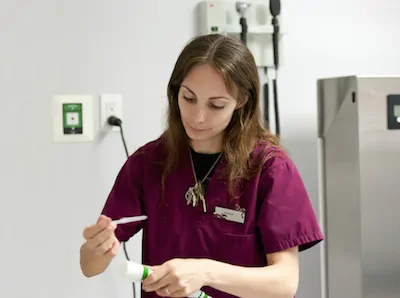 The gender ratio is surprisingly balanced (50-50). However, the generations under 40 are significantly skewed toward women and are therefore expected to tip the balance in the medium term.
In terms of pay, female veterinarians face the same disparities as in other sectors, except that the pay gap peaks at 28%. According to the FVE, this can be explained by the fact that women prefer part-time work to devote more time to their families, unlike men. As a result, 26% of female veterinarians work part-time, compared to 12% of their male counterparts.
In addition, the FVE raises another point that warrants further study: the tendency of female veterinarians to be drawn to professional sectors that pay less.
A final insight from these preliminary results: the majority of revenue is generated by non-commercial professional activities. On average, therefore, providing medical care creates more value than the sale of pet food or medications.
Furthermore, this study suggests that European veterinary practitioners still approach the fundamental aspects of any business—such as legal matters, financial strategy, management, and the development of customer relationship skills (CRM, marketing, merchandising, etc.), as well as the integration of new technologies into the management of their practices.
The gender ratio is surprisingly balanced (50-50). However, the generations under 40 are significantly skewed toward women and are therefore expected to tip the balance in the medium term.
In terms of pay, female veterinarians face the same disparities as in other sectors, except that the pay gap peaks at 28%. According to the FVE, this can be explained by the fact that women prefer part-time work to devote more time to their families, unlike men. As a result, 26% of female veterinarians work part-time, compared to 12% of their male counterparts.
In addition, the FVE raises another point that warrants further study: the tendency of female veterinarians to be drawn to professional sectors that pay less.
A final insight from these preliminary results: the majority of revenue is generated by non-commercial professional activities. On average, therefore, providing medical care creates more value than the sale of pet food or medications.
Furthermore, this study suggests that European veterinary practitioners still approach the fundamental aspects of any business—such as legal matters, financial strategy, management, and the development of customer relationship skills (CRM, marketing, merchandising, etc.), as well as the integration of new technologies into the management of their practices.
Read next
Veterinary Business
10/04/2026
Pet owners preferred ChatGPT answers to a veterinarian’s but the study did not test clinical accuracy
Veterinary Business
03/18/2025
Veterinary Education: VetAgro Sup (36th) and national veterinary school Alfort (49th) in the 2025 ranking of the world's best schools
Veterinary Business
04/11/2024
Commentaires
No comments yet.
Sign in to comment