

Back to articles
Research: Chickens are intelligent animals—let's get that straight!
V
Vetitude
01/05/2017
4 min read
0 comments
Share:
This week, an American scientist published a summary of all available knowledge on intelligence, social behavior, and emotions in chickens. This overview reveals a bird that is neither mindless nor a “birdbrain,” as its reputation might lead us to believe. Like many birds and mammals, chickens are intelligent, capable of experiencing complex emotions, and possess their own distinct personalities. With a global population exceeding 52 billion—far outnumbering ducks, pigs, or rabbits—chickens are found on every continent. In fact, there are seven times more chickens than humans on Earth! And yet, their abilities remain largely underestimated and misunderstood.
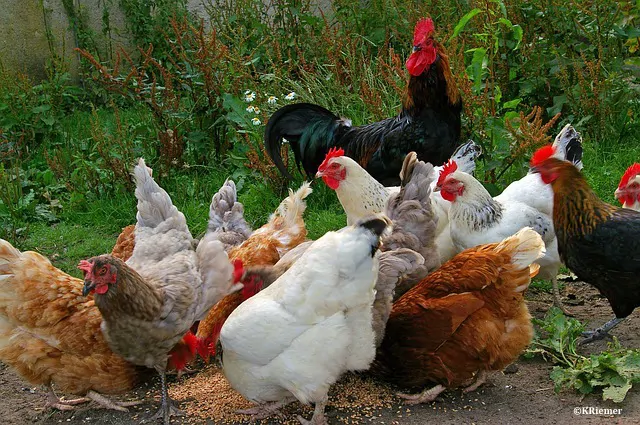 You’ll never look at a chicken the same way again after reading Lori Marino’s findings on this bird. In an article published in the journal *Animal Cognition**
, this animal behavior specialist reviewed recent research on the psychology, behavior, and emotions of the chicken (Gallus gallus domesticus
). Although often overlooked, this species deserves our full attention, he argues, given the animal’s astonishing abilities, which defy common stereotypes. The author has identified a wide range of complex social, cognitive, and emotional behaviors in chickens.
In terms of intelligence, emotional sophistication, and social interactions, the domestic chicken can rival many birds and mammals considered particularly intelligent. Their abilities are far more complex than research has shown so far and deserve further exploration in the future.
> As evidence, chickens possess visual memory
, a sense of spatial orientation, and observational skills—abilities that are undoubtedly based on mental representation. They are capable of understanding that something exists even when it is outside their field of vision (object permanence) and of recognizing objects that are partially or completely hidden.
> Chickens possess a certain understanding of number and share some basic arithmetic abilities
with other animals. They distinguish between quantities by performing simple calculations (addition or subtraction up to 5) and can arrange quantities in a sequence.
> Chickens demonstrate self-control (forgoing an immediate reward for a larger future reward) and self-assessment in relation to their peers (evaluating their position in the social hierarchy), two abilities that indicate an awareness of self and others.
You’ll never look at a chicken the same way again after reading Lori Marino’s findings on this bird. In an article published in the journal *Animal Cognition**
, this animal behavior specialist reviewed recent research on the psychology, behavior, and emotions of the chicken (Gallus gallus domesticus
). Although often overlooked, this species deserves our full attention, he argues, given the animal’s astonishing abilities, which defy common stereotypes. The author has identified a wide range of complex social, cognitive, and emotional behaviors in chickens.
In terms of intelligence, emotional sophistication, and social interactions, the domestic chicken can rival many birds and mammals considered particularly intelligent. Their abilities are far more complex than research has shown so far and deserve further exploration in the future.
> As evidence, chickens possess visual memory
, a sense of spatial orientation, and observational skills—abilities that are undoubtedly based on mental representation. They are capable of understanding that something exists even when it is outside their field of vision (object permanence) and of recognizing objects that are partially or completely hidden.
> Chickens possess a certain understanding of number and share some basic arithmetic abilities
with other animals. They distinguish between quantities by performing simple calculations (addition or subtraction up to 5) and can arrange quantities in a sequence.
> Chickens demonstrate self-control (forgoing an immediate reward for a larger future reward) and self-assessment in relation to their peers (evaluating their position in the social hierarchy), two abilities that indicate an awareness of self and others.
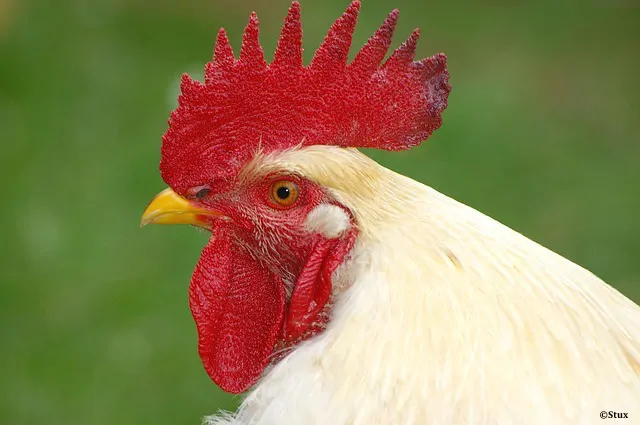 > The hen communicates in complex ways, including through referential communication: she is capable of conveying precise information about her environment, for example, to warn of potential danger or locate a food source. To do this, they have a repertoire of at least 24 distinct vocalizations
, as well as various visual signals. Their alarm call differs depending on whether the predator is airborne or on the ground. This ability, which requires a certain level of self-awareness, is shared by other social and intelligent animals, such as primates.
> Chickens have the ability to reason and make logical deductions
. For example, they are capable of transitive inference (temporal and numerical intelligence), a type of deductive reasoning that children develop around the age of seven.
> Chickens can perceive time intervals and are capable of anticipating future events
.
> Chickens exhibit sophisticated behaviors in social interactions. When placed in situations that require problem-solving or decision-making, it is capable of discriminating between individuals, of manipulation and Machiavellian-style strategies
, and learns by observing its peers in complex ways similar to humans.
> Chickens experience a whole range of complex negative and positive emotions (fear, anticipation, anxiety, etc.). They display a form of
empathy known as emotional contagion
.
> Each hen has a distinct personality
. For example, a mother hen’s maternal nature influences the behavior of her chicks. In roosters, personality plays a major role in the outcome of fights for social status.
Such findings call for further exploration of the ethological complexity of chickens, as well as a shift in perspective regarding the psychology of these animals, in order to obtain even more precise and richer data and to better understand them.
* http://link.springer.com/article/10.1007%2Fs10071-016-1064-4
> The hen communicates in complex ways, including through referential communication: she is capable of conveying precise information about her environment, for example, to warn of potential danger or locate a food source. To do this, they have a repertoire of at least 24 distinct vocalizations
, as well as various visual signals. Their alarm call differs depending on whether the predator is airborne or on the ground. This ability, which requires a certain level of self-awareness, is shared by other social and intelligent animals, such as primates.
> Chickens have the ability to reason and make logical deductions
. For example, they are capable of transitive inference (temporal and numerical intelligence), a type of deductive reasoning that children develop around the age of seven.
> Chickens can perceive time intervals and are capable of anticipating future events
.
> Chickens exhibit sophisticated behaviors in social interactions. When placed in situations that require problem-solving or decision-making, it is capable of discriminating between individuals, of manipulation and Machiavellian-style strategies
, and learns by observing its peers in complex ways similar to humans.
> Chickens experience a whole range of complex negative and positive emotions (fear, anticipation, anxiety, etc.). They display a form of
empathy known as emotional contagion
.
> Each hen has a distinct personality
. For example, a mother hen’s maternal nature influences the behavior of her chicks. In roosters, personality plays a major role in the outcome of fights for social status.
Such findings call for further exploration of the ethological complexity of chickens, as well as a shift in perspective regarding the psychology of these animals, in order to obtain even more precise and richer data and to better understand them.
* http://link.springer.com/article/10.1007%2Fs10071-016-1064-4
Read next
Animal Welfare
10/06/2026
Bites haven't be an unavoidable part of veterinary work
Animal Welfare
10/05/2026
US animal welfare policy: new federal measures focus on dogs and research while farm animals remain largely outside the framework
Animal Welfare
10/08/2025
Commentaires
No comments yet.
Sign in to comment