

Back to articles
Animal Welfare
Animal abuse
Animal health
Animal Health Act
Animal Health Law
Animal Trafficking
Animal welfare
Antimicrobial resistance
Canine Identification
Canine Program
Cat Breeder
Cat Breeding
Chat
Dog
Dog breeder
Dog breeding
Dog Identification
Dog Passport
Dog Trafficking
Eurogroup for Animals
Feline Identification
Identification of Domestic Carnivores
Illegal Trade in Pets
Passport for Domestic Carnivores
Pet Passport
Pet Trafficking
Pet Travel Scheme
Pets
Rabies
Royal Society for the Prevention of Cruelty to Animals
RSPCA
Veterinarian
Veterinary care
Veterinary medicine
Zoonosis
Pets: The European Parliament Calls for Stepped-Up Efforts to Combat the Trafficking of Dogs and Cats
V
Vetitude
03/07/2016
4 min read
0 comments
Share:
On February 25, the European Parliament adopted a resolution to combat the illegal trade in pets within the European Union. It formally calls on the Commission to take measures to put an end to this ever-expanding trafficking. To achieve this, it calls for the sharing of identification and registration data for cats and dogs across Europe. MEPs believe that the trafficking of pets—including those from wild and exotic species—is increasingly linked to organized crime and poses a risk to public health and animal welfare.
For many animal welfare organizations (Eurogroup for Animals, Royal Society for the Prevention of Cruelty to Animals, etc.), as well as veterinarians, law enforcement agencies, and relevant authorities, it has become urgent to take action in the face of the explosive growth of the illegal trafficking of dogs and cats in Europe. Since the Pet Travel Scheme entered into force in 2003—a program designed to allow owners to travel with their pets—the system has been exploited on a large scale by traffickers for commercial purposes. Animal trafficking is thus estimated to be the third most lucrative criminal activity within the European Union, after arms and drug trafficking. Certain information contained in pet passports, particularly the pet’s age or vaccination status, continues to be falsified. This is despite improvements made to the Pet Travel Scheme in June 2013, notably through additional security measures.
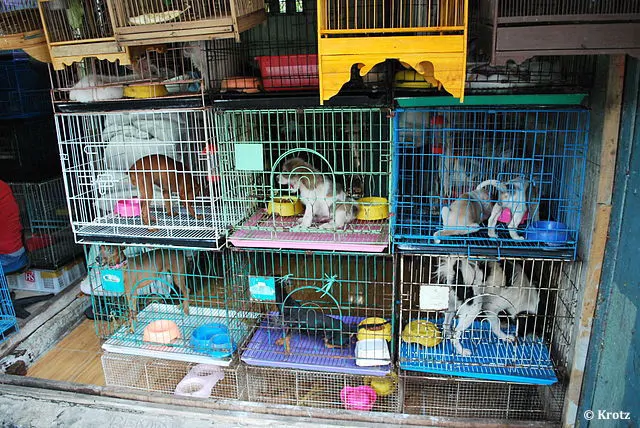 Despite the implementation of mandatory registration and identification systems for dogs and cats in many Member States, most national databases are not yet compatible, which limits traceability when animals are moved within the EU. Disparities also exist regarding the type of information held, the animals covered, and the administrative body responsible for the data. According to Members of Parliament, compatible and harmonized requirements at the European level would reduce the potential for document forgery and illicit trade, thereby benefiting animal welfare, public health and animal health, and ensuring genuine cross-border traceability.
In a non-binding resolution, the Parliament therefore calls on the Commission to ensure such compatibility among countries regarding the means and methods of identifying and registering dogs and cats, as well as to consider establishing databases for other pets. MEPs believe that a compatible system covering the entire territory of the Union will also have repercussions far beyond the fight against illegal trade—for example, by making it possible to identify the source of outbreaks of specific diseases or to combat animal abuse. Parliament also calls on the Commission to take strong and effective measures to tackle wildlife trafficking intended to supply the pet trade. Finally, it urges the Commission to publish without delay the findings of the study it funded on the welfare of dogs and cats involved in commercial practices in Europe.
Pets from the illegal trade are often subjected to poor breeding practices, are poorly socialized or not socialized at all, are more susceptible to disease, and carry many zoonoses such as rabies, the resolution states, emphasizing that 70% of the diseases that have emerged in humans over the past few decades are of animal origin. The lack of vaccination, appropriate antiviral treatment, and veterinary and health care for these animals also makes it necessary to use antibiotics to treat them, which increases the risk of antimicrobial resistance.
The resolution, forwarded to the Council and the Commission, is part of the Animal Health Law, which was informally agreed upon between MEPs and EU ministers in June 2015 and is expected to be voted on by Parliament in a second reading during this week’s plenary session.
* European Parliament resolution of February 25, 2016, on the introduction of compatible pet registration systems in all Member States, February 25, 2016, http://www.europarl.europa.eu/sides/getDoc.do?pubRef=-//EP//TEXT+TA+P8-TA-2016-0065+0+DOC+XML+V0//FR
Despite the implementation of mandatory registration and identification systems for dogs and cats in many Member States, most national databases are not yet compatible, which limits traceability when animals are moved within the EU. Disparities also exist regarding the type of information held, the animals covered, and the administrative body responsible for the data. According to Members of Parliament, compatible and harmonized requirements at the European level would reduce the potential for document forgery and illicit trade, thereby benefiting animal welfare, public health and animal health, and ensuring genuine cross-border traceability.
In a non-binding resolution, the Parliament therefore calls on the Commission to ensure such compatibility among countries regarding the means and methods of identifying and registering dogs and cats, as well as to consider establishing databases for other pets. MEPs believe that a compatible system covering the entire territory of the Union will also have repercussions far beyond the fight against illegal trade—for example, by making it possible to identify the source of outbreaks of specific diseases or to combat animal abuse. Parliament also calls on the Commission to take strong and effective measures to tackle wildlife trafficking intended to supply the pet trade. Finally, it urges the Commission to publish without delay the findings of the study it funded on the welfare of dogs and cats involved in commercial practices in Europe.
Pets from the illegal trade are often subjected to poor breeding practices, are poorly socialized or not socialized at all, are more susceptible to disease, and carry many zoonoses such as rabies, the resolution states, emphasizing that 70% of the diseases that have emerged in humans over the past few decades are of animal origin. The lack of vaccination, appropriate antiviral treatment, and veterinary and health care for these animals also makes it necessary to use antibiotics to treat them, which increases the risk of antimicrobial resistance.
The resolution, forwarded to the Council and the Commission, is part of the Animal Health Law, which was informally agreed upon between MEPs and EU ministers in June 2015 and is expected to be voted on by Parliament in a second reading during this week’s plenary session.
* European Parliament resolution of February 25, 2016, on the introduction of compatible pet registration systems in all Member States, February 25, 2016, http://www.europarl.europa.eu/sides/getDoc.do?pubRef=-//EP//TEXT+TA+P8-TA-2016-0065+0+DOC+XML+V0//FR
Read next
Animal Welfare
10/06/2026
Bites haven't be an unavoidable part of veterinary work
Animal Welfare
10/05/2026
US animal welfare policy: new federal measures focus on dogs and research while farm animals remain largely outside the framework
Animal Welfare
10/08/2025
Commentaires
No comments yet.
Sign in to comment