

Back to articles
Animal Welfare
Aggressive Dog
Animal
Animal ownership license
Attack dog
Behavioral Test
Behavioural assessment
Bite
Canine Behavior
Canine Identification
Dangerous Dogs
Dog
Dog bite
Dog breeding
Dog Identification
Dog License
Dog Obedience
Dog Training
Electronic identification
Guard dog
Microchip
Pedigree dog
Pedigree Dog Breeding
Sterilization
Watchdog
In Berlin, dog owners must now obtain a dog license
V
Vetitude
05/25/2016
3 min read
0 comments
Share:
In the German capital, prospective dog owners will first have to obtain an Animal ownership license, which is issued following a theoretical and practical test. According to the bill, approved on May 18, 2016, the requirement to demonstrate prior competence will take effect this year. Berlin dog owners will also have to pay €100 to obtain this dog ownership permit, followed by an annual fee of €40.
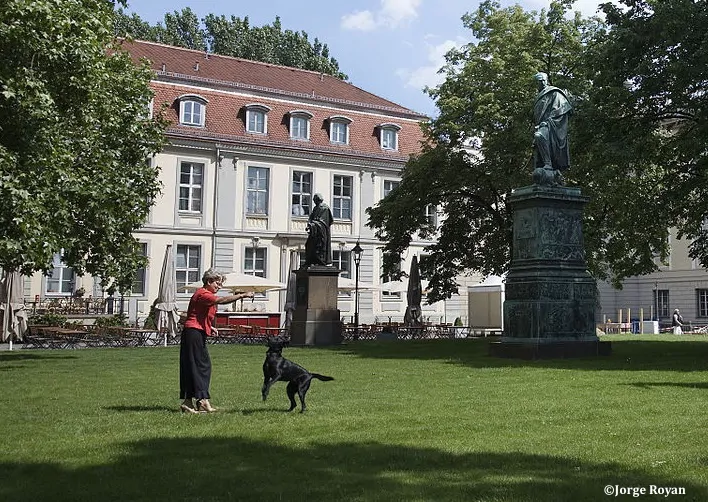 With nearly 100,000 dogs in the city for a population of 3.5 million, Berlin is implementing more restrictive measures to hold owners accountable, improve coexistence within the community, and limit risks (aggression, bites, etc.). Before getting a dog in the German capital, owners will therefore have to prove they have control over their pet by successfully passing theoretical and practical tests, including obedience tests.
In addition, dogs above a certain size (30 cm at the withers) must be kept on a leash throughout the city, except in about forty specifically designated areas.
The rules that dog owners must follow vary by German region. Some states
, such as Lower Saxony, have listed categories of dogs subject to specific requirements (including an official behavior test) based on their presumed level of danger. There are also a large number of additional restrictive measures (for example, dog taxes, mandatory insurance, obtaining a certificate of competence, mandatory microchip identification, registration with the authorities, sterilization or neutering, a ban on breeding, mandatory leashes and muzzles, etc.).
In France, since 2008, owning a dog deemed potentially dangerous (attack, guard, or defense dogs) has also required a permit*, issued following a training course and a behavioural assessment of the animal. The same applies in Switzerland**.
The restrictions have raised concerns among dog owners in Berlin. The bill, which has been poorly received, is deemed unnecessary and discriminatory. Several parks in the capital—which boasts 13,000 ha of public green spaces—already prohibit dogs, significantly reducing the number of permitted walking areas. With the dog license, a new step has been taken, and many voices are speaking out against the proposed financial contribution: €100 to be paid by the owner, plus an annual fee of €40. Ultimately, the broader debate centers on the quality of life in Berlin and pits dog owners against non-owners.
* Rural Code, Section 2, Dangerous and Stray Animals: The owner or keeper of a Category 1 or 2 dog “is required to hold a certificate of competence attesting to completion of training in dog training and behavior, as well as accident prevention .”
They “are required, when the dog is over eight months old and under twelve months old, to have the dog undergo a behavioural assessment.”
** Animal Protection Ordinance of April 23, 2008, Article 68: “Before acquiring a dog, prospective owners must provide a certificate of competence proving that they have acquired knowledge on how to care for and handle dogs. (...) The person responsible for the dog’s care must, within one year of acquiring the dog, present a certificate of competence attesting that they have control over their dog in everyday situations. This rule does not apply to individuals who have completed training as dog owner trainers (...), or as specialists responsible for identifying the causes of problematic canine behaviors.”
With nearly 100,000 dogs in the city for a population of 3.5 million, Berlin is implementing more restrictive measures to hold owners accountable, improve coexistence within the community, and limit risks (aggression, bites, etc.). Before getting a dog in the German capital, owners will therefore have to prove they have control over their pet by successfully passing theoretical and practical tests, including obedience tests.
In addition, dogs above a certain size (30 cm at the withers) must be kept on a leash throughout the city, except in about forty specifically designated areas.
The rules that dog owners must follow vary by German region. Some states
, such as Lower Saxony, have listed categories of dogs subject to specific requirements (including an official behavior test) based on their presumed level of danger. There are also a large number of additional restrictive measures (for example, dog taxes, mandatory insurance, obtaining a certificate of competence, mandatory microchip identification, registration with the authorities, sterilization or neutering, a ban on breeding, mandatory leashes and muzzles, etc.).
In France, since 2008, owning a dog deemed potentially dangerous (attack, guard, or defense dogs) has also required a permit*, issued following a training course and a behavioural assessment of the animal. The same applies in Switzerland**.
The restrictions have raised concerns among dog owners in Berlin. The bill, which has been poorly received, is deemed unnecessary and discriminatory. Several parks in the capital—which boasts 13,000 ha of public green spaces—already prohibit dogs, significantly reducing the number of permitted walking areas. With the dog license, a new step has been taken, and many voices are speaking out against the proposed financial contribution: €100 to be paid by the owner, plus an annual fee of €40. Ultimately, the broader debate centers on the quality of life in Berlin and pits dog owners against non-owners.
* Rural Code, Section 2, Dangerous and Stray Animals: The owner or keeper of a Category 1 or 2 dog “is required to hold a certificate of competence attesting to completion of training in dog training and behavior, as well as accident prevention .”
They “are required, when the dog is over eight months old and under twelve months old, to have the dog undergo a behavioural assessment.”
** Animal Protection Ordinance of April 23, 2008, Article 68: “Before acquiring a dog, prospective owners must provide a certificate of competence proving that they have acquired knowledge on how to care for and handle dogs. (...) The person responsible for the dog’s care must, within one year of acquiring the dog, present a certificate of competence attesting that they have control over their dog in everyday situations. This rule does not apply to individuals who have completed training as dog owner trainers (...), or as specialists responsible for identifying the causes of problematic canine behaviors.”
Read next
Animal Welfare
10/06/2026
Bites haven't be an unavoidable part of veterinary work
Animal Welfare
10/05/2026
US animal welfare policy: new federal measures focus on dogs and research while farm animals remain largely outside the framework
Animal Welfare
10/08/2025
Commentaires
No comments yet.
Sign in to comment