

Back to articles
Animal Welfare
Animal abuse
Animal welfare
Animal Welfare Foundation
AWF
Chevalin
Electronic identification
Equine
Equine identification
Equine Wellness
Gaia
Hippophagy
Horse
Horse Identification
Horse meat
Horse Theft
Horse Trafficking
Horse welfare
Microchip
NSAIDs
Phenylbutazone
Sick Horses
Slaughter
Slaughterhouse
TSB
Veterinarian
Veterinary Prescription
Zurich Animal Welfare Association
Horse Meat: A Latin American Investigation Reveals Unsafe Slaughter Practices and Animal Abuse
V
Vetitude
03/10/2016
4 min read
0 comments
Share:
A new investigation into the origin of horse meat intended for export to the European Union—primarily via Belgium—was conducted in Argentina and Uruguay in March and April 2015 by the animal welfare organizations Tierschutzbund Zürich (TSB) and the Animal Welfare Foundation (AWF). Revealed by Gaia this month, the findings of this investigation are damning.
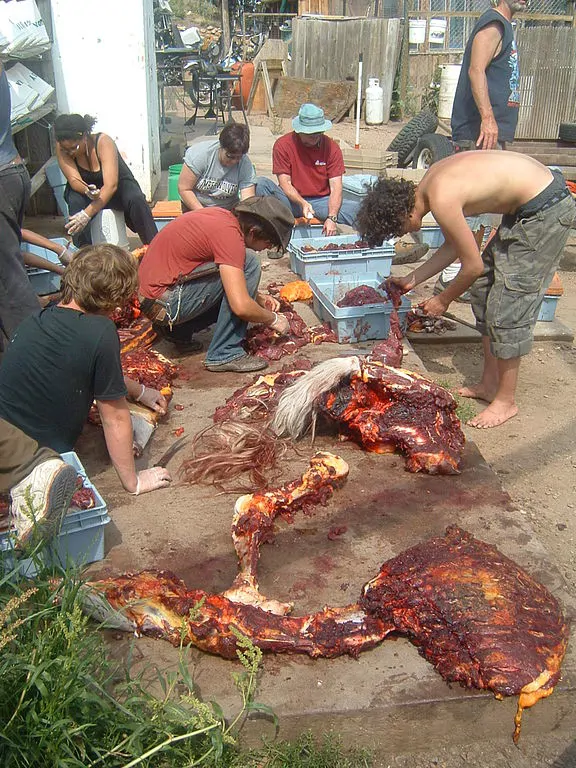 The list of questionable practices is long: sick or injured horses left without care, trafficking of stolen horses, long transport times without water or food in dilapidated trucks, brutal handling by unqualified staff, non-compliant slaughterhouses and pens, appalling slaughter conditions, lack of traceability, etc. Belgium, considered the hub of the global horse meat trade, re-exports a large portion of the imported volume to other countries such as France, Italy, the Netherlands, and Japan
. Four Belgian companies share the lucrative trade in horse meat from South America: Chevideco, Equinox, Multimeat, and Velda.
Mostly exported—particularly to Europe—South American horse meat thus ends up on the plates of consumers, not only in Belgium but elsewhere as well. “Yet the path from horse to plate is nothing but a long chain of animal abuse, neglect, and fraud
,”
says Michel Vandenbosch, president of Gaia. “It is high time that all Belgian supermarkets stop selling horse meat from Latin America.”
In Uruguay and Argentina—two third countries where traceability and animal welfare are not guaranteed—horses are not raised for meat production. Slaughterhouses source horses used for breeding, farm work, and racing.
Among them are
many emaciated, sick, injured, and elderly animals, some of which are even the result of trafficking
. Like the lack of an effective traceability system, horse theft is a recurring problem in these countries.
During a previous investigation into the transport and slaughter conditions of South American horses, conducted in 2009 and 2010 in Brazil, Mexico, and Argentina, the organization Gaia had already exposed the abuse and endless journeys endured by these animals, which are most often transported for up to twenty hours without water, food, or rest. In the six years since, nothing seems to have really changed...
The new field investigation, conducted last year in Argentina and Uruguay, focuses on horse roundup centers and auction sites, as well as transport trucks and slaughterhouses. Even before slaughter, the horses’ suffering is ever-present throughout their entire journey. As the report* shows, some animals are emaciated, have untreated injuries or fractures, or show lesions on their bodies or heads; others are starved, exhausted, and neglected. Investigators even found decomposing carcasses of horses that had died before being slaughtered, piled up outside the pens.
The journey to slaughterhouses frequently exceeds 1,000 km and 24 hours. The vehicles used to transport the horses are, to say the least, unsuitable—if not downright dilapidated. In the overloaded trailers, the animals are given neither food nor water. Such transport conditions violate European standards, as does the absence of identification tags on some horses. This lack of traceability poses a major risk to public health.
In fact, using forged documents, hundreds—or even thousands—of horses from Brazil are fraudulently transported to Uruguay, a new source country for importers. However, Uruguay does not have an identification system comparable to that of the European Union. The horses are not microchipped or tracked via a passport documenting their medical history. The most recent owner simply must sign a declaration confirming that the horse has not received any treatment in the past six months. But unlike under European law, phenylbutazone—a nonsteroidal anti-inflammatory drug—is sold and administered to horses without a veterinary prescription, as are many other medications.
In Uruguay, three horse slaughterhouses are approved by the European Union (Clay, Agroindustrial del Este, Sarel). Sarel is owned by the Belgian importer Multimeat, which supplies horse meat to several supermarkets in Belgium. Argentina (via
the Lamar and Entre Ríos slaughterhouses) also continues to supply Belgian supermarket chains (Aldi, Carrefour,
Champion,
Cora,
Delhaize,
Intermarché,
Match,
Prima,
Spar).
However, some progress has been made since the previous investigation. For instance, Brussels banned the import of horse meat from Mexico into Europe in late 2014. Some retailers have responded accordingly: Lidl Belgium decided to remove horse meat from its shelves; Jumbo in the Netherlands and Swiss supermarkets have halted imports from Argentina; and Colruyt and Makro now purchase only horse meat sourced from the European Union.
* http://www.gaia.be/sites/default/files/paragraph/files/2016_-_production_of_horsemeat_in_argentina_uruguay_-_full_fr.compressed.pdf
https://youtu.be/Se864nkUg68
The list of questionable practices is long: sick or injured horses left without care, trafficking of stolen horses, long transport times without water or food in dilapidated trucks, brutal handling by unqualified staff, non-compliant slaughterhouses and pens, appalling slaughter conditions, lack of traceability, etc. Belgium, considered the hub of the global horse meat trade, re-exports a large portion of the imported volume to other countries such as France, Italy, the Netherlands, and Japan
. Four Belgian companies share the lucrative trade in horse meat from South America: Chevideco, Equinox, Multimeat, and Velda.
Mostly exported—particularly to Europe—South American horse meat thus ends up on the plates of consumers, not only in Belgium but elsewhere as well. “Yet the path from horse to plate is nothing but a long chain of animal abuse, neglect, and fraud
,”
says Michel Vandenbosch, president of Gaia. “It is high time that all Belgian supermarkets stop selling horse meat from Latin America.”
In Uruguay and Argentina—two third countries where traceability and animal welfare are not guaranteed—horses are not raised for meat production. Slaughterhouses source horses used for breeding, farm work, and racing.
Among them are
many emaciated, sick, injured, and elderly animals, some of which are even the result of trafficking
. Like the lack of an effective traceability system, horse theft is a recurring problem in these countries.
During a previous investigation into the transport and slaughter conditions of South American horses, conducted in 2009 and 2010 in Brazil, Mexico, and Argentina, the organization Gaia had already exposed the abuse and endless journeys endured by these animals, which are most often transported for up to twenty hours without water, food, or rest. In the six years since, nothing seems to have really changed...
The new field investigation, conducted last year in Argentina and Uruguay, focuses on horse roundup centers and auction sites, as well as transport trucks and slaughterhouses. Even before slaughter, the horses’ suffering is ever-present throughout their entire journey. As the report* shows, some animals are emaciated, have untreated injuries or fractures, or show lesions on their bodies or heads; others are starved, exhausted, and neglected. Investigators even found decomposing carcasses of horses that had died before being slaughtered, piled up outside the pens.
The journey to slaughterhouses frequently exceeds 1,000 km and 24 hours. The vehicles used to transport the horses are, to say the least, unsuitable—if not downright dilapidated. In the overloaded trailers, the animals are given neither food nor water. Such transport conditions violate European standards, as does the absence of identification tags on some horses. This lack of traceability poses a major risk to public health.
In fact, using forged documents, hundreds—or even thousands—of horses from Brazil are fraudulently transported to Uruguay, a new source country for importers. However, Uruguay does not have an identification system comparable to that of the European Union. The horses are not microchipped or tracked via a passport documenting their medical history. The most recent owner simply must sign a declaration confirming that the horse has not received any treatment in the past six months. But unlike under European law, phenylbutazone—a nonsteroidal anti-inflammatory drug—is sold and administered to horses without a veterinary prescription, as are many other medications.
In Uruguay, three horse slaughterhouses are approved by the European Union (Clay, Agroindustrial del Este, Sarel). Sarel is owned by the Belgian importer Multimeat, which supplies horse meat to several supermarkets in Belgium. Argentina (via
the Lamar and Entre Ríos slaughterhouses) also continues to supply Belgian supermarket chains (Aldi, Carrefour,
Champion,
Cora,
Delhaize,
Intermarché,
Match,
Prima,
Spar).
However, some progress has been made since the previous investigation. For instance, Brussels banned the import of horse meat from Mexico into Europe in late 2014. Some retailers have responded accordingly: Lidl Belgium decided to remove horse meat from its shelves; Jumbo in the Netherlands and Swiss supermarkets have halted imports from Argentina; and Colruyt and Makro now purchase only horse meat sourced from the European Union.
* http://www.gaia.be/sites/default/files/paragraph/files/2016_-_production_of_horsemeat_in_argentina_uruguay_-_full_fr.compressed.pdf
https://youtu.be/Se864nkUg68
Read next
Animal Welfare
10/06/2026
Bites haven't be an unavoidable part of veterinary work
Animal Welfare
10/05/2026
US animal welfare policy: new federal measures focus on dogs and research while farm animals remain largely outside the framework
Animal Welfare
10/08/2025
Commentaires
No comments yet.
Sign in to comment