

Back to articles
Animal Welfare
Arabian horse
Brachycephalic
British Equine Veterinary Association
Canine Morphotype
El Rey Magnum
Equine
Equine veterinarian
Genetic selection
Hypertype
Livestock Farming
Orion Farms
Purebred Arabian
Veterinary Record
Horse Breeding: When Genetic Selection of Arabian Horses Verges on the Absurd
V
Vetitude
10/17/2017
3 min read
0 comments
Share:
With his hypertype build, El Rey Magnum looks just like a cartoon horse. Yet this nine-month-old purebred Arabian is the pride of Orion Farms, a breeding center in the United States. As a result of selective breeding for an extreme hypertype, the young Arabian horse has a deformed physique, described as “close to perfection” by its breeders. As with brachycephalic dogs and cats, the pursuit of this aesthetic ideal disregards the consequences for these animals’ health and well-being. Across the Channel, British veterinarians—who have already spoken out against extreme canine and feline morphotypes—are warning of the risks posed by this new genetic trend affecting horses.
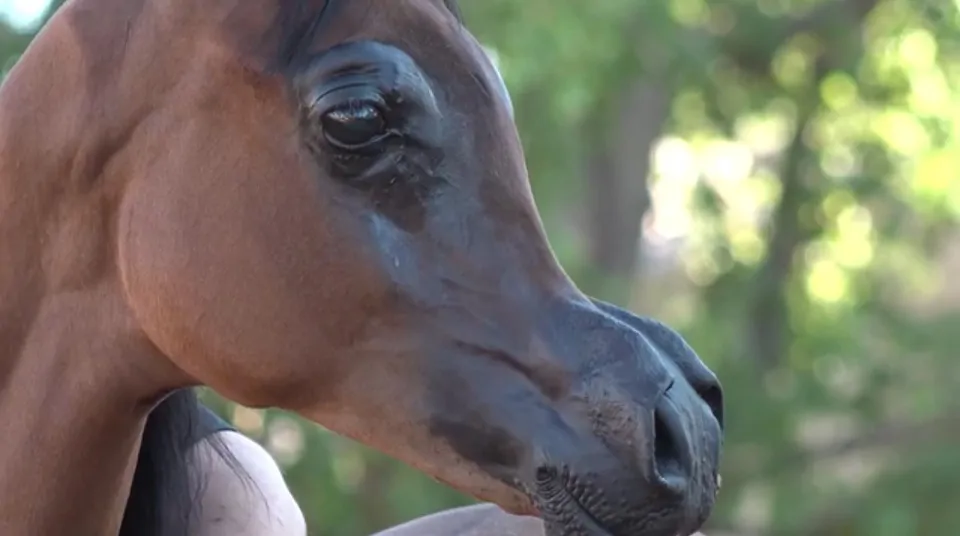 Valued at several million dollars, El Rey Magnum was born and raised at Orrion Farms, an American Arabian thoroughbred breeding farm located in Washington State. His physique, taken to the extreme, is presented in a promotional video as the culmination of a breeding program aimed at perfection—and eagerly awaited by enthusiasts around the world... But the caricatured appearance resulting from this breeding is even more problematic in a horse than in a dog. Indeed, unlike dogs or humans, horses cannot breathe through their mouths—only through their noses. With his deformed skull and muzzle, this young horse is particularly at risk of developing respiratory problems. The shape of its head could eventually compromise its ability to breathe or eat normally.
In an article in the *Veterinary Record*, several British equine veterinarians and specialists have spoken out against this example of extreme breeding—unprecedented in horses—whose sole purpose is aesthetics and the “ideal” appearance. This is not about improving the Arabian horse’s performance or abilities, but rather about exaggerating its specific physical traits to the point of deformity. This is a troubling trend, much like the pursuit of the “hypertype” in dog and cat breeds affected by brachycephalic syndrome. In addition to the associated health problems, extreme brachycephaly is often accompanied by a reduced quality of life, obesity due to exercise intolerance, and a shortened life expectancy.
According to Madeleine Campbell, director of Equine Ethics Consultancy, “any trend in animal breeding that aims to produce extreme physical traits and negatively affects an animal’s normal needs must be condemned on the grounds of animal welfare.” Jonathan Pycock, president of the British Equine Veterinary Association, is also opposed to these types of extreme traits: “I don’t like the result. This look is really not appealing. How far will this go? Is it really so terrible for a horse to look like a horse, rather than a cartoon character?”
Valued at several million dollars, El Rey Magnum was born and raised at Orrion Farms, an American Arabian thoroughbred breeding farm located in Washington State. His physique, taken to the extreme, is presented in a promotional video as the culmination of a breeding program aimed at perfection—and eagerly awaited by enthusiasts around the world... But the caricatured appearance resulting from this breeding is even more problematic in a horse than in a dog. Indeed, unlike dogs or humans, horses cannot breathe through their mouths—only through their noses. With his deformed skull and muzzle, this young horse is particularly at risk of developing respiratory problems. The shape of its head could eventually compromise its ability to breathe or eat normally.
In an article in the *Veterinary Record*, several British equine veterinarians and specialists have spoken out against this example of extreme breeding—unprecedented in horses—whose sole purpose is aesthetics and the “ideal” appearance. This is not about improving the Arabian horse’s performance or abilities, but rather about exaggerating its specific physical traits to the point of deformity. This is a troubling trend, much like the pursuit of the “hypertype” in dog and cat breeds affected by brachycephalic syndrome. In addition to the associated health problems, extreme brachycephaly is often accompanied by a reduced quality of life, obesity due to exercise intolerance, and a shortened life expectancy.
According to Madeleine Campbell, director of Equine Ethics Consultancy, “any trend in animal breeding that aims to produce extreme physical traits and negatively affects an animal’s normal needs must be condemned on the grounds of animal welfare.” Jonathan Pycock, president of the British Equine Veterinary Association, is also opposed to these types of extreme traits: “I don’t like the result. This look is really not appealing. How far will this go? Is it really so terrible for a horse to look like a horse, rather than a cartoon character?”
Read next
Animal Welfare
10/06/2026
Bites haven't be an unavoidable part of veterinary work
Animal Welfare
10/05/2026
US animal welfare policy: new federal measures focus on dogs and research while farm animals remain largely outside the framework
Animal Welfare
10/08/2025
Commentaires
No comments yet.
Sign in to comment