

Back to articles
Animal Welfare
Animal Behavior
Behavior
Chronic pain
Chronic stress
Cortisol
Equine welfare
Equine Wellness
Horse Behavior
Horse welfare
HPA
Pain
Stress
Stress hormone
Equine Well-Being: A New Indicator for Detecting Chronic Stress in Horses
V
Vetitude
09/11/2017
2 min read
0 comments
Share:
A study published in PLOS ONE reveals that sources of suffering in horses, such as chronic pain and hematological abnormalities, are associated with lower cortisol levels. About 60 adult horses, monitored in their daily environment over several weeks, served as a model for researchers to study the impact of chronic stress on the hypothalamic-pituitary-adrenal (HPA) axis. Fecal and plasma cortisol concentrations were used as indicators to measure equine suffering and well-being.
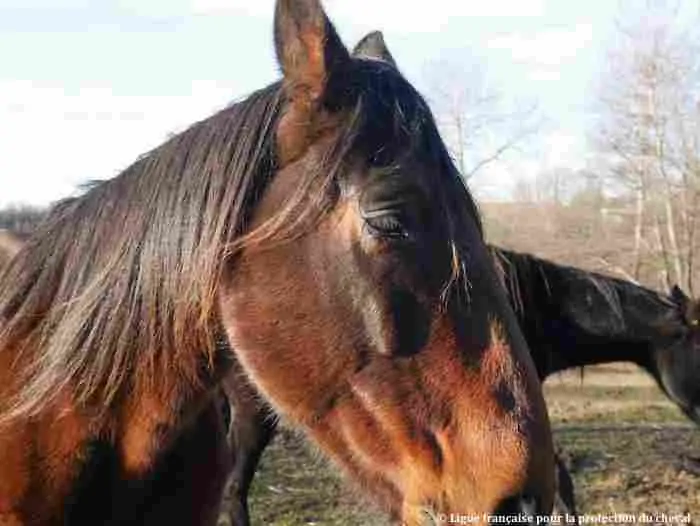 The researchers studied 59 adult horses (44 geldings and 15 mares) from three equestrian centres in Brittany, in their usual living environment (individual stalls, daily training sessions). They identified several behavioral and health indicators of well-being or suffering in these animals before measuring their cortisol levels using blood and fecal samples. In particular, they tested the feasibility of assessing chronic suffering through the measurement of the stress hormone.
The results show that horses whose well-being is clearly compromised (ears laid back, back problems, prostration, hematological abnormalities such as anemia, high levels of neutrophils) also exhibit lower levels of cortisol—both fecal and plasma—compared to their peers. Thus, horses that adopt an apathetic posture—characterized by periods of immobility, prostration, and a lack of responsiveness to their environment—are associated with low cortisol concentrations. Furthermore, fecal cortisol levels measured in the evening are positively correlated with those obtained from blood samples, which should eventually allow for a noninvasive measure of equine well-being.
Researchers still need to determine to what extent factors that influence equine well-being—such as living conditions (e.g., housing in individual stalls versus group housing, in a barn versus in a pasture or paddock), the first months of life, and interactions with humans, act as mediators of cortisol levels in horses.
The researchers studied 59 adult horses (44 geldings and 15 mares) from three equestrian centres in Brittany, in their usual living environment (individual stalls, daily training sessions). They identified several behavioral and health indicators of well-being or suffering in these animals before measuring their cortisol levels using blood and fecal samples. In particular, they tested the feasibility of assessing chronic suffering through the measurement of the stress hormone.
The results show that horses whose well-being is clearly compromised (ears laid back, back problems, prostration, hematological abnormalities such as anemia, high levels of neutrophils) also exhibit lower levels of cortisol—both fecal and plasma—compared to their peers. Thus, horses that adopt an apathetic posture—characterized by periods of immobility, prostration, and a lack of responsiveness to their environment—are associated with low cortisol concentrations. Furthermore, fecal cortisol levels measured in the evening are positively correlated with those obtained from blood samples, which should eventually allow for a noninvasive measure of equine well-being.
Researchers still need to determine to what extent factors that influence equine well-being—such as living conditions (e.g., housing in individual stalls versus group housing, in a barn versus in a pasture or paddock), the first months of life, and interactions with humans, act as mediators of cortisol levels in horses.
Read next
Animal Welfare
10/06/2026
Bites haven't be an unavoidable part of veterinary work
Animal Welfare
10/05/2026
US animal welfare policy: new federal measures focus on dogs and research while farm animals remain largely outside the framework
Animal Welfare
10/08/2025
Commentaires
No comments yet.
Sign in to comment