

Back to articles
Animal Welfare
Abandoned Equines
Abandoned Horse
Abandonment of Horses
Animal welfare
Donkey
Electronic identification
England
Equine
Equine identification
Equine welfare
Fly-grazing
French League for the Protection of Horses
Great Britain
Horse
Horse breeding
Horse Identification
Horse meat
Horse Meat Scandal
Horse Protection
Horse welfare
Illegal grazing
LFPC
Pony
Royal Society for the Prevention of Cruelty to Animals
RSPCA
Straying
Straying Horses
Unwanted horses
Wales
Equine Welfare: Great Britain Enacts Legislation to Curb Abandonment and Unsupervised Grazing
V
Vetitude
05/27/2015
3 min read
0 comments
Share:
Following Wales in January 2014, England recently passed a law on May 26, 2015, aimed at combating horses, ponies, and donkeys that stray on land or pastures without authorization. This practice, known as “fly-grazing,” reportedly affects more than 3,000 abandoned equines. It poses a major headache for landowners, animal protection associations, and local authorities.
The horse meat scandals, the economic downturn, overproduction in the equine horse breeding industry, and the spiraling costs of horse care have created the perfect conditions for a sharp rise in abandonment across the Channel. The new law, the Control of Horses Act 2015,
amends the Animals Act 1971
to better deter owners from illegally grazing or abandoning their animals on public and private land without permission.
This law brings England in line with Wales, which passed a similar bill early last year, and is expected to improve equine welfare across the country. Indeed, abandoned horses can now be taken into care more quickly and effectively by local authorities, which have been granted expanded powers.
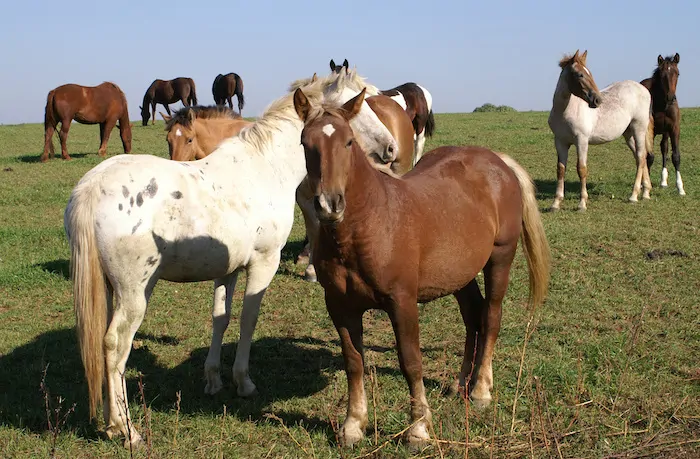 Similarly, farmers and other landowners benefit from shorter timeframes to take action
when horses are illegally abandoned on their property. Indeed, these animals, left to fend for themselves, often damage land, crops, and fences, and may even encroach on livestock grazing areas, resulting in costs to ensure their well-being and safety. Today, swift and appropriate measures can be taken to resolve the problem, rather than allowing them to roam on land that is sometimes unsuitable for grazing, without shelter or supplemental food—which is often the case at present.
Previously, under the Animals Act 1971
, an abandoned horse could not be seized until fourteen days had passed, after which it could be sold at markets or public auctions. Under the law of May 26, 2015, all equines found grazing in the wild must be reported to the authorities within twenty-four hours
, and irresponsible owners now have only four days to claim their animals
. In addition, the new legislation expands the options for putting an end to the straying of these abandoned horses, which include private sale, donation, or adoption through
animal protection associations.
Irresponsible owners will also be required to pay for any damage caused to the land, as well as for the care provided to their animals, if they wish to reclaim them. The new law is also expected to require them to comply with electronic identification regulations,
as no abandoned horse will be returned to its owner without first being identified by a transponder.
Meanwhile, the rehoming campaign launched by the Royal Society for the Prevention of Cruelty to Animals
(#HomesforHorses) continues, covering England and Wales. Some 70 horses, ponies, or donkeys have already found new owners or foster families since late March 2015. But with numbers continuing to rise, hundreds more remain up for adoption (www.rspca.org.uk/homesforhorses
).
Similarly, farmers and other landowners benefit from shorter timeframes to take action
when horses are illegally abandoned on their property. Indeed, these animals, left to fend for themselves, often damage land, crops, and fences, and may even encroach on livestock grazing areas, resulting in costs to ensure their well-being and safety. Today, swift and appropriate measures can be taken to resolve the problem, rather than allowing them to roam on land that is sometimes unsuitable for grazing, without shelter or supplemental food—which is often the case at present.
Previously, under the Animals Act 1971
, an abandoned horse could not be seized until fourteen days had passed, after which it could be sold at markets or public auctions. Under the law of May 26, 2015, all equines found grazing in the wild must be reported to the authorities within twenty-four hours
, and irresponsible owners now have only four days to claim their animals
. In addition, the new legislation expands the options for putting an end to the straying of these abandoned horses, which include private sale, donation, or adoption through
animal protection associations.
Irresponsible owners will also be required to pay for any damage caused to the land, as well as for the care provided to their animals, if they wish to reclaim them. The new law is also expected to require them to comply with electronic identification regulations,
as no abandoned horse will be returned to its owner without first being identified by a transponder.
Meanwhile, the rehoming campaign launched by the Royal Society for the Prevention of Cruelty to Animals
(#HomesforHorses) continues, covering England and Wales. Some 70 horses, ponies, or donkeys have already found new owners or foster families since late March 2015. But with numbers continuing to rise, hundreds more remain up for adoption (www.rspca.org.uk/homesforhorses
).
Read next
Animal Welfare
10/06/2026
Bites haven't be an unavoidable part of veterinary work
Animal Welfare
10/05/2026
US animal welfare policy: new federal measures focus on dogs and research while farm animals remain largely outside the framework
Animal Welfare
10/08/2025
Commentaires
No comments yet.
Sign in to comment