

Back to articles
Endurance: The FEI Finally Takes Action Against the Gulf Emirates by Canceling International Races
B
bertrand-neveux
02/28/2015
4 min read
0 comments
Share:
What a turnaround! In world endurance races, impunity was the norm when it came to cheating or doping as long as it involved a member of a Gulf team. However, under pressure from several national federations calling for a boycott, the International Equestrian Federation (FEI) simply removed the races held in the Emirates from its calendar.
Thus, on February 26, 2015, the FEI Executive Board, chaired by the newly elected president Ingmar De Vos (Belgium), removed the two major international endurance events via
an emergency procedure in order to “protect the horse welfare and preserve the integrity of the FEI’s rules and regulations.”
Some will see a connection between this FEI decision and the change in presidency; the president’s home country had called for a boycott, as had the Swiss federation and other European federations… except for France, despite being a major endurance nation.
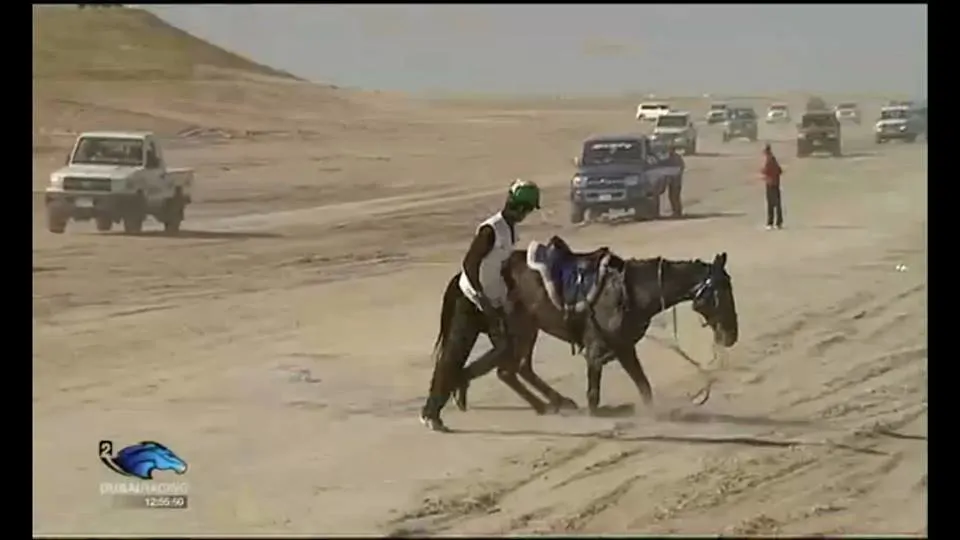 The shameful and widely publicized death of Splitters Creek Bundy during the Af-Reef Cup in Abu Dhabi (euthanasia following fractures of both cannon bones) prompted several federations to announce their non-participation in the 2016 World Endurance Championships in Dubai, and even to prohibit their riders from competing in Group VII events (Gulf, Maghreb, Middle East).
Last June, the FEI had already adopted rules to strengthen horse welfare during endurance races, a few weeks before the World Equestrian Games in Normandy and, above all, following yet another series of incidents during the final qualifying race in Compiègne.
These measures include additional anti-doping tests, increased monitoring of injuries, sanctions against those responsible for injured horses to hold them more accountable (riders, trainers, officials), and longer rest periods. Similarly, the issue of conflicts of interest has been addressed.
However, observers of the sport remained skeptical given the FEI’s lack of willingness to enforce sanctions in proven cases.
In fact, this is what prompted the French League for the Protection of Horses (LFPC) and the French Equine Veterinary Association (AVEF) to file a complaint against persons unknown following the events in Compiègne.
On May 23, 2014, during the 160-km international race in Compiègne (the longest distance to be covered in a single day in an endurance event), which counted toward qualification for the 2014 World Equestrian Games, a ten-year-old mare—owned by a stable in the United Arab Emirates and ridden by a French rider—died under highly suspicious circumstances.
The discrepancy between the results of the analyses requested by the FEI—which declined to publish a report but nevertheless stated that “the doping test came back negative and the necropsy failed to determine the cause of death”—
and those of the samples taken at the request of the AVEF by a French laboratory, has only served to deepen the doubt and reinforce the AVEF’s and the LFPC’s suspicion of doping.
The veterinarians initially targeted by public opinion were keen to speak out and denounce unacceptable practices that put horses in grave danger:
The shameful and widely publicized death of Splitters Creek Bundy during the Af-Reef Cup in Abu Dhabi (euthanasia following fractures of both cannon bones) prompted several federations to announce their non-participation in the 2016 World Endurance Championships in Dubai, and even to prohibit their riders from competing in Group VII events (Gulf, Maghreb, Middle East).
Last June, the FEI had already adopted rules to strengthen horse welfare during endurance races, a few weeks before the World Equestrian Games in Normandy and, above all, following yet another series of incidents during the final qualifying race in Compiègne.
These measures include additional anti-doping tests, increased monitoring of injuries, sanctions against those responsible for injured horses to hold them more accountable (riders, trainers, officials), and longer rest periods. Similarly, the issue of conflicts of interest has been addressed.
However, observers of the sport remained skeptical given the FEI’s lack of willingness to enforce sanctions in proven cases.
In fact, this is what prompted the French League for the Protection of Horses (LFPC) and the French Equine Veterinary Association (AVEF) to file a complaint against persons unknown following the events in Compiègne.
On May 23, 2014, during the 160-km international race in Compiègne (the longest distance to be covered in a single day in an endurance event), which counted toward qualification for the 2014 World Equestrian Games, a ten-year-old mare—owned by a stable in the United Arab Emirates and ridden by a French rider—died under highly suspicious circumstances.
The discrepancy between the results of the analyses requested by the FEI—which declined to publish a report but nevertheless stated that “the doping test came back negative and the necropsy failed to determine the cause of death”—
and those of the samples taken at the request of the AVEF by a French laboratory, has only served to deepen the doubt and reinforce the AVEF’s and the LFPC’s suspicion of doping.
The veterinarians initially targeted by public opinion were keen to speak out and denounce unacceptable practices that put horses in grave danger:
 The complaint was filed by the two associations for:
- Last-minute registrations that prevent organizers from preparing to accommodate competing horses under proper conditions;
- Practices amounting to cheating: “Indeed, some participants would not hesitate to challenge decisions made by judges or veterinarians in order to pressure them into allowing the race to continue, making their work difficult and endangering their horses. (…)
- Last-minute “jockey” riders who ride horses they are unfamiliar with and whose fatigue or specific abnormalities they cannot detect before, during, or after the competition—riders who are therefore no longer attuned to their mounts (managing its exertion, relieving it when necessary, etc.).
- The development of doping techniques, which unfortunately can significantly mask the classic signs of fatigue that alert veterinarians—to such an extent that these unsportsmanlike practices allow fatigued horses to arrive at the checkpoint with seemingly normal test results, even to the most seasoned veterinarian, who must make a judgment in a very short time based on a limited number of clinical criteria.
- animal abuse and neglect, offenses defined and punishable under Articles 521-1, R 654-1, and R 653-1 of the Penal Code
- animal doping and complicity in doping, offenses defined and punishable under Articles L 241-2, L 241-3, and L 241-5 of the Sports Code
Read next
Animal Welfare
10/06/2026
Bites haven't be an unavoidable part of veterinary work
Animal Welfare
10/05/2026
US animal welfare policy: new federal measures focus on dogs and research while farm animals remain largely outside the framework
Animal Welfare
10/08/2025
Commentaires
No comments yet.
Sign in to comment