

Back to articles
Animal Welfare
Animal
Animal welfare
Chimpanzee
Endangered species
Endangered Species Act
ESA
Fish and Wildlife Service
Gorilla
Pan troglodytes
Pets
Primate
Endangered Species: Expanded Protection for Captive Chimpanzees in the United States
V
Vetitude
06/16/2015
3 min read
0 comments
Share:
The approximately 2,000 chimpanzees held in captivity in the United States now join their wild cousins as an “endangered” species, rather than merely “threatened,” according to the classification under the Endangered Species Act (ESA). This decision should ensure them greater protection and restrict the commercial activities involving them. The new regulation, published today in the Federal Register, will take effect 90 days after its publication, on September 14, 2015.
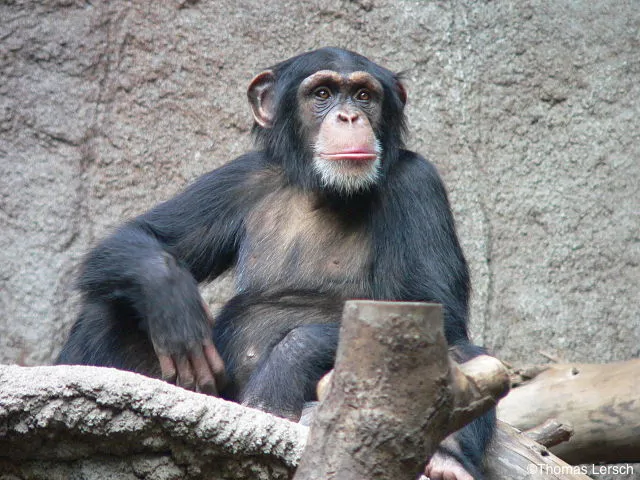 The U.S. Fish and Wildlife Service now lists all chimpanzee (Pan troglodytes) populations—both wild and captive—on the endangered species list, bringing their status into alignment with the legal requirements of the ESA. Under this animal welfare law, captive animals now enjoy the same legal status as their wild counterparts, which have been classified as “endangered” since 1990.
This unilateral protection of the species has facilitated the exploitation of chimpanzees held in captivity in the United States. The new rule puts an end to this imbalance, which was denounced in particular in 2010 in a petition sent to the Fish and Wildlife Service. Signed by a coalition of organizations, including the Jane Goodall Institute, the petition called for the listing of all chimpanzees as “endangered” through an official review of the species’ status under the ESA. A review of the arguments presented ultimately led to a proposed rule in 2013 to protect all chimpanzees, which has now been finalized.
Habitat loss, disease outbreaks, and widespread poaching (partly due to the exploitation of captive individuals) have led to a decline of more than 65% in wild chimpanzee populations, which are unevenly distributed across 22 countries in Equatorial Africa. There are now believed to be only 170,000 to 300,000 chimpanzees remaining in Africa today, down from one million fifty years ago. Expanded federal protection for their captive cousins is expected to curb the capture of these animals for invasive biomedical research, the pet trade, and the entertainment industry.
Certain activities involving chimpanzees will be prohibited without a permit, including the import or export of these animals into and out of the United States, their improper keeping within the country, and interstate and international trade. Permits for these activities will be issued only for scientific operations that benefit wild species or aim to improve their survival and conservation, including through habitat restoration and better in situ population management.
The U.S. Fish and Wildlife Service has allocated $9.4 million to chimpanzee conservation programs. These grants, combined with $11.5 million in additional funding, support field projects in 19 countries:
The U.S. Fish and Wildlife Service now lists all chimpanzee (Pan troglodytes) populations—both wild and captive—on the endangered species list, bringing their status into alignment with the legal requirements of the ESA. Under this animal welfare law, captive animals now enjoy the same legal status as their wild counterparts, which have been classified as “endangered” since 1990.
This unilateral protection of the species has facilitated the exploitation of chimpanzees held in captivity in the United States. The new rule puts an end to this imbalance, which was denounced in particular in 2010 in a petition sent to the Fish and Wildlife Service. Signed by a coalition of organizations, including the Jane Goodall Institute, the petition called for the listing of all chimpanzees as “endangered” through an official review of the species’ status under the ESA. A review of the arguments presented ultimately led to a proposed rule in 2013 to protect all chimpanzees, which has now been finalized.
Habitat loss, disease outbreaks, and widespread poaching (partly due to the exploitation of captive individuals) have led to a decline of more than 65% in wild chimpanzee populations, which are unevenly distributed across 22 countries in Equatorial Africa. There are now believed to be only 170,000 to 300,000 chimpanzees remaining in Africa today, down from one million fifty years ago. Expanded federal protection for their captive cousins is expected to curb the capture of these animals for invasive biomedical research, the pet trade, and the entertainment industry.
Certain activities involving chimpanzees will be prohibited without a permit, including the import or export of these animals into and out of the United States, their improper keeping within the country, and interstate and international trade. Permits for these activities will be issued only for scientific operations that benefit wild species or aim to improve their survival and conservation, including through habitat restoration and better in situ population management.
The U.S. Fish and Wildlife Service has allocated $9.4 million to chimpanzee conservation programs. These grants, combined with $11.5 million in additional funding, support field projects in 19 countries:
Developing local conservation policies and assisting with law enforcement to ensure the long-term survival and protection of chimpanzees and gorillas, in partnership with the Wildlife Conservation Society;
- Improving the conservation of West African chimpanzees through the management of protected areas, in partnership with the Wild Chimpanzee Foundation-Africa;
- Launching a conservation policy for West African chimpanzees along the Liberia-Guinea border, in partnership with Fauna and Flora International;
- Funding for long-term research and conservation of gorillas and chimpanzees in the Ebo Forest in Cameroon, in partnership with the Zoological Society of San Diego;
- Conducting a study on chimpanzees in Senegal, in partnership with Iowa State University;
- Educating local communities about gorilla and chimpanzee conservation in the eastern part of the Democratic Republic of the Congo, in partnership with the Jane Goodall Institute.
Read next
Animal Welfare
10/06/2026
Bites haven't be an unavoidable part of veterinary work
Animal Welfare
10/05/2026
US animal welfare policy: new federal measures focus on dogs and research while farm animals remain largely outside the framework
Animal Welfare
10/08/2025
Commentaires
No comments yet.
Sign in to comment