

Back to articles
Animal Welfare
AAEP
American Association of Equine Practitioners
American Veterinary Medical Association
AVMA
Donkey
Donkeys
Ejiao
Poaching
Skin
Slaughter
World Veterinary Association
WVA
Donkey hides: a global trade denounced as inhumane and destructive
V
Vetitude
01/05/2019
3 min read
0 comments
Share:
Several veterinary organizations, including the American Association of Equine Practitioners (AAEP) and the American Veterinary Medical Association (AVMA), condemn the global trade in donkey hides, which primarily supplies a booming Chinese industry and threatens donkey populations worldwide. To produce ejiao, a highly popular traditional remedy made from donkey-skin gelatin, China slaughters millions of equines every year. As the donkey population in China has plummeted, Chinese manufacturers have turned to importing donkeys from Africa, even if it means decimating those populations as well.
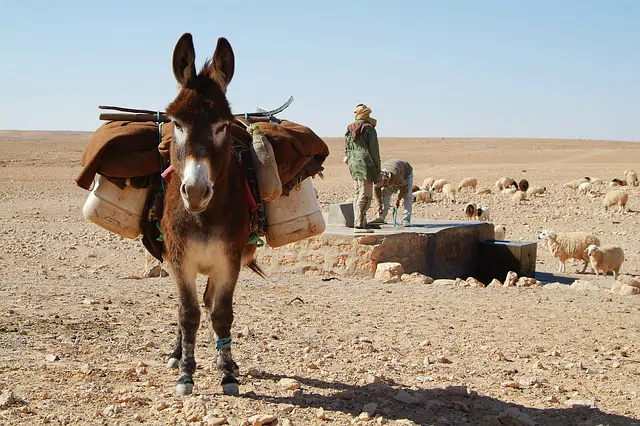 For centuries, traditional Chinese medicine has treated dizziness and other health conditions with ejiao, a so-called miracle herbal remedy whose main ingredient is a gelatin extracted by boiling donkey hides. Demand for ejiao has risen significantly over the past decade, to the point that China now imports donkey hides from around the world—including Brazil and Mexico—and poaching threatens the survival of these equines. In Africa, the epicenter of the donkey-hide trade, entire regions in the western part of the continent are experiencing localized extinctions of donkey species, according to the WVA.
The FAO estimates that the donkey population in China has been cut in half, falling from approximately 11 million in recent years to 5.4 million in 2016. Although the Chinese industry is investing in donkey breeding programs, the strong demand for ejiao from Chinese consumers remains unmet. Donkeys are ill-suited to intensive farming practices due to their long gestation period, low fertility, low success rate with artificial insemination, and high susceptibility to stress-induced abortions, according to the WVA.
The AVMA has joined forces with the AAEP, the American Association of Equine Practitioners, to condemn the inhumane transport and slaughter of donkeys around the world to meet the growing global trade in donkey hides. It is estimated that at least 1.8 million donkey hides are sold each year to supply the lucrative ejiao market, used in Chinese beauty products and traditional medicine remedies.
In addition to animal welfare concerns, this trade is particularly devastating in developing countries, where donkeys are essential to the livelihoods of millions of the world’s poorest people. When faced with the theft of donkeys, families lose their income overnight. Buying a new animal is often impossible given the high cost of donkeys, which is linked to declining populations. The loss of a donkey also jeopardizes the transportation of schoolchildren and limits the growth of women’s roles in the community. As for poaching, it increases the risk of disease spread and seriously compromises the equine welfare due to inappropriate handling, transport, and slaughter techniques.
As a result, the AAEP is committed to raising awareness of this issue among the North American veterinary profession. For its outgoing president, Margo Macpherson, the AVMA’s support reinforces the international impact of the AAEP’s stance. Furthermore, poaching and the trade in donkey hides could very well directly affect the United States in the near future. This is particularly concerning given the vulnerable population of wild burros in the western states.
The WVA has called for a halt to the donkey hide trade until its impact can be assessed globally, both for donkey populations and for the human communities that depend on them. At this rate, if nothing is done, donkeys could disappear from Kenya by 2024.
For centuries, traditional Chinese medicine has treated dizziness and other health conditions with ejiao, a so-called miracle herbal remedy whose main ingredient is a gelatin extracted by boiling donkey hides. Demand for ejiao has risen significantly over the past decade, to the point that China now imports donkey hides from around the world—including Brazil and Mexico—and poaching threatens the survival of these equines. In Africa, the epicenter of the donkey-hide trade, entire regions in the western part of the continent are experiencing localized extinctions of donkey species, according to the WVA.
The FAO estimates that the donkey population in China has been cut in half, falling from approximately 11 million in recent years to 5.4 million in 2016. Although the Chinese industry is investing in donkey breeding programs, the strong demand for ejiao from Chinese consumers remains unmet. Donkeys are ill-suited to intensive farming practices due to their long gestation period, low fertility, low success rate with artificial insemination, and high susceptibility to stress-induced abortions, according to the WVA.
The AVMA has joined forces with the AAEP, the American Association of Equine Practitioners, to condemn the inhumane transport and slaughter of donkeys around the world to meet the growing global trade in donkey hides. It is estimated that at least 1.8 million donkey hides are sold each year to supply the lucrative ejiao market, used in Chinese beauty products and traditional medicine remedies.
In addition to animal welfare concerns, this trade is particularly devastating in developing countries, where donkeys are essential to the livelihoods of millions of the world’s poorest people. When faced with the theft of donkeys, families lose their income overnight. Buying a new animal is often impossible given the high cost of donkeys, which is linked to declining populations. The loss of a donkey also jeopardizes the transportation of schoolchildren and limits the growth of women’s roles in the community. As for poaching, it increases the risk of disease spread and seriously compromises the equine welfare due to inappropriate handling, transport, and slaughter techniques.
As a result, the AAEP is committed to raising awareness of this issue among the North American veterinary profession. For its outgoing president, Margo Macpherson, the AVMA’s support reinforces the international impact of the AAEP’s stance. Furthermore, poaching and the trade in donkey hides could very well directly affect the United States in the near future. This is particularly concerning given the vulnerable population of wild burros in the western states.
The WVA has called for a halt to the donkey hide trade until its impact can be assessed globally, both for donkey populations and for the human communities that depend on them. At this rate, if nothing is done, donkeys could disappear from Kenya by 2024.
Read next
Animal Welfare
10/06/2026
Bites haven't be an unavoidable part of veterinary work
Animal Welfare
10/05/2026
US animal welfare policy: new federal measures focus on dogs and research while farm animals remain largely outside the framework
Animal Welfare
10/08/2025
Commentaires
No comments yet.
Sign in to comment