

Back to articles
Animal Welfare
Brachycephalic
Bulldog
English Bulldog
Genetic defect
Genetic diversity
Hypertype
Inbreeding
Olde English Bulldogge
Pedigree dog
Brachycephalic Breeds: The English Bulldog, a Victim of Its Own Success
V
Vetitude
08/26/2016
3 min read
0 comments
Share:
The lack of genetic diversity in the English Bulldog is a cause for concern regarding the breed’s future. A recent study* of the genetic makeup of 102 registered English Bulldogs reveals that large regions of the genome are identical from one dog to another. This inbreeding makes it impossible to correct the genotypic and phenotypic abnormalities associated with the many health problems observed in this breed, or to eliminate deleterious recessive mutations. Crossbreeding the English Bulldog with a related breed, such as the Old English Bulldogge, would be the best way to ensure its survival, according to the study’s authors.
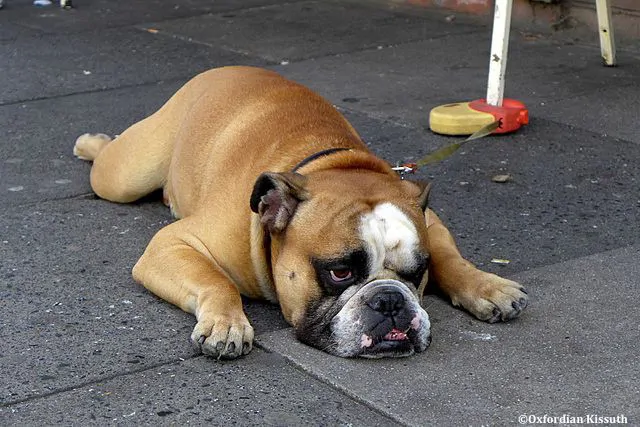 The English Bulldog is one of the most popular dog breeds in the world. But it is also a brachycephalic dog with fragile health, predisposed to respiratory and cardiac disorders, skin and joint conditions, eye infections, and more. Managing these health issues, which are linked to the genetic deviations of the hypertype, primarily involves surgery, starting with parturition, which requires a nearly routine cesarean section. Furthermore, these issues are often accompanied by a reduced quality of life, obesity due to exercise intolerance, and a shortened life expectancy (8 to 10 years on average).
The current state of inbreeding is largely the result of selection pressure toward a “hypertype” with a short, upturned muzzle, focusing primarily on specific physical traits without considering the consequences for animal health and animal welfare. According to researchers, the breed’s current lack of genetic diversity is due to a small founding population
(
breeding began in the 19th
century with only 68 individuals) and artificial genetic bottlenecks that have occurred since then, caused by genetic selection.
Thus, attempting to reverse this trend through selective breeding to improve the breed’s health—by manipulating and using only existing bloodlines—is doomed to failure.
The best way to achieve greater genetic diversity and reduce the risk of hereditary disease is to cross the English Bulldog with a related but genetically distinct breed. A suitable candidate for introducing this new genetic material could be the Old English Bulldogge, a breed created in the 1970s by an American breeder to return to the healthier working bulldog that existed in England in the 1800s.
The 102 registered English Bulldogs included in the study were genetically compared to 37 additional dogs brought to the University of California (UC Davis) veterinary clinic for health issues. The results show no genetic difference between registered pedigree dogs and those from commercial breeders, thus confirming that there is no ongoing shift toward a healthier conformation.
* Niels Pedersen et al.: A genetic assessment of the English bulldog, Canine Genetics and Epidemiology, July 29, 2016, https://cgejournal.biomedcentral.com/articles/10.1186/s40575-016-0036-y
The English Bulldog is one of the most popular dog breeds in the world. But it is also a brachycephalic dog with fragile health, predisposed to respiratory and cardiac disorders, skin and joint conditions, eye infections, and more. Managing these health issues, which are linked to the genetic deviations of the hypertype, primarily involves surgery, starting with parturition, which requires a nearly routine cesarean section. Furthermore, these issues are often accompanied by a reduced quality of life, obesity due to exercise intolerance, and a shortened life expectancy (8 to 10 years on average).
The current state of inbreeding is largely the result of selection pressure toward a “hypertype” with a short, upturned muzzle, focusing primarily on specific physical traits without considering the consequences for animal health and animal welfare. According to researchers, the breed’s current lack of genetic diversity is due to a small founding population
(
breeding began in the 19th
century with only 68 individuals) and artificial genetic bottlenecks that have occurred since then, caused by genetic selection.
Thus, attempting to reverse this trend through selective breeding to improve the breed’s health—by manipulating and using only existing bloodlines—is doomed to failure.
The best way to achieve greater genetic diversity and reduce the risk of hereditary disease is to cross the English Bulldog with a related but genetically distinct breed. A suitable candidate for introducing this new genetic material could be the Old English Bulldogge, a breed created in the 1970s by an American breeder to return to the healthier working bulldog that existed in England in the 1800s.
The 102 registered English Bulldogs included in the study were genetically compared to 37 additional dogs brought to the University of California (UC Davis) veterinary clinic for health issues. The results show no genetic difference between registered pedigree dogs and those from commercial breeders, thus confirming that there is no ongoing shift toward a healthier conformation.
* Niels Pedersen et al.: A genetic assessment of the English bulldog, Canine Genetics and Epidemiology, July 29, 2016, https://cgejournal.biomedcentral.com/articles/10.1186/s40575-016-0036-y
Read next
Animal Welfare
10/06/2026
Bites haven't be an unavoidable part of veterinary work
Animal Welfare
10/05/2026
US animal welfare policy: new federal measures focus on dogs and research while farm animals remain largely outside the framework
Animal Welfare
10/08/2025
Commentaires
No comments yet.
Sign in to comment