

Back to articles
Boxing is a source of stress for horses
B
bertrand-neveux
03/23/2015
3 min read
0 comments
Share:
While stall housing is the predominant system for housing horses, this method limits social interactions and forces them to live in semi-isolation. A study* shows that the lack of companionship and space is detrimental to equine welfare and causes significant stress.
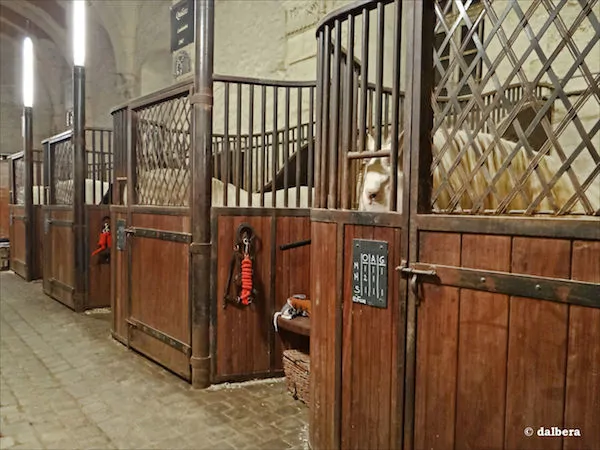 Traditionally, stables are divided into stalls ranging from 9 to 12 m². However, a study reveals that horses housed individually, with little or no contact with their neighbors or other animals, show significant signs of stress.
Thus, even if comfortable and safe, the stall appears unsuitable for a social animal like the horse
, according to Kelly Yarnell of Nottingham Trent University. Isolation does indeed trigger a stress response and can potentially have negative consequences for equine health and well-being.
Providing multiple openings or shared areas, for example, can help alleviate this issue. But only group housing provides horses with an environment where they can exhibit natural behavior, as contact with other horses ensures their overall well-being.
The researchers compared the behavioral and physiological responses of sixteen horses housed in four different types of enclosures associated with varying levels of social contact. They measured fecal glucocorticoid levels in all four groups. In addition, thermal images of the eye were taken, along with its temperature, which provides a non-invasive measure of stress.
Traditionally, stables are divided into stalls ranging from 9 to 12 m². However, a study reveals that horses housed individually, with little or no contact with their neighbors or other animals, show significant signs of stress.
Thus, even if comfortable and safe, the stall appears unsuitable for a social animal like the horse
, according to Kelly Yarnell of Nottingham Trent University. Isolation does indeed trigger a stress response and can potentially have negative consequences for equine health and well-being.
Providing multiple openings or shared areas, for example, can help alleviate this issue. But only group housing provides horses with an environment where they can exhibit natural behavior, as contact with other horses ensures their overall well-being.
The researchers compared the behavioral and physiological responses of sixteen horses housed in four different types of enclosures associated with varying levels of social contact. They measured fecal glucocorticoid levels in all four groups. In addition, thermal images of the eye were taken, along with its temperature, which provides a non-invasive measure of stress.
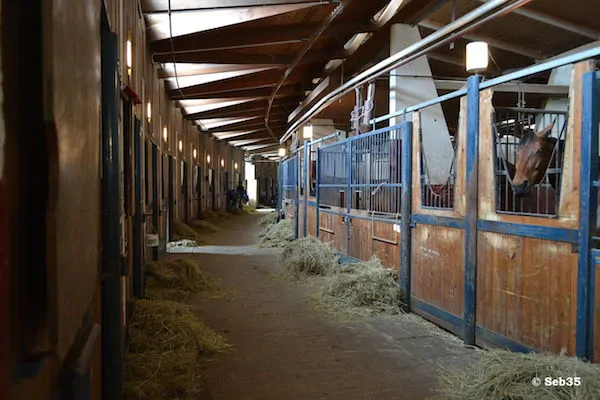 They found that animals isolated and deprived of physical contact became highly stressed and more difficult to handle than their counterparts housed in settings that allowed for social interactions. Fecal glucocorticoid levels were lower and eye temperature was significantly lower in horses housed in groups compared to all other groups.
The design of “social” housing thus has a significant impact on improving horse welfare. And these findings could also have implications for how housing is designed for captive wild equines, such as onagers or zebras, in zoos.
* Kelly Yarnell et al. Domesticated horses differ in their behavioral and physiological responses to isolated and group housing. Physiology & Behavior, vol. 143, 2015, pp. 51–57.
They found that animals isolated and deprived of physical contact became highly stressed and more difficult to handle than their counterparts housed in settings that allowed for social interactions. Fecal glucocorticoid levels were lower and eye temperature was significantly lower in horses housed in groups compared to all other groups.
The design of “social” housing thus has a significant impact on improving horse welfare. And these findings could also have implications for how housing is designed for captive wild equines, such as onagers or zebras, in zoos.
* Kelly Yarnell et al. Domesticated horses differ in their behavioral and physiological responses to isolated and group housing. Physiology & Behavior, vol. 143, 2015, pp. 51–57.
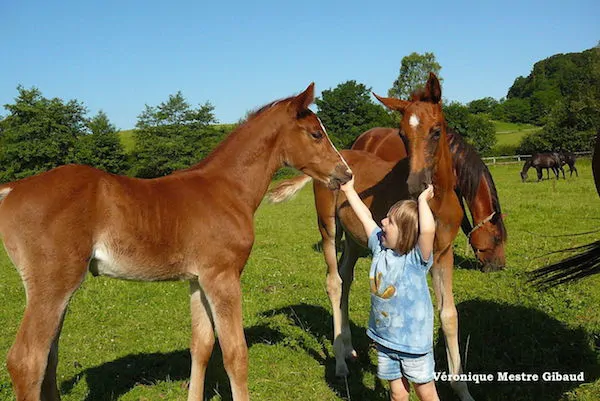 Caring for horses and horse riding help reduce stress in adolescents, according to a study published in the American Psychological Association’s Human-Animal Interaction Bulletin
.
Researchers tested the saliva of 130 adolescents participating in a 12-week horse riding program. Each participant provided six saliva samples over a two-day period, before and after the program. They then analyzed cortisol levels in the samples.
The results showed significantly lower levels of stress hormones in the young people who spent several days with horses compared to those in the control group.
For the researchers, this is a first step toward preventing psychopathological disorders in adolescents through
therapy based on equestrian sports. Previous studies have already shown that interactions with dogs, cats, and horses are beneficial for children, as they improve their self-esteem
, among other things
. However, the idea of combating stress in adolescents through horse care and horse riding had not been explored until now.
Caring for horses and horse riding help reduce stress in adolescents, according to a study published in the American Psychological Association’s Human-Animal Interaction Bulletin
.
Researchers tested the saliva of 130 adolescents participating in a 12-week horse riding program. Each participant provided six saliva samples over a two-day period, before and after the program. They then analyzed cortisol levels in the samples.
The results showed significantly lower levels of stress hormones in the young people who spent several days with horses compared to those in the control group.
For the researchers, this is a first step toward preventing psychopathological disorders in adolescents through
therapy based on equestrian sports. Previous studies have already shown that interactions with dogs, cats, and horses are beneficial for children, as they improve their self-esteem
, among other things
. However, the idea of combating stress in adolescents through horse care and horse riding had not been explored until now.
Reducing Human Stress Through Horses
Read next
Animal Welfare
10/06/2026
Bites haven't be an unavoidable part of veterinary work
Animal Welfare
10/05/2026
US animal welfare policy: new federal measures focus on dogs and research while farm animals remain largely outside the framework
Animal Welfare
10/08/2025
Commentaires
No comments yet.
Sign in to comment