

Back to articles
Animal Welfare: From European Cows to Swedish Pigs
B
bertrand-neveux
01/31/2015
3 min read
0 comments
Share:
Never before has animal welfare been so much in the spotlight
, both
in national debates and in international discussions—with varying degrees of success and, above all, with underlying motives that are sometimes diametrically opposed. Two specific examples this week:
Cow Welfare: EFSA Extends Public Consultation
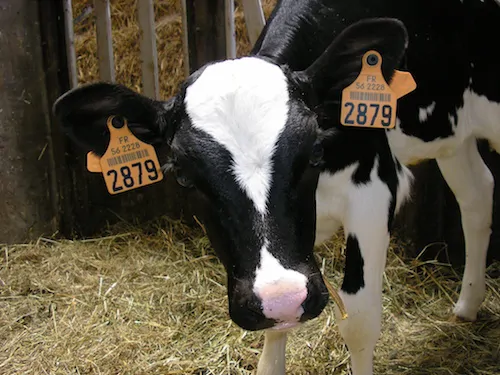 The European Food Safety Authority (EFSA) has extended the deadline for the public consultation aimed at reviewing the available data on the welfare of dairy cows on small farms
. Stakeholders and other interested parties now have until February 13 to submit their comments.
EFSA’s assessment includes an inventory of the number of dairy cows in the European Union and variations in farm size across countries, as well as a definition and categorization of these small-scale farms. This data collection will form part of a scientific opinion on the welfare of dairy cows on small-scale farms, which will be published this year.
Pig Welfare: A So-Called Protection Program in Sweden
The Swedish Pig Association’s proposal to implement its “animal welfare program” has been criticized by scientists, who suspect that, under this misleading term, the association aims to circumvent animal protection laws for financial gain.
While animal welfare laws are supposed to apply to everyone, in practice certain industrial operations manage to evade them, such as turkey and chicken farms. Admittedly, Swedish authorities have adopted a monitoring program in collaboration with producers who, by making a few voluntary commitments that go beyond the law, are able to avoid certain provisions they do not wish to comply with.
The European Food Safety Authority (EFSA) has extended the deadline for the public consultation aimed at reviewing the available data on the welfare of dairy cows on small farms
. Stakeholders and other interested parties now have until February 13 to submit their comments.
EFSA’s assessment includes an inventory of the number of dairy cows in the European Union and variations in farm size across countries, as well as a definition and categorization of these small-scale farms. This data collection will form part of a scientific opinion on the welfare of dairy cows on small-scale farms, which will be published this year.
Pig Welfare: A So-Called Protection Program in Sweden
The Swedish Pig Association’s proposal to implement its “animal welfare program” has been criticized by scientists, who suspect that, under this misleading term, the association aims to circumvent animal protection laws for financial gain.
While animal welfare laws are supposed to apply to everyone, in practice certain industrial operations manage to evade them, such as turkey and chicken farms. Admittedly, Swedish authorities have adopted a monitoring program in collaboration with producers who, by making a few voluntary commitments that go beyond the law, are able to avoid certain provisions they do not wish to comply with.
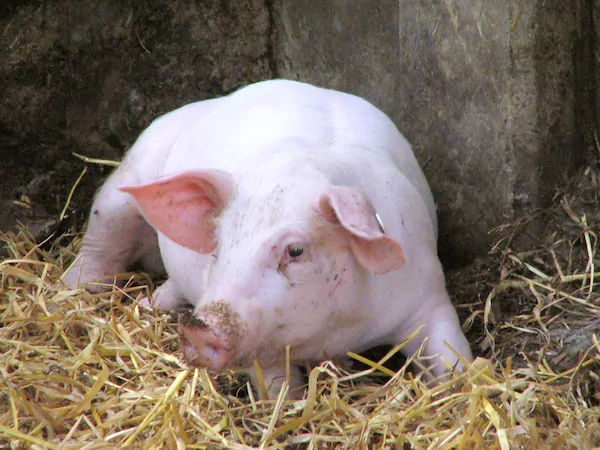 Now, they want to include pig farming in this program
. In its “animal welfare program,” five exceptions to the law are proposed: increasing the density of animals
per unit area; keeping sows in individual stalls
during and after parturition, during estrus, and during the breeding season; weaning piglets earlier
; and keeping more pigs
at each stage of development. The Ministry of Agriculture has not yet taken a position on this proposal, but has invested approximately one million dollars in field trials.
The study selected twelve farms. The results indicate behavioral disorders in both the piglets—weaned as early as three weeks of age—and the sows, which exhibited symptoms of stress. Older pigs develop tail-biting behavior. One of the study’s conclusions is that the number of pigs slaughtered and farm profitability increase in tandem with the proposed reductions in animal welfare... New results are expected in March.
Now, they want to include pig farming in this program
. In its “animal welfare program,” five exceptions to the law are proposed: increasing the density of animals
per unit area; keeping sows in individual stalls
during and after parturition, during estrus, and during the breeding season; weaning piglets earlier
; and keeping more pigs
at each stage of development. The Ministry of Agriculture has not yet taken a position on this proposal, but has invested approximately one million dollars in field trials.
The study selected twelve farms. The results indicate behavioral disorders in both the piglets—weaned as early as three weeks of age—and the sows, which exhibited symptoms of stress. Older pigs develop tail-biting behavior. One of the study’s conclusions is that the number of pigs slaughtered and farm profitability increase in tandem with the proposed reductions in animal welfare... New results are expected in March.
Read next
Animal Welfare
10/06/2026
Bites haven't be an unavoidable part of veterinary work
Animal Welfare
10/05/2026
US animal welfare policy: new federal measures focus on dogs and research while farm animals remain largely outside the framework
Animal Welfare
10/08/2025
Commentaires
No comments yet.
Sign in to comment