

Back to articles
Animal Transport: Strasbourg Seeks to Strengthen and Update Animal Welfare Requirements
V
Vetitude
02/18/2019
4 min read
0 comments
Share:
The European Parliament adopted, by a large majority, the report on the implementation of the regulation on animal protection during transport, both within and outside the European Union. In particular, the text calls for a ban on exports of live animals to countries that do not comply with European animal welfare standards, for a reduction in travel times, for stricter penalties for violations, and for the development of alternative strategies.
 The report, adopted by the European Parliament on February 14, assesses the degree of implementation of the regulation governing the protection and animal welfare during transport (EC No. 1/2005). It sets out several findings, recommendations, and conclusions aimed at improving its enforcement, which remains inadequate and varies significantly from one Member State to another. “Stricter and more harmonized enforcement, coupled with effective and deterrent penalties, is essential to improving animal welfare during animal transport,” the rapporteur emphasizes.
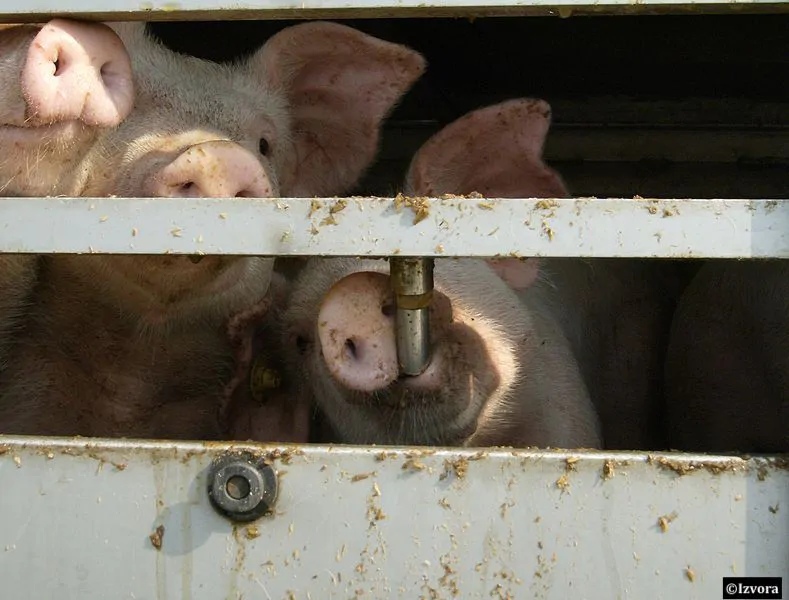
Over the past ten years, more than 200 reports have exposed the appalling conditions of animal transport, and more than one million European citizens have twice called on the European institutions to “stop the trucks” (Eurogroup for Animals’ #stopthetrucks campaign). Yet every year, millions of animals continue to be transported over long distances between Member States and to third countries for breeding or slaughter. These journeys last several days, or even several weeks, most often without food, water, or veterinary care, in violation of European values and current regulations.
The report therefore calls for concrete actions to effectively improve the animal welfare of transported animals. Members of the European Parliament want the European Union to put an end to these outdated practices and adopt a new system for marketing products of animal origin that better respects the fundamental needs of animals. The Commission is asked to develop strategies to gradually replace animal transport with the trade in meat and carcasses, as well as embryos and semen. This involves developing a regional model for animal production that is more ethically sound, in which animals are slaughtered as close as possible to where they were raised and fattened, as well as through the construction of economically viable local slaughterhouses and even the development of on-farm slaughter.
Echoing the recommendations on animal welfare in the EU issued by the European Court of Auditors in 2018, the report calls for the initiation of infringement proceedings against Member States to prevent acts of cruelty toward animals and to increase compliance with the rules across the Union. It highlights that the number of inspections conducted ranges from zero to several million per year depending on the country… and that the rate of detected violations ranges from 0 to 16.6 percent. “Repeated violations should result in prosecution, penalties including the confiscation of vehicles, and mandatory training for those responsible for animal welfare and animal transport.” Most of these violations concern the fitness of animals for transport at the time of loading. To address this, the Commission is asked to establish a comprehensive definition of “fitness for transport” and to provide robust training for livestock producers, drivers, and veterinarians.
In the same vein, the European Parliament regrets that “the Commission has unfortunately not updated the rules on animal transport based on the most recent scientific data,” particularly regarding ventilation and cooling in vehicles, appropriate watering for unweaned animals, species-specific headroom, etc. Specifically, the report recommends that unweaned animals be unloaded for at least one hour so they can be fed electrolytes or milk replacers, and that they not be transported for more than eight hours in total.
The report goes even further regarding the export of live animals to third countries. It concludes that these cross-border journeys, which result in “extremely long and stressful waiting periods at borders,” are appalling and should be banned when the EU’s animal welfare standards are not met in the animals’ destination countries.
The ball is now in the European Commission’s court, which must begin to steer the shift toward trading only in meat and carcasses. Furthermore, during the upcoming reform of the Common Agricultural Policy, it is suggested that the Commission “preserve and strengthen the link between CAP payments and improved animal welfare conditions that fully comply with or exceed the standards set out in Regulation No. 1/2005.”
The report, adopted by the European Parliament on February 14, assesses the degree of implementation of the regulation governing the protection and animal welfare during transport (EC No. 1/2005). It sets out several findings, recommendations, and conclusions aimed at improving its enforcement, which remains inadequate and varies significantly from one Member State to another. “Stricter and more harmonized enforcement, coupled with effective and deterrent penalties, is essential to improving animal welfare during animal transport,” the rapporteur emphasizes.
Over the past ten years, more than 200 reports have exposed the appalling conditions of animal transport, and more than one million European citizens have twice called on the European institutions to “stop the trucks” (Eurogroup for Animals’ #stopthetrucks campaign). Yet every year, millions of animals continue to be transported over long distances between Member States and to third countries for breeding or slaughter. These journeys last several days, or even several weeks, most often without food, water, or veterinary care, in violation of European values and current regulations.
The report therefore calls for concrete actions to effectively improve the animal welfare of transported animals. Members of the European Parliament want the European Union to put an end to these outdated practices and adopt a new system for marketing products of animal origin that better respects the fundamental needs of animals. The Commission is asked to develop strategies to gradually replace animal transport with the trade in meat and carcasses, as well as embryos and semen. This involves developing a regional model for animal production that is more ethically sound, in which animals are slaughtered as close as possible to where they were raised and fattened, as well as through the construction of economically viable local slaughterhouses and even the development of on-farm slaughter.
Echoing the recommendations on animal welfare in the EU issued by the European Court of Auditors in 2018, the report calls for the initiation of infringement proceedings against Member States to prevent acts of cruelty toward animals and to increase compliance with the rules across the Union. It highlights that the number of inspections conducted ranges from zero to several million per year depending on the country… and that the rate of detected violations ranges from 0 to 16.6 percent. “Repeated violations should result in prosecution, penalties including the confiscation of vehicles, and mandatory training for those responsible for animal welfare and animal transport.” Most of these violations concern the fitness of animals for transport at the time of loading. To address this, the Commission is asked to establish a comprehensive definition of “fitness for transport” and to provide robust training for livestock producers, drivers, and veterinarians.
In the same vein, the European Parliament regrets that “the Commission has unfortunately not updated the rules on animal transport based on the most recent scientific data,” particularly regarding ventilation and cooling in vehicles, appropriate watering for unweaned animals, species-specific headroom, etc. Specifically, the report recommends that unweaned animals be unloaded for at least one hour so they can be fed electrolytes or milk replacers, and that they not be transported for more than eight hours in total.
The report goes even further regarding the export of live animals to third countries. It concludes that these cross-border journeys, which result in “extremely long and stressful waiting periods at borders,” are appalling and should be banned when the EU’s animal welfare standards are not met in the animals’ destination countries.
The ball is now in the European Commission’s court, which must begin to steer the shift toward trading only in meat and carcasses. Furthermore, during the upcoming reform of the Common Agricultural Policy, it is suggested that the Commission “preserve and strengthen the link between CAP payments and improved animal welfare conditions that fully comply with or exceed the standards set out in Regulation No. 1/2005.”
Read next
Animal Welfare
10/06/2026
Bites haven't be an unavoidable part of veterinary work
Animal Welfare
10/05/2026
US animal welfare policy: new federal measures focus on dogs and research while farm animals remain largely outside the framework
Animal Welfare
10/08/2025
Commentaires
No comments yet.
Sign in to comment