

Back to articles
Animal Welfare
Animal Exports
Animal health
Animal protection
Animal Transport
Animal welfare
Bernard Van Goethem
Nodular dermatosis
Slaughterhouse
Veterinarian
Veterinary services
Animal Transport: Brussels Calls for Greater Oversight of Animal Welfare
V
Vetitude
07/06/2016
4 min read
0 comments
Share:
In a letter* dated June 30, the European Commission draws the attention of veterinarians and exporters to the conditions that must be met for animal transport to third countries. This reminder follows,
in particular,
animal welfare violations observed during animal exports to Turkey. Brussels, through its Director of Health and Health Security Bernard Van Goethem, suggests implementing several key measures and controls to reduce the risks faced by transported animals.
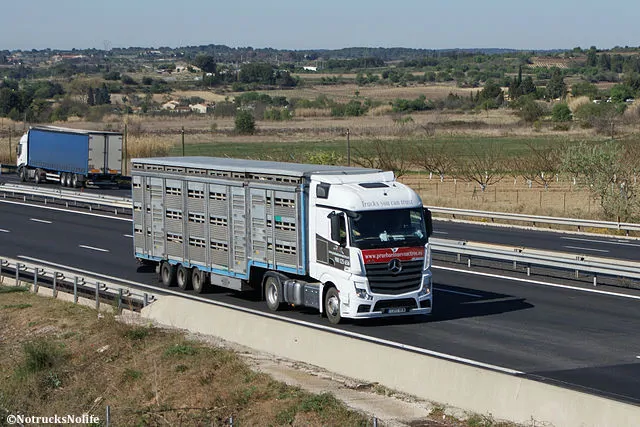 Among its suggestions, the Commission asks the veterinary services of all Member States to implement measures and ensure oversight of the conditions under which live animals are exported outside the territory of the Union. They are also asked to help inform other stakeholders involved in animal transport, particularly traffic police and travel organizers.
The Commission is regularly made aware of incidents that endanger the animal welfare and health of animals at the border between Turkey and Bulgaria. These animals are transported under conditions that do not comply with regulatory requirements regarding animal protection during transport. Such violations are on the rise, especially in the summer, and the situation has become even more complex this year due to the spread of contagious lumpy skin disease in Bulgaria. Consequently, a number of key points must be taken into account when organizing and authorizing journeys to a destination outside the European Union, particularly those crossing the Turkish-Bulgarian border.
First and foremost, the Commission reiterates that organizers of long-distance journeys must ensure, throughout the entire journey—from the point of departure to the final destination—that the animal welfare is not compromised by insufficient coordination of the various stages or by a failure to take weather conditions into account. They are also required to ensure a supply of water, food, and bedding for the duration of transport, to take into account the working hours of border health inspection services in order to avoid unnecessary delays, and to provide the competent authority with a completed and signed copy of Section 1 of the waybill at least two business days before departure.
For its part, the competent authority at the point of departure is responsible for conducting several inspections and verifying that the waybill submitted by the organizer complies with the regulations and, above all, is realistic. In particular, the presence of an air-conditioning system inside vehicles traveling in temperatures exceeding 30 °C does not guarantee that it will be able to lower the temperature and maintain it at an acceptable level. In the event of extreme heat, some Member States recommend increasing the space allocated to animals by 30 percent—an example the Commission considers worth following.
The competent authority must also verify that emergency plans are appropriate for the type of journey planned and that, when loading animals destined to leave the territory of the Union, the supply of water, feed, and bedding is adequate. As part of the renewal of authorizations for vehicles used in long-distance animal transport, reviewing the records from recent years also makes it possible to verify that water distribution equipment is suitable for the animal species being transported.
Ultimately, the Commission recommends that all competent authorities, when faced with non-compliance, take emergency measures or ensure that the person responsible for the animals takes such measures to guarantee animal welfare. These measures include, among other things, unloading the animals and housing them in suitable facilities, returning them to the point of departure, or even sending them to the nearest slaughterhouse or undergoing euthanasia, as appropriate. The measures taken, which must be proportionate to the severity of the identified risks, must not cause unnecessary or additional suffering to the animals.
* http://www.franceagrimer.fr/content/download/46295/442336/file/KUE_201606_note_export_animaux_vivants_pays_tiers%20en.pdf
Among its suggestions, the Commission asks the veterinary services of all Member States to implement measures and ensure oversight of the conditions under which live animals are exported outside the territory of the Union. They are also asked to help inform other stakeholders involved in animal transport, particularly traffic police and travel organizers.
The Commission is regularly made aware of incidents that endanger the animal welfare and health of animals at the border between Turkey and Bulgaria. These animals are transported under conditions that do not comply with regulatory requirements regarding animal protection during transport. Such violations are on the rise, especially in the summer, and the situation has become even more complex this year due to the spread of contagious lumpy skin disease in Bulgaria. Consequently, a number of key points must be taken into account when organizing and authorizing journeys to a destination outside the European Union, particularly those crossing the Turkish-Bulgarian border.
First and foremost, the Commission reiterates that organizers of long-distance journeys must ensure, throughout the entire journey—from the point of departure to the final destination—that the animal welfare is not compromised by insufficient coordination of the various stages or by a failure to take weather conditions into account. They are also required to ensure a supply of water, food, and bedding for the duration of transport, to take into account the working hours of border health inspection services in order to avoid unnecessary delays, and to provide the competent authority with a completed and signed copy of Section 1 of the waybill at least two business days before departure.
For its part, the competent authority at the point of departure is responsible for conducting several inspections and verifying that the waybill submitted by the organizer complies with the regulations and, above all, is realistic. In particular, the presence of an air-conditioning system inside vehicles traveling in temperatures exceeding 30 °C does not guarantee that it will be able to lower the temperature and maintain it at an acceptable level. In the event of extreme heat, some Member States recommend increasing the space allocated to animals by 30 percent—an example the Commission considers worth following.
The competent authority must also verify that emergency plans are appropriate for the type of journey planned and that, when loading animals destined to leave the territory of the Union, the supply of water, feed, and bedding is adequate. As part of the renewal of authorizations for vehicles used in long-distance animal transport, reviewing the records from recent years also makes it possible to verify that water distribution equipment is suitable for the animal species being transported.
Ultimately, the Commission recommends that all competent authorities, when faced with non-compliance, take emergency measures or ensure that the person responsible for the animals takes such measures to guarantee animal welfare. These measures include, among other things, unloading the animals and housing them in suitable facilities, returning them to the point of departure, or even sending them to the nearest slaughterhouse or undergoing euthanasia, as appropriate. The measures taken, which must be proportionate to the severity of the identified risks, must not cause unnecessary or additional suffering to the animals.
* http://www.franceagrimer.fr/content/download/46295/442336/file/KUE_201606_note_export_animaux_vivants_pays_tiers%20en.pdf
Read next
Animal Welfare
10/06/2026
Bites haven't be an unavoidable part of veterinary work
Animal Welfare
10/05/2026
US animal welfare policy: new federal measures focus on dogs and research while farm animals remain largely outside the framework
Animal Welfare
10/08/2025
Commentaires
No comments yet.
Sign in to comment