

Back to articles
Animal Welfare
Animal health
Animal welfare
Crocodiles
Farmed fish
Meat
Pig Farming
Reptile
Skin
Slaughter
Veterinarian
Veterinary assistant
Veterinary Program
Veterinary services
WOAH
World Organisation for Animal Health
180 countries adopt the first strategy aimed at advancing animal welfare worldwide
V
Vetitude
05/30/2017
4 min read
0 comments
Share:
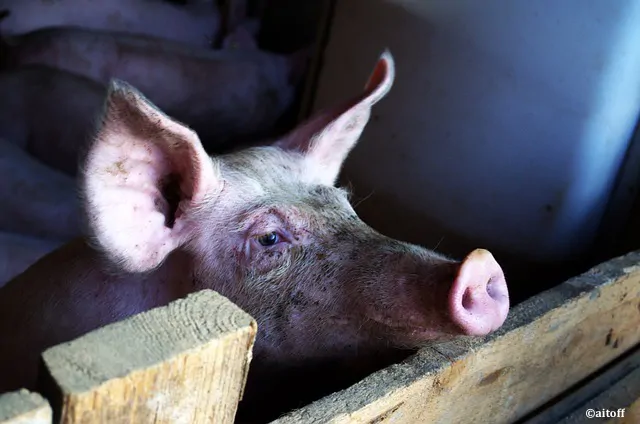
The member countries of the World Organisation for Animal Health have formally adopted a coordinated strategy for animal welfare*, during the 85th General Session of the WOAH in Paris. This set of scientifically based standards and recommendations, which was partially approved in December 2016, aims to provide a shared impetus and foster a better world “where animal welfare is respected, promoted, and strengthened, alongside continuous improvements in animal health, human well-being, socioeconomic development, and environmental sustainability.” Within this ambitious framework, new standards are currently being developed for pig farming, as well as for the slaughter of reptiles raised for their skin or meat.
 The adopted global strategy aims to sustainably improve animal welfare for farmed terrestrial animals and fish by recognizing their status as sentient beings.
It is based solely on the global standards and guidelines in this area, which were recently approved at the 4th WOAH Conference on animal welfare in Mexico. This strategy is also based on feedback and the results of implementing these recommendations at the national level. Whether animals are kept, used, transported, sold, etc., the primary objective is to continually strive to preserve animal health, which is a prerequisite for animal welfare.
The WOAH’s first intergovernmental standards on animal welfare date back to 2005. They have been regularly updated since then, in line with evolving scientific knowledge on the subject, just as standards related to animal health and food safety have been. While these are not sanitary measures in the strict sense, they nevertheless play an important role in the context of international trade. All WOAH member countries are committed to implementing them at the national level, regardless of their cultural and economic circumstances.
A strategy built on four pillars > Development of global standards on animal welfare:
based on relevant scientific research and field experience, and taking into account associated ethical considerations
, these standards are designed to ensure a satisfactory level of animal welfare and are mutually recognized in all regions of the world. Currently, new standards are being developed for pig farming systems, as well as for the killing and slaughter of snakes, monitor lizards, alligators, and other crocodilians raised for their skin and meat.
> Capacity Building and Training:
Guidance and tools are provided to countries to strengthen the capacity of their veterinary services—key actors in animal welfare—to enhance their ability to implement the adopted standards. At the same time, training programs are conducted for all those who care for animals. Ideally, animal welfare principles are integrated into the curricula for veterinarians, veterinary paraprofessionals, and veterinary students at agricultural educational institutions—and even as early as elementary school
.
> Communication
: Governments, national and international organizations, veterinary services, educational institutions, and the general public are made aware of animal welfare issues. Communication programs are developed to provide governments, veterinarians, agri-food industry representatives, livestock producers, and others with accurate and up-to-date information on the subject.
> Implementation of Standards and Related Policies: Member countries are encouraged to incorporate animal welfare standards into their national legislation.
A Five-Point Implementation Plan
In practice, the approved strategy calls for:
The adopted global strategy aims to sustainably improve animal welfare for farmed terrestrial animals and fish by recognizing their status as sentient beings.
It is based solely on the global standards and guidelines in this area, which were recently approved at the 4th WOAH Conference on animal welfare in Mexico. This strategy is also based on feedback and the results of implementing these recommendations at the national level. Whether animals are kept, used, transported, sold, etc., the primary objective is to continually strive to preserve animal health, which is a prerequisite for animal welfare.
The WOAH’s first intergovernmental standards on animal welfare date back to 2005. They have been regularly updated since then, in line with evolving scientific knowledge on the subject, just as standards related to animal health and food safety have been. While these are not sanitary measures in the strict sense, they nevertheless play an important role in the context of international trade. All WOAH member countries are committed to implementing them at the national level, regardless of their cultural and economic circumstances.
A strategy built on four pillars > Development of global standards on animal welfare:
based on relevant scientific research and field experience, and taking into account associated ethical considerations
, these standards are designed to ensure a satisfactory level of animal welfare and are mutually recognized in all regions of the world. Currently, new standards are being developed for pig farming systems, as well as for the killing and slaughter of snakes, monitor lizards, alligators, and other crocodilians raised for their skin and meat.
> Capacity Building and Training:
Guidance and tools are provided to countries to strengthen the capacity of their veterinary services—key actors in animal welfare—to enhance their ability to implement the adopted standards. At the same time, training programs are conducted for all those who care for animals. Ideally, animal welfare principles are integrated into the curricula for veterinarians, veterinary paraprofessionals, and veterinary students at agricultural educational institutions—and even as early as elementary school
.
> Communication
: Governments, national and international organizations, veterinary services, educational institutions, and the general public are made aware of animal welfare issues. Communication programs are developed to provide governments, veterinarians, agri-food industry representatives, livestock producers, and others with accurate and up-to-date information on the subject.
> Implementation of Standards and Related Policies: Member countries are encouraged to incorporate animal welfare standards into their national legislation.
A Five-Point Implementation Plan
In practice, the approved strategy calls for:
- the creation of a new international forum designed as a platform for discussion among technical experts and stakeholders involved in the development and revision of animal welfare standards;
- the development and application of new, science-based standards;
- encouraging and supporting actions designed to facilitate the implementation of the global strategy within the context of each specific region;
- the strengthening of national veterinary services through capacity-building activities, in particular through the use of the PVS (Performance of Veterinary Services) process. Since 2007, more than 140 Member Countries have implemented this support program, which aims to sustainably improve their veterinary services in accordance with WOAH international standards. During the approximately 350 evaluation, analysis, and monitoring missions conducted in the field, PVS experts have, in particular, helped Veterinary Services assess their capacities, identify their strengths, weaknesses, and areas for improvement, and have worked with national authorities to develop solutions.
- opening new horizons and strengthening the links between the science of animal welfare and other scientific disciplines (social, environmental, and economic sciences, etc.) through participatory and collaborative activities in the fields of research, publications, conferences, etc.
Read next
Animal Welfare
10/06/2026
Bites haven't be an unavoidable part of veterinary work
Animal Welfare
10/05/2026
US animal welfare policy: new federal measures focus on dogs and research while farm animals remain largely outside the framework
Animal Welfare
10/08/2025
Commentaires
No comments yet.
Sign in to comment