

Back to articles
Fighting Antimicrobial Resistance with a Fungus and Horse Manure
B
bertrand-neveux
03/20/2015
3 min read
0 comments
Share:
European biologists have discovered a new protein with antibacterial properties in a common fungus that grows on horse manure. A new step in the fight against antimicrobial resistance? Laboratory tests show that this substance, called copsin, has the same effect on certain bacteria as traditional antimicrobials. Its unique structural properties make it a candidate for new antibiotics.
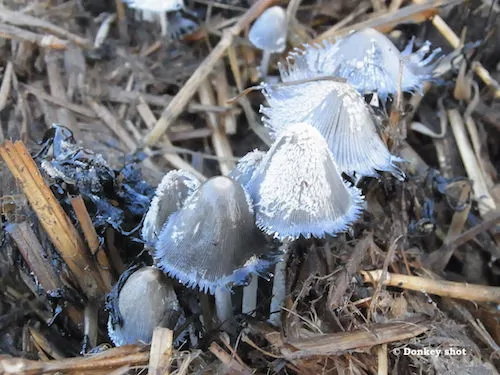 Copsin, the new bactericidal agent, was discovered in the fungus Coprinopsis cinerea,
a coprophilic species that grows on horse manure. A team of microbiologists and molecular biologists led by Markus Aebi, a professor of mycology at the Swiss Federal Institute of Technology in Zurich (ETH Zurich), is behind this discovery. The researchers hope this discovery will provide a solution to the problem of antimicrobial resistance in bacteria by leading to the development of a new class of antibiotics capable of replacing those that are losing their ability to fight infections
.
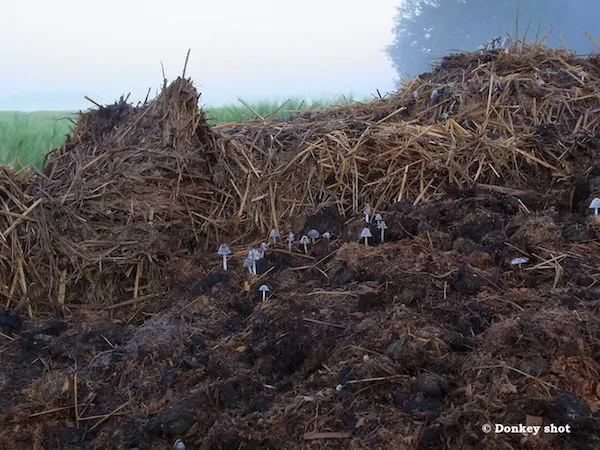
They sought to understand how the fungus and the various bacteria present in horse manure interact, with one inhibiting the growth of the others. The answer lies in horse manure, a rich substrate that harbors a wide variety of microorganisms—including fungi and bacteria—that are constantly competing for nutrients and living space. It is therefore highly likely that powerful antibiotics exist in such an environment, which are used by the various organisms to inhibit the growth of their competitors.
The ETH Zurich team therefore cultured the fungus in the laboratory alongside several types of Gram-positive bacteria and found that C. cinerea killed several of them, including human pathogens such as Enterococcus faecium and Listeria monocytogenes.
Further analyses demonstrated that the protein copsin produced by the fungus was responsible for this antibiotic effect and that it was active against resistant bacteria.
Copsin, the new bactericidal agent, was discovered in the fungus Coprinopsis cinerea,
a coprophilic species that grows on horse manure. A team of microbiologists and molecular biologists led by Markus Aebi, a professor of mycology at the Swiss Federal Institute of Technology in Zurich (ETH Zurich), is behind this discovery. The researchers hope this discovery will provide a solution to the problem of antimicrobial resistance in bacteria by leading to the development of a new class of antibiotics capable of replacing those that are losing their ability to fight infections
.
They sought to understand how the fungus and the various bacteria present in horse manure interact, with one inhibiting the growth of the others. The answer lies in horse manure, a rich substrate that harbors a wide variety of microorganisms—including fungi and bacteria—that are constantly competing for nutrients and living space. It is therefore highly likely that powerful antibiotics exist in such an environment, which are used by the various organisms to inhibit the growth of their competitors.
The ETH Zurich team therefore cultured the fungus in the laboratory alongside several types of Gram-positive bacteria and found that C. cinerea killed several of them, including human pathogens such as Enterococcus faecium and Listeria monocytogenes.
Further analyses demonstrated that the protein copsin produced by the fungus was responsible for this antibiotic effect and that it was active against resistant bacteria.
 Copsin belongs to the group of defensins, a class of small proteins produced by many organisms to combat pathogenic microorganisms. The human body, for example, produces them in the mucous membranes or skin to protect itself from infections.
Beyond its potential use as an antibiotic in medicine, the exceptional stability of this protein opens the door to applications, particularly in the food industry and food preservation. In fact, it remains active even when heated to 100 °C, placed in acid for hours, or exposed to aggressive enzymes.
According to the researchers, copsin owes these biochemical properties to its extremely compact three-dimensional structure, revealed by NMR spectroscopy.
The question remains as to how fungi have used defensins and other naturally occurring antibiotic substances for millions of years to protect themselves against bacteria, whereas those used in human medicine have developed antimicrobial resistance after only 70 years...
For more information: Andreas Essig et al. “Copsin, a novel peptide-based fungal antibiotic interfering with peptidoglycan synthesis.” Journal of Biological Chemistry, 2014, doi: 10.1074/jbc.M114.599878.
Copsin belongs to the group of defensins, a class of small proteins produced by many organisms to combat pathogenic microorganisms. The human body, for example, produces them in the mucous membranes or skin to protect itself from infections.
Beyond its potential use as an antibiotic in medicine, the exceptional stability of this protein opens the door to applications, particularly in the food industry and food preservation. In fact, it remains active even when heated to 100 °C, placed in acid for hours, or exposed to aggressive enzymes.
According to the researchers, copsin owes these biochemical properties to its extremely compact three-dimensional structure, revealed by NMR spectroscopy.
The question remains as to how fungi have used defensins and other naturally occurring antibiotic substances for millions of years to protect themselves against bacteria, whereas those used in human medicine have developed antimicrobial resistance after only 70 years...
For more information: Andreas Essig et al. “Copsin, a novel peptide-based fungal antibiotic interfering with peptidoglycan synthesis.” Journal of Biological Chemistry, 2014, doi: 10.1074/jbc.M114.599878.
Read next
Antimicrobial resistance
10/08/2026
Zoonotic bacterial pathogens: antimicrobial resistance turns repeated animal exposure into a One Health threat
Antimicrobial resistance
10/06/2026
A study has ranked the antimicrobial-resistant organisms considered most important at the human–companion animal interface
Antimicrobial resistance
09/27/2026
Commentaires
No comments yet.
Sign in to comment