

Back to articles
Research & Diagnostics
Assistance dog
Cognitive Tests
Disability
Disease Screening
Dog
Dog Training
First Aid
Guide dog
Guide dog for the blind
Rescue dog
Sniffer dog
Working dog
Working Dogs: A New Predictive Aptitude Test to Improve Selection
V
Vetitude
12/22/2018
4 min read
0 comments
Share:
A recent study conducted at the University of Arizona (United States) shows that canine cognition tests can be used to select the highest-performing dogs, given the high demand for these service and working dogs. Thus, the predictive identification of the abilities of future assistance and detection dogs could make their training less costly and faster, given that about half of the dogs currently in training are eliminated from the final selection process.
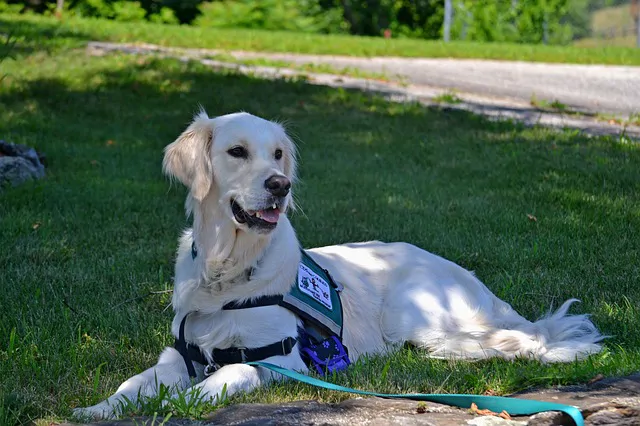 The scope of work for working dogs is vast and diverse. Assistance dogs are trained to work with people with disabilities who use wheelchairs or have visual or hearing impairments. Detection dogs are trained to detect explosives, weapons, narcotics, bed bugs, and even to perform screening for diseases such as cancer. Others are even trained to jump out of helicopters during field rescue missions.
Despite the diversity of missions assigned to dogs, these tasks can be difficult for many of them to perform, as not all dogs are created equal. Even among those specifically bred to become assistance dogs, for example, only half will successfully complete the training program, while the others will remain well-trained pets.
As a result, the waiting list for a certified assistance dog can be as long as two years.
Evan MacLean, director of the Center for Canine Cognition at the University of Arizona and lead author of a new study published in *Frontiers in Veterinary Science*
, has been studying ways to identify the best dogs for different jobs, before beginning the long and costly training process, by testing their cognitive abilities early on.
The goal is to predict their suitability for a given job, beyond simply considering each dog’s physical and behavioral characteristics. Canine cognitive functions have, in fact, received far less attention than reactivity or temperament. Yet these dogs must be capable of tackling real cognitive challenges, both during their training and later in their work environment. Thus, their training requires the ability to process and memorize all kinds of information, to perceive and categorize visible or concealed objects, so that they can carry out their missions and solve any problems they encounter, while adapting to new situations or difficulties.
The scope of work for working dogs is vast and diverse. Assistance dogs are trained to work with people with disabilities who use wheelchairs or have visual or hearing impairments. Detection dogs are trained to detect explosives, weapons, narcotics, bed bugs, and even to perform screening for diseases such as cancer. Others are even trained to jump out of helicopters during field rescue missions.
Despite the diversity of missions assigned to dogs, these tasks can be difficult for many of them to perform, as not all dogs are created equal. Even among those specifically bred to become assistance dogs, for example, only half will successfully complete the training program, while the others will remain well-trained pets.
As a result, the waiting list for a certified assistance dog can be as long as two years.
Evan MacLean, director of the Center for Canine Cognition at the University of Arizona and lead author of a new study published in *Frontiers in Veterinary Science*
, has been studying ways to identify the best dogs for different jobs, before beginning the long and costly training process, by testing their cognitive abilities early on.
The goal is to predict their suitability for a given job, beyond simply considering each dog’s physical and behavioral characteristics. Canine cognitive functions have, in fact, received far less attention than reactivity or temperament. Yet these dogs must be capable of tackling real cognitive challenges, both during their training and later in their work environment. Thus, their training requires the ability to process and memorize all kinds of information, to perceive and categorize visible or concealed objects, so that they can carry out their missions and solve any problems they encounter, while adapting to new situations or difficulties.
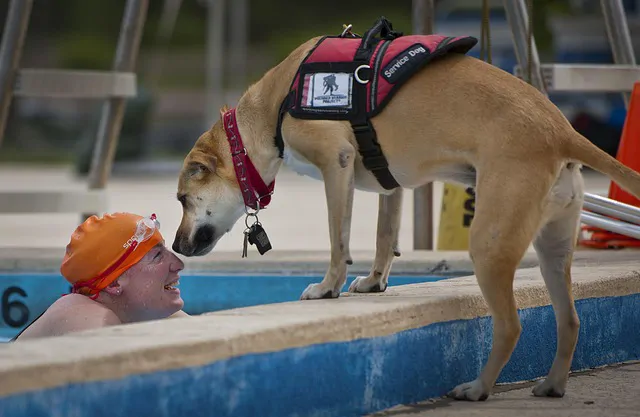 Given the need for objective measures of this cognitive flexibility, two types of working dogs were subjected to a battery of tests: assistance dogs (164) aged 18 months and assigned to people with disabilities, and explosive-detection dogs (222) working for the U.S. military. The performance of these two types of dogs was assessed using 25 different play-based cognitive tests. Correlations between individual test responses and measures of job performance were identified. Based on this, additional shorter tests were conducted, focusing on tasks specific to each type of training.
The results show that a set of distinct skills can predict whether an animal will make a good detection dog or a good assistance dog. In both the exploratory and prospective studies, successful assistance dogs
were more likely to make eye contact with a person
when faced with an unsolvable task, or when a shared activity was disrupted by an unexpected event. Among detection dogs
, the highest-performing dogs scored higher on measures of sensitivity to human body language
(such as pointing gestures) and on measures of short-term memory. In the group of dogs associated with the highest probability of success, predictions achieved an average accuracy of 86%.
The study’s findings suggest that cognition could be considered alongside physical and behavioral traits to predict a working dog’s performance. Such a prediction would make it possible to train only those dogs that are worth the effort… and the cost. According to the study’s author, this could result in potential savings estimated at tens of thousands of dollars in unnecessary training costs.
The team is now seeking to determine whether cognitive tests could be conducted even earlier—as early as 8 weeks of age—and whether the detected abilities, which differ from one dog to another, have a genetic basis that could be targeted in canine selection programs.
* Improved selection of assistance dogs and explosive detection dogs using cognitive measures, https://www.frontiersin.org/articles/10.3389/fvets.2018.00236/full
Given the need for objective measures of this cognitive flexibility, two types of working dogs were subjected to a battery of tests: assistance dogs (164) aged 18 months and assigned to people with disabilities, and explosive-detection dogs (222) working for the U.S. military. The performance of these two types of dogs was assessed using 25 different play-based cognitive tests. Correlations between individual test responses and measures of job performance were identified. Based on this, additional shorter tests were conducted, focusing on tasks specific to each type of training.
The results show that a set of distinct skills can predict whether an animal will make a good detection dog or a good assistance dog. In both the exploratory and prospective studies, successful assistance dogs
were more likely to make eye contact with a person
when faced with an unsolvable task, or when a shared activity was disrupted by an unexpected event. Among detection dogs
, the highest-performing dogs scored higher on measures of sensitivity to human body language
(such as pointing gestures) and on measures of short-term memory. In the group of dogs associated with the highest probability of success, predictions achieved an average accuracy of 86%.
The study’s findings suggest that cognition could be considered alongside physical and behavioral traits to predict a working dog’s performance. Such a prediction would make it possible to train only those dogs that are worth the effort… and the cost. According to the study’s author, this could result in potential savings estimated at tens of thousands of dollars in unnecessary training costs.
The team is now seeking to determine whether cognitive tests could be conducted even earlier—as early as 8 weeks of age—and whether the detected abilities, which differ from one dog to another, have a genetic basis that could be targeted in canine selection programs.
* Improved selection of assistance dogs and explosive detection dogs using cognitive measures, https://www.frontiersin.org/articles/10.3389/fvets.2018.00236/full
Read next
Research & Diagnostics
10/09/2026
WHO sets new diagnostic targets for Echinococcus granulosus in humans, dogs and sheep
Research & Diagnostics
10/09/2026
Nipah virus in wastewater: promising for early warning?
Research & Diagnostics
10/01/2026
Commentaires
No comments yet.
Sign in to comment