

Back to articles
Research & Diagnostics
Bird Conservation
League for the Protection of Birds
LPO
Migratory
Ortolans
Passerines
Poacher
Poaching
Wild birds
Wild species
Wild Birds: Brussels Again Calls on France to Protect Ortolans
V
Vetitude
06/24/2016
4 min read
0 comments
Share:
In a reasoned opinion issued on June 16, 2016, the European Commission initiated infringement proceedings against France, calling on the country to put an end to the poaching of the ortolan bunting (Emberiza hortulana) on its territory. This is the second warning, as France had already received a formal notice on January 24, 2013, to stop the illegal capture of these passerines in the Landes region. French authorities have up to two months to comply with the EU directive on wild birds*. After this period, the Commission will initiate legal proceedings before the European Court of Justice.
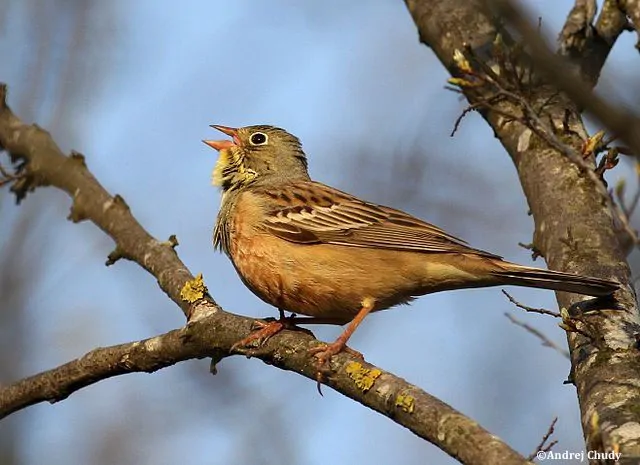 According to the Commission, the European population of the ortolan bunting fell by 84% between 1980 and 2012. Poaching of this migratory bird species on French soil undermines the conservation efforts undertaken by other Member States to halt the decline of its populations. France therefore has until August 15 to put an end to the illegal hunting of the ortolan bunting and bring its national legislation into compliance with EU law.
The ortolan bunting is subject to strict protection under European Union regulations. Thus, the “Birds” Directive prohibits activities that directly threaten the survival of wild species, such as intentionally killing or capturing birds, damaging their nests, collecting and possessing their eggs, disturbing them in a way that threatens their conservation, and possessing or trading in dead or live birds whose hunting is not authorized. The directive also ensures the protection of the habitats of endangered and migratory species.
However, while French law does indeed prohibit the hunting of ortolans, in practice, law enforcement authorities tolerate the practice of hunting these passerines every September along their migratory route—which passes through southwestern France—for food. The League for the Protection of Birds (LPO), which has been denouncing the poaching of ortolan buntings in the Landes region for years, has compiled a case file proving that “not only does the French government fail to provide the resources to apprehend and prosecute poachers, but it also issues instructions to ‘tolerate’ the practice to officials in charge of wildlife enforcement.” “Today, the Commission is stepping up its efforts,” the association says. “With the draft bill on restoring biodiversity currently under review, France cannot continue to be singled out as Europe’s worst offender for failing to comply with the ‘Birds’ Directive.’” The bill notably provides for stricter criminal penalties against poachers of protected species, as well as harsher measures to crack down on online wildlife trafficking.
France now has two months to notify the Commission of the measures taken to comply with the directive. If the response is unsatisfactory, the Commission will refer the matter to the European Court of Justice.
* Directive 2009/147/EC of the European Parliament and of the Council of November 30, 2009, on the conservation of wild birds, https://inpn.mnhn.fr/docs/natura2000/Directive_oiseaux_version_2009.pdf
According to the Commission, the European population of the ortolan bunting fell by 84% between 1980 and 2012. Poaching of this migratory bird species on French soil undermines the conservation efforts undertaken by other Member States to halt the decline of its populations. France therefore has until August 15 to put an end to the illegal hunting of the ortolan bunting and bring its national legislation into compliance with EU law.
The ortolan bunting is subject to strict protection under European Union regulations. Thus, the “Birds” Directive prohibits activities that directly threaten the survival of wild species, such as intentionally killing or capturing birds, damaging their nests, collecting and possessing their eggs, disturbing them in a way that threatens their conservation, and possessing or trading in dead or live birds whose hunting is not authorized. The directive also ensures the protection of the habitats of endangered and migratory species.
However, while French law does indeed prohibit the hunting of ortolans, in practice, law enforcement authorities tolerate the practice of hunting these passerines every September along their migratory route—which passes through southwestern France—for food. The League for the Protection of Birds (LPO), which has been denouncing the poaching of ortolan buntings in the Landes region for years, has compiled a case file proving that “not only does the French government fail to provide the resources to apprehend and prosecute poachers, but it also issues instructions to ‘tolerate’ the practice to officials in charge of wildlife enforcement.” “Today, the Commission is stepping up its efforts,” the association says. “With the draft bill on restoring biodiversity currently under review, France cannot continue to be singled out as Europe’s worst offender for failing to comply with the ‘Birds’ Directive.’” The bill notably provides for stricter criminal penalties against poachers of protected species, as well as harsher measures to crack down on online wildlife trafficking.
France now has two months to notify the Commission of the measures taken to comply with the directive. If the response is unsatisfactory, the Commission will refer the matter to the European Court of Justice.
* Directive 2009/147/EC of the European Parliament and of the Council of November 30, 2009, on the conservation of wild birds, https://inpn.mnhn.fr/docs/natura2000/Directive_oiseaux_version_2009.pdf
The “Birds” Directive at a Glance
Many species of wild birds—both migratory and resident—are in decline in Europe. Of the more than 500 species recorded, at least 32% are not currently in a favorable conservation status. The European Union sought to reverse this trend by banning certain practices and introducing measures to manage and protect birds and their environment. Thus, Directive 2009/147/EC aims to conserve all species of wild birds and establishes the rules governing their protection, management, and regulation. It applies not only to birds but also to their eggs, nests, and habitats. EU member states are required to take all necessary measures to maintain or restore populations of endangered species. To preserve, maintain, or restore sufficient diversity and area of habitats for all bird species, measures include the creation of protection zones, the maintenance and management of habitats, the restoration of destroyed biotopes, and the creation of new ones. Certain endangered species—those threatened with extinction or vulnerable—are subject to specific measures regarding their environment to ensure their survival. Endangered species and migratory birds must be provided with special protection zones, with particular attention paid to wetlands. These areas are part of the Natura 2000 network of protected ecological sites. In addition, Member States must promote research on the management, protection, and sustainable use of wild birds in Europe. Certain species, if their populations permit, may be hunted, but only under certain conditions:- the number of birds hunted must be consistent with maintaining the population at a satisfactory level;
- species must not be hunted during their breeding season or when their young are dependent on them;
- migratory species must not be hunted during their return to their breeding grounds;
- methods of mass or non-selective killing are prohibited.
Read next
Research & Diagnostics
10/09/2026
WHO sets new diagnostic targets for Echinococcus granulosus in humans, dogs and sheep
Research & Diagnostics
10/09/2026
Nipah virus in wastewater: promising for early warning?
Research & Diagnostics
10/01/2026
Commentaires
No comments yet.
Sign in to comment