

Back to articles
Wild bees: Nearly one in ten species is endangered in Europe
B
bertrand-neveux
04/01/2015
4 min read
0 comments
Share:
The first assessment of all European wild bee species has just been published by the IUCN. According to the report, 9.2% are threatened with extinction, while 5.2% will be threatened in the near future. The status of more than a thousand species (56.7%) remains unknown, making it impossible to perform a risk assessment for these data-deficient species due to a lack of scientific data.
This assessment provides unprecedented information on the approximately 1,960 species of wild bees in Europe, including their status, distribution, threats to their populations, and more. Published on March 19, 2015, it is part of the IUCN European Red List of Bees and the European project “Status and Trends of European Pollinators”
(STEP), both funded by the European Commission.
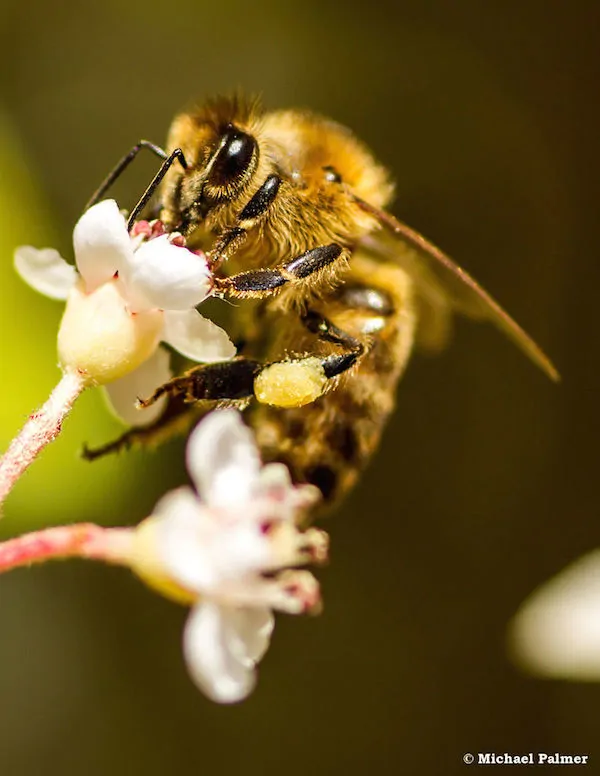 The report shows that 7.7% (150 species) are in decline, 12.6% (244 species) remain more or less stable, and only 0.7% (13 species) are increasing. The population trend for the remaining 1,535 species (79%), mainly concentrated in the Mediterranean region, remains unknown.
By comparison, still in Europe, 59% of mollusks and 40% of freshwater fish, 23% of amphibians, 20% of reptiles, 17% of mammals, 16% of dragonflies, 13% of birds, and 9% of butterflies are also threatened with extinction.
Nearly 30% of all bee species threatened (critically endangered, endangered, vulnerable) at the European level are endemic to Europe
. It is therefore the responsibility of member countries to protect the global populations of these species. Of the approximately 20,000 bee species worldwide, Europe is home to about 10%, even though the continent accounts for only 7% of the world’s terrestrial habitats.
The main threat to European bees is the loss and degradation of their habitat, primarily due to the intensification of agriculture.
Thus, changes in agricultural practices (with their accompanying use of pesticides, herbicides, and fertilizers), urban development, pollution, the increased frequency of wildfires in the Mediterranean region, climate change (particularly for bumblebees), and invasive alien species have led to large-scale losses.
The report shows that 7.7% (150 species) are in decline, 12.6% (244 species) remain more or less stable, and only 0.7% (13 species) are increasing. The population trend for the remaining 1,535 species (79%), mainly concentrated in the Mediterranean region, remains unknown.
By comparison, still in Europe, 59% of mollusks and 40% of freshwater fish, 23% of amphibians, 20% of reptiles, 17% of mammals, 16% of dragonflies, 13% of birds, and 9% of butterflies are also threatened with extinction.
Nearly 30% of all bee species threatened (critically endangered, endangered, vulnerable) at the European level are endemic to Europe
. It is therefore the responsibility of member countries to protect the global populations of these species. Of the approximately 20,000 bee species worldwide, Europe is home to about 10%, even though the continent accounts for only 7% of the world’s terrestrial habitats.
The main threat to European bees is the loss and degradation of their habitat, primarily due to the intensification of agriculture.
Thus, changes in agricultural practices (with their accompanying use of pesticides, herbicides, and fertilizers), urban development, pollution, the increased frequency of wildfires in the Mediterranean region, climate change (particularly for bumblebees), and invasive alien species have led to large-scale losses.
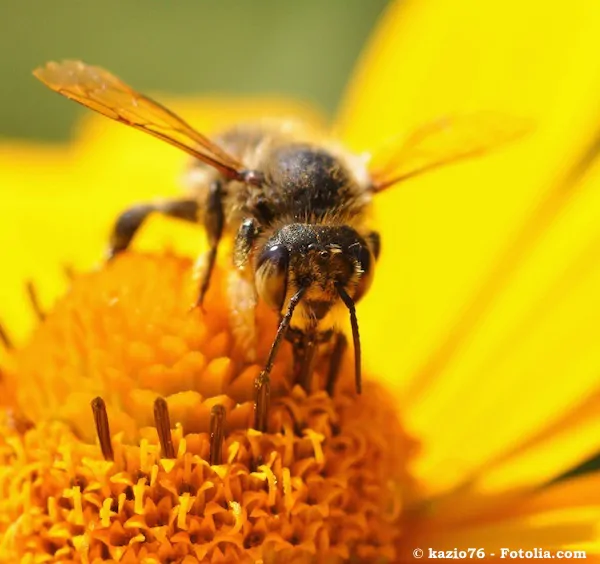 Bees are essential to both natural ecosystems and agriculture. Thirty-five percent of global agricultural production comes from plants that depend, to a greater or lesser extent, on pollinators, primarily insects (representing one-third of plants intended for human consumption). Of the 124 plants cultivated for global human consumption, 87 (70%) require pollination by insects for seed production
(such as carrots, onions, and garlic) or to improve quality and yields (for example, coffee, nuts, and fruits).
Through crop pollination, bees provide a service valued at an estimated 153 billion euros annually worldwide and 22 billion in Europe—at no cost.
Furthermore, recent studies show that wild bees account for a larger share of pollination than was previously attributed to honeybees (Apis mellifera
). Since many plants—both wild and cultivated—are pollinated only by certain types of bees, the decline in biodiversity can lead to a loss of plant diversity.
Thus, because wild bees play an essential role in crop pollination, the report’s authors emphasize the need to invest more in research in order to implement an effective conservation policy and urgently identify ways to reverse their decline. They also recommend taking these species into account in the management of protected areas and in agricultural policies across Europe.
Finally, the results of this assessment are part of the broader strategy implemented by the European Union to halt biodiversity loss and the degradation of its ecosystems by 2020.
Three French Initiatives
> The national program “The Bee, Environmental Sentinel,”
launched by the National Union of French Beekeepers (UNAF) in December 2005, will celebrate its tenth anniversary this year, from June 18 to 20, 2015, in more than 70 cities across France. With some sixty partners (regions, departments, metropolitan communities, cities, and private companies), its objectives address current challenges: the massive decline of bees and pollinators in France and around the world; the urgent need to safeguard plant biodiversity and the environment; the essential shift toward sustainable and responsible agriculture; the preservation of the human-nature connection; and public education.
> This year, the “Week for Alternatives to Pesticides”
is also celebrating its tenth anniversary with a nationwide tour taking place from March 20 to 30, 2015. Organized annually by Générations Futures, this event aims to raise public awareness about the challenges of reducing pesticide use and exploring alternative solutions.
> Under the slogan “Pesticides Kill!”,
Agronomists and Veterinarians Without Borders (AVSF) is launching a petition
to ban the most dangerous products in developing countries (http://www.petition-pesticides.org
). The signatures collected will be sent to the secretariat of the United Nations Environment Programme (UNEP), which, together with the FAO, initiated the Rotterdam Convention, in order to support the ongoing ratification process and the effective implementation of the convention.
Bees are essential to both natural ecosystems and agriculture. Thirty-five percent of global agricultural production comes from plants that depend, to a greater or lesser extent, on pollinators, primarily insects (representing one-third of plants intended for human consumption). Of the 124 plants cultivated for global human consumption, 87 (70%) require pollination by insects for seed production
(such as carrots, onions, and garlic) or to improve quality and yields (for example, coffee, nuts, and fruits).
Through crop pollination, bees provide a service valued at an estimated 153 billion euros annually worldwide and 22 billion in Europe—at no cost.
Furthermore, recent studies show that wild bees account for a larger share of pollination than was previously attributed to honeybees (Apis mellifera
). Since many plants—both wild and cultivated—are pollinated only by certain types of bees, the decline in biodiversity can lead to a loss of plant diversity.
Thus, because wild bees play an essential role in crop pollination, the report’s authors emphasize the need to invest more in research in order to implement an effective conservation policy and urgently identify ways to reverse their decline. They also recommend taking these species into account in the management of protected areas and in agricultural policies across Europe.
Finally, the results of this assessment are part of the broader strategy implemented by the European Union to halt biodiversity loss and the degradation of its ecosystems by 2020.
Three French Initiatives
> The national program “The Bee, Environmental Sentinel,”
launched by the National Union of French Beekeepers (UNAF) in December 2005, will celebrate its tenth anniversary this year, from June 18 to 20, 2015, in more than 70 cities across France. With some sixty partners (regions, departments, metropolitan communities, cities, and private companies), its objectives address current challenges: the massive decline of bees and pollinators in France and around the world; the urgent need to safeguard plant biodiversity and the environment; the essential shift toward sustainable and responsible agriculture; the preservation of the human-nature connection; and public education.
> This year, the “Week for Alternatives to Pesticides”
is also celebrating its tenth anniversary with a nationwide tour taking place from March 20 to 30, 2015. Organized annually by Générations Futures, this event aims to raise public awareness about the challenges of reducing pesticide use and exploring alternative solutions.
> Under the slogan “Pesticides Kill!”,
Agronomists and Veterinarians Without Borders (AVSF) is launching a petition
to ban the most dangerous products in developing countries (http://www.petition-pesticides.org
). The signatures collected will be sent to the secretariat of the United Nations Environment Programme (UNEP), which, together with the FAO, initiated the Rotterdam Convention, in order to support the ongoing ratification process and the effective implementation of the convention.
Read next
Research & Diagnostics
10/09/2026
WHO sets new diagnostic targets for Echinococcus granulosus in humans, dogs and sheep
Research & Diagnostics
10/09/2026
Nipah virus in wastewater: promising for early warning?
Research & Diagnostics
10/01/2026
Commentaires
No comments yet.
Sign in to comment