

Back to articles
Research & Diagnostics
Animal health
Animal welfare
Federation of Veterinarians of Europe
FVE
Vaccination
Vaccination Record
Veterinarian
Veterinary act
Vaccination Act: The vaccination of animals must remain the sole responsibility of veterinarians
V
Vetitude
07/01/2017
4 min read
0 comments
Share:
In light of health threats and the global spread of diseases, the Federation of Veterinarians of Europe (FVE) wishes to reiterate, with supporting evidence, that the vaccination of all animals—whether Livestock or pets—is and must remain a veterinary act. Strongly opposed to the deregulation of this practice, the FVE maintains that doing so would jeopardize animal health, animal welfare, and public health, while also resulting in significant economic losses. The effectiveness of the global fight against disease thus depends on the vaccination of animals by veterinarians.
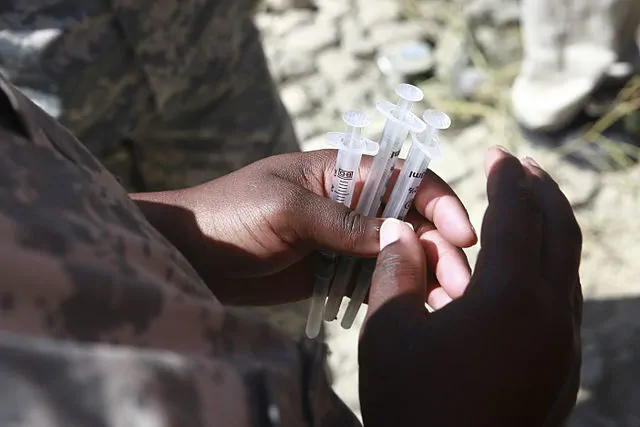 In our increasingly globalized societies, diseases spread unpredictably, particularly infections caused by new strains of microorganisms. These diseases pose a threat not only to pets and Livestock but also to the food chain and agricultural activities. Rabies, African swine fever, lumpy skin disease, and many other diseases have major economic, health, and social consequences. Consequently, maintaining an effective disease control system must remain a top priority for the future, according to the FVE. In this context, vaccination by veterinarians is an essential means of preventing, containing, or eradicating a disease.
Vaccination is, in fact, an integral part of herd health management. Through risk assessment, veterinarians are best positioned to determine which animals should be vaccinated and which product will be most effective for each animal. Furthermore, vaccines are veterinary drugs that require a prescription following a clinical examination of the animals to be immunized. For pharmacovigilance reasons and particularly in the context of notifiable diseases, veterinary certification is thus the cornerstone of disease prevention and control.
Moreover, in most European countries, the vaccination of animals is the exclusive responsibility of veterinarians. And this must remain the case. According to the FVE, the absence of regulations governing the veterinary act or non-compliance with such regulations jeopardizes not only animal health but also human health. Indeed, within the “One Health” framework, animal vaccination programs contribute directly to the protection of humans. They also help improve productivity without compromising animal welfare.
To reaffirm the legitimacy of the veterinary profession, the FVE reiterates the arguments in favor of vaccination being an exclusively veterinary practice:
In our increasingly globalized societies, diseases spread unpredictably, particularly infections caused by new strains of microorganisms. These diseases pose a threat not only to pets and Livestock but also to the food chain and agricultural activities. Rabies, African swine fever, lumpy skin disease, and many other diseases have major economic, health, and social consequences. Consequently, maintaining an effective disease control system must remain a top priority for the future, according to the FVE. In this context, vaccination by veterinarians is an essential means of preventing, containing, or eradicating a disease.
Vaccination is, in fact, an integral part of herd health management. Through risk assessment, veterinarians are best positioned to determine which animals should be vaccinated and which product will be most effective for each animal. Furthermore, vaccines are veterinary drugs that require a prescription following a clinical examination of the animals to be immunized. For pharmacovigilance reasons and particularly in the context of notifiable diseases, veterinary certification is thus the cornerstone of disease prevention and control.
Moreover, in most European countries, the vaccination of animals is the exclusive responsibility of veterinarians. And this must remain the case. According to the FVE, the absence of regulations governing the veterinary act or non-compliance with such regulations jeopardizes not only animal health but also human health. Indeed, within the “One Health” framework, animal vaccination programs contribute directly to the protection of humans. They also help improve productivity without compromising animal welfare.
To reaffirm the legitimacy of the veterinary profession, the FVE reiterates the arguments in favor of vaccination being an exclusively veterinary practice:
- clinical examination, diagnosis, health management plans, targeted advice, and the prescription of veterinary medicinal products or vaccines are closely related procedures that must fall within the exclusive purview of the veterinarian;
- vaccination cannot be recommended without an appropriate examination and a thorough understanding of the health status of farm animals. It is an integral part of herd health management, defined by the veterinarian based on a risk assessment, in collaboration with the livestock producer;
- The veterinarian is specially trained in the technical aspects of vaccination (vaccine storage, routes of administration, record-keeping, etc.) to ensure optimal immunization of the animals;
- Veterinarians are also trained in monitoring and recording adverse effects (pharmacovigilance), as well as in measuring vaccine efficacy, for example against circulating strains;
- Maintaining an extensive veterinary network with good coverage across the country, particularly in remote rural areas, ensures effective and rapid disease control during an epizootic;
- in the case of emerging diseases, veterinarians often use temporarily authorized vaccines that require rigorous post-administration monitoring. They closely monitor potential adverse effects and must report them immediately;
- For notifiable diseases, the official veterinarian’s certificate serves to guarantee the health status of the animal(s) and the absence of certain diseases;
- Since governments are responsible for controlling notifiable diseases, they should delegate this task only to veterinarians, who possess the necessary expertise and experience to carry it out most effectively and who are accountable to the relevant national authorities. Eradication programs require veterinarians to adhere to specific criteria regarding which vaccine to use, when to administer it, and for which animals;
- in the event of epidemics or epizootics, governments may decide to fund the establishment of vaccine banks if production proves insufficient. Veterinarians must then optimize the number of doses used, ensuring logistical coordination while adhering to the vaccination plan;
- Epidemics are costly and undermine consumer confidence in the trade of animals and animal products. It would be detrimental to reduce the effectiveness of vaccination in pursuit of short-term financial gains, as the long-term effects could be far more costly.
Read next
Research & Diagnostics
10/09/2026
WHO sets new diagnostic targets for Echinococcus granulosus in humans, dogs and sheep
Research & Diagnostics
10/09/2026
Nipah virus in wastewater: promising for early warning?
Research & Diagnostics
10/01/2026
Commentaires
No comments yet.
Sign in to comment