

Back to articles
The Genetic Cause of a Serious Canine Lung Disease
MR
Mia Rozenbaum
05/05/2020
2 min read
0 comments
Share:
The identification of a gene responsible for a lung disease in Airedale Terriers could lead to important discoveries regarding a similar disease in humans.
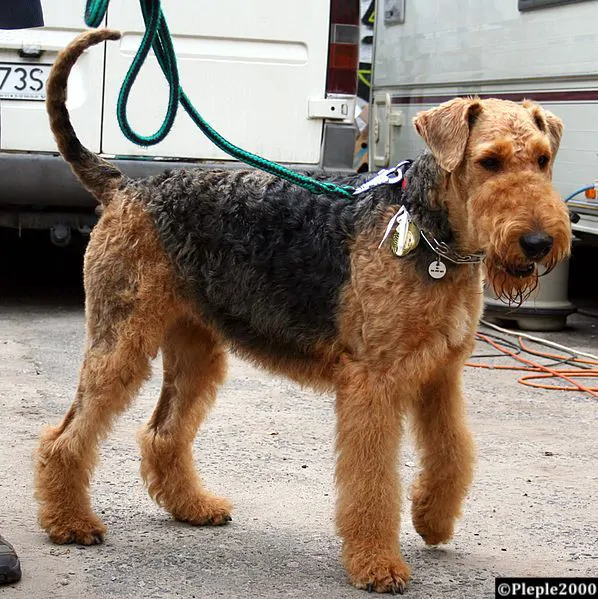 In 2007, several puppies from a Finnish Airedale Terrier breeding program died under unexplained circumstances just a few days after birth. Pathological analysis revealed that the puppies appeared to be suffering from a lung condition.
The vacuoles—specialized membrane-bound organelles found in the epithelial or surface cells of the pulmonary alveoli, which are responsible for gas exchange—did not reach their normal maturity. As a result, they were unable to produce the essential surfactant that reduces surface tension on the surface of these cells.
An examination of the pedigrees of the deceased puppies quickly revealed the genetic cause of the disease and identified the LAMP3 gene as the culprit. This gene encodes a protein that functions specifically within the membranes of the vacuoles that produce the surfactant.
Since then, nearly 7,000 pedigree dogs of more than 300 different breeds have been screened for this genetic defect. However, it has been found only in the Airedale Terrier breed, in which up to 20% appear to be carriers of the defect.
In the future, asymptomatic carriers will be able to be identified using a genetic test, thereby preventing the birth of affected dogs.
This research could also have implications for certain respiratory problems in human newborns, who may also experience similar symptoms. By analogy, the LAMP3 gene could therefore also be responsible for these diseases in humans. Studies are currently underway.
Once again, a study in dogs has identified a gene of interest for a human disease.
In 2007, several puppies from a Finnish Airedale Terrier breeding program died under unexplained circumstances just a few days after birth. Pathological analysis revealed that the puppies appeared to be suffering from a lung condition.
The vacuoles—specialized membrane-bound organelles found in the epithelial or surface cells of the pulmonary alveoli, which are responsible for gas exchange—did not reach their normal maturity. As a result, they were unable to produce the essential surfactant that reduces surface tension on the surface of these cells.
An examination of the pedigrees of the deceased puppies quickly revealed the genetic cause of the disease and identified the LAMP3 gene as the culprit. This gene encodes a protein that functions specifically within the membranes of the vacuoles that produce the surfactant.
Since then, nearly 7,000 pedigree dogs of more than 300 different breeds have been screened for this genetic defect. However, it has been found only in the Airedale Terrier breed, in which up to 20% appear to be carriers of the defect.
In the future, asymptomatic carriers will be able to be identified using a genetic test, thereby preventing the birth of affected dogs.
This research could also have implications for certain respiratory problems in human newborns, who may also experience similar symptoms. By analogy, the LAMP3 gene could therefore also be responsible for these diseases in humans. Studies are currently underway.
Once again, a study in dogs has identified a gene of interest for a human disease.
Read next
Research & Diagnostics
10/09/2026
WHO sets new diagnostic targets for Echinococcus granulosus in humans, dogs and sheep
Research & Diagnostics
10/09/2026
Nipah virus in wastewater: promising for early warning?
Research & Diagnostics
10/01/2026
Commentaires
No comments yet.
Sign in to comment