

Back to articles
Research & Diagnostics
Bladder Cancer
Cancer
COVID-19
Diabetes
Diagnosis
Dog
Epilepsy
Lung Cancer
Malaria
Medicine
Melanoma
Narcoleptic episode
Neoplasia
Oncology
Parasitism
Parkinson's
Robot
Sense of Smell
Skin Cancer
Sniffer
Sniffer Dogs: Detecting Diseases by Smell
MR
Mia Rozenbaum
02/25/2021
7 min read
0 comments
Share:
Dogs have a much more developed sense of smell than humans. Their olfactory abilities even allow them to detect imperceptible changes that are early signs of disease. Dogs trained for this purpose can recognize cancer, predict a narcoleptic episode, or even identify an infection. But despite an undeniable success rate, dogs are struggling to find their place in the medical field in France.
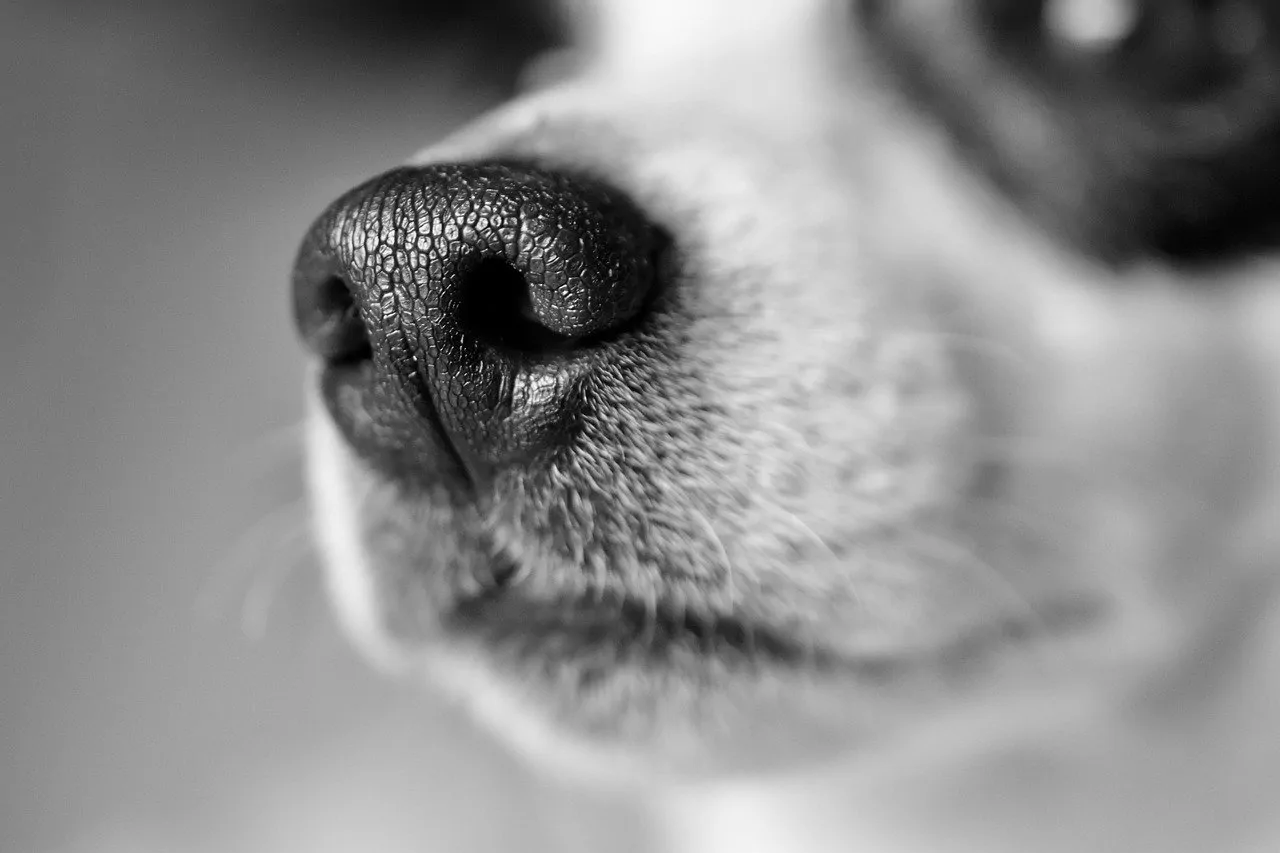
Dogs are renowned for their sense of smell. Their genetic makeup and physiology are perfectly suited for advanced olfactory detection. With approximately 220 million receptors—compared to 5 million in humans—a dog’s nose is ten thousand times more sensitive than that of its owner. They are capable of detecting substances at concentrations of one part per trillion—the equivalent of a single drop in twenty Olympic-sized swimming pools!
But that’s not their only advantage. Dogs can also smell in “stereo,” meaning their noses can distinguish between the right and left nostrils. They inhale air up to three hundred times per minute, with a rapid breathing rate, which means their olfactory cells are constantly receiving new odor particles. Humans have been taking advantage of these keen abilities for centuries—for hunting, exploring, and searching for people, explosives, drugs, and now diseases.
Diagnosis Through Olfactory Screening
In fact, dogs’ sense of smell is so subtle that they can identify even the slightest physiological changes in their two-legged companions, including those caused by illness. Even the slightest hormonal fluctuations, which release volatile organic compounds, are detected by dogs. Researchers have therefore turned to this ability and trained dogs to recognize the olfactory markers of certain diseases, which may even go unnoticed during routine medical tests. Studies on dogs’ ability to detect cancer have received the most media attention. Dogs can indeed be trained to recognize several types of cancer, including skin, breast, and bladder cancer. In 2006, five dogs were trained to detect cancer based on patients’ breath . And they do so with exceptional accuracy: 88% accuracy for breast cancer and 99% for lung cancer. More recently, a study showed that dogs can even detect cancer markers with 97% accuracy using blood samples taken from patients. And these are just a few of the many studies on the subject. These findings could lead to new approaches to cancer screening that are inexpensive, accurate, and non-invasive. Dogs could save thousands of lives by performing early detection of a disease—a disease for which treatment effectiveness and case fatality rates depend largely on how quickly it is addressed . But these olfactory abilities extend far beyond the field of oncology. Dogs are capable of detecting many other diseases, such as malaria. Researchers have shown that these animals can correctly identify children infected with the parasites responsible —with 70% accuracy—simply by sniffing the socks the children had worn all night. In addition to cancer and malaria, Parkinson’s disease is also on the list of conditions that can be detected by smell . Patients’ “scent” changes, even years before the first clinical signs appear. Dogs could therefore be used for early detection of the disease, which is essential for patient care. Patients could then receive preventive treatment to halt the progression of the infection before it becomes too severe.Sniffing Out the Early Warning Signs of Disease
This ability to predict the onset of a disease before it develops is a feat that science has struggled to replicate effectively. Yet taking action early often helps buy time, slow the progression of the disease, and improve patients’ quality of life. Dogs can, in particular, predict an epileptic seizure or a narcoleptic attack—two events that can be dangerous if they occur in the wrong place or at the wrong time. A study published in 2013 revealed that, in 11 out of 12 cases, trained dogs recognized the biochemical changes associated with a narcoleptic episode by smell. More importantly, they were able to alert the patient up to five minutes before the episode, thereby preventing injury. The data on epilepsy is more controversial. While a small 2019 study shows that dogs can distinguish an “epilepsy odor,” some researchers suggest that they are actually reacting to their owners’ psychological episodes rather than epileptic seizures. Dogs are also increasingly helping people with diabetes. They can alert them when their blood sugar levels drop or rise. In fact, they can detect isoprene, a natural chemical present in breath that increases significantly during a hypoglycemic episode. Similarly, dogs can warn of impending headaches by detecting the scent of serotonin, a molecule whose levels spike when the body is about to trigger a migraine. For those who suffer from migraines, an early warning can make the difference between mild symptoms—thanks to preventive treatment—and debilitating pain. 54% of dog owners who are prone to migraines say they’ve noticed behavioral changes in their dogs during or before attacks. And for nearly 60% of them, their dog had alerted them one to two hours in advance.COVID-19-Sniffing Dogs
The latest mission for sniffer dogs is to combat the novel coronavirus. Researchers have high hopes for dogs, as respiratory illnesses like COVID-19 alter our body odor. There is therefore a strong likelihood that dogs can detect the new disease. In a pilot study conducted at the University of Helsinki, dogs were trained to recognize the olfactory signature of SARS-CoV-2 coronavirus infection in patients’ urine, with reliability equivalent to that of a standard PCR test. Before olfactory tests can be used in clinical practice, Finnish scientists are currently preparing a randomized, double-blind study in which the dogs will be tested on a larger number of samples. As early as late April 2020, the canine unit at the National Veterinary School of Alfort also began its work, yielding highly conclusive screening results based on patients’ sweat. The success rate of canine COVID-19 screening ranges from 90 to 99.5 percent. As a new diagnostic tool, dogs could therefore revolutionize the response to the current pandemic in the short term. Rapid, effective, and non-invasive screening—but above all, targeted detection within a population, even among asymptomatic individuals—could have a massive impact on the rapid, large-scale management of the disease. However, even though experts universally view the idea as promising—and it is even being adopted abroad—in France, it is struggling to secure public funding to scale up operations. The project is sorely lacking the resources needed to bring this free, non-invasive, immediate, and unlimited test to fruition, while some countries—such as Lebanon, Finland, and the United Arab Emirates—have already moved into the operational phase.Medical dogs aren’t coming anytime soon
Although study after study has validated the usefulness of dogs in clinical settings for detecting, screening for, and preventing disease in humans, their presence in laboratories to replace standard tests is not on the horizon just yet. Too many uncertainties remain regarding the odor molecules involved. Identifying these molecules would make it possible to standardize and formalize the detection process and the training of sniffer dogs. But even then, skepticism within the medical community in France might prevail. Not all doctors will be willing to rely on a dog to make a diagnosis, despite proven effectiveness. Further studies should, however, help convince the skeptics, for example as part of a preliminary screening process. In the meantime, researchers aim to automate dogs’ remarkable olfactory abilities into a compact device. A team of researchers at the Massachusetts Institute of Technology (MIT) has developed a system capable of detecting the chemical and microbial content of an air sample with a sensitivity 200 times greater than a dog’s nose. However, the system has no learning capability. So they combined the device with machine learning technology that would give it the ability to learn to identify and recognize samples from patients. According to the researchers, these results could one day lead to an automated olfactory system small enough to be integrated into a cell phone. In the future, dogs in laboratories might therefore have less fur and more metal. But these robotic noses are expensive, costing about $1,000 per sample to test and document. The natural solution is therefore still worth considering, even if some people remain unconvinced. https://www.youtube.com/watch?v=tjcIhCbI8hM&feature=emb_logo&ab_channel=%C3%89coleNationaleV%C3%A9t%C3%A9rinaired%27AlfortRead next
Research & Diagnostics
10/09/2026
WHO sets new diagnostic targets for Echinococcus granulosus in humans, dogs and sheep
Research & Diagnostics
10/09/2026
Nipah virus in wastewater: promising for early warning?
Research & Diagnostics
10/01/2026
Commentaires
No comments yet.
Sign in to comment