

Back to articles
Research & Diagnostics
Antivenom
Bite
Doctors Without Borders
Ebola
Fav-Africa
Maba
MSF
Serum
Snake
Snake bite
Taipan
Venom
Venomous snake
Viper
WHO
Snake Bites: Vipers, Mambas, and Other Taipans Are Behind a Global Health Crisis
V
Vetitude
09/04/2016
4 min read
0 comments
Share:
Some 5 million people are bitten each year worldwide, resulting in more than 100,000 deaths and approximately 400,000 amputations or disfigurements. These are the statistics on venomous snake bites compiled by the World Health Organization (WHO). These estimates are considered to be well below the actual numbers. In the affected countries of Africa, Asia, and Latin America, poor rural populations are the hardest hit, as are children. Yet treatments for snakebites are not a public health priority, unlike certain tropical diseases, and there is a severe shortage of antivenom.
 Despite a heavy toll—one worthy of a major global health crisis—venomous snake bites remain a neglected public health problem, affecting primarily tropical and subtropical regions. Yet these bites cause severe paralysis, hemorrhages, irreversible renal failure, tissue damage requiring amputation, and permanent disfigurement, and are far more deadly than most tropical diseases. In India alone, more than 45,000 people died in 2005 as a direct result of these bites—a quarter of the number of AIDS-related deaths.
The journal *Nature**
revisits this long-standing problem, which has struggled to gain traction in global health debates. In September 2015, Doctors Without Borders (MSF) warned the international community that it would soon run out of antivenom, the only effective treatment against the toxicity of snake venom. The reason: the Pasteur Sanofi group had decided, a year earlier, to halt production of its Fav-Afrique antivenom. According to MSF estimates, the consequences are disastrous: this shortage is expected to kill an additional 10,000 people per year in Africa alone
—a toll comparable to that of the Ebola virus.
Despite a heavy toll—one worthy of a major global health crisis—venomous snake bites remain a neglected public health problem, affecting primarily tropical and subtropical regions. Yet these bites cause severe paralysis, hemorrhages, irreversible renal failure, tissue damage requiring amputation, and permanent disfigurement, and are far more deadly than most tropical diseases. In India alone, more than 45,000 people died in 2005 as a direct result of these bites—a quarter of the number of AIDS-related deaths.
The journal *Nature**
revisits this long-standing problem, which has struggled to gain traction in global health debates. In September 2015, Doctors Without Borders (MSF) warned the international community that it would soon run out of antivenom, the only effective treatment against the toxicity of snake venom. The reason: the Pasteur Sanofi group had decided, a year earlier, to halt production of its Fav-Afrique antivenom. According to MSF estimates, the consequences are disastrous: this shortage is expected to kill an additional 10,000 people per year in Africa alone
—a toll comparable to that of the Ebola virus.
 But since most people bitten by snakes live in the world’s poorest regions, with weak health care systems and few medical resources, the issue is largely ignored. Admittedly, in May 2016, the World Health Assembly held in Geneva, Switzerland, placed this crisis on its agenda. But experts disagree on the solutions needed to end the current shortage: some are banking on innovation to develop a new generation of broad-spectrum antivenoms, while others prefer to improve the production and use of existing serums and reduce their cost. It is true that serum production methods have hardly evolved since the 1890s! One of the major challenges in serum manufacturing is preparing the appropriate immunogen. Currently, however, few countries produce venom of sufficient quality to manufacture suitable and effective serums. The arrival on the market of unsuitable, untested, or even counterfeit serums has eroded confidence in this treatment, causing demand—and thus production—to plummet and prices to soar.
Consequently, in the absence of a reliable market for these medicines and sufficient profitability, pharmaceutical companies and governments have halted production. Of the 35 producers that started out, only 5 remain for all of sub-Saharan Africa.
But since most people bitten by snakes live in the world’s poorest regions, with weak health care systems and few medical resources, the issue is largely ignored. Admittedly, in May 2016, the World Health Assembly held in Geneva, Switzerland, placed this crisis on its agenda. But experts disagree on the solutions needed to end the current shortage: some are banking on innovation to develop a new generation of broad-spectrum antivenoms, while others prefer to improve the production and use of existing serums and reduce their cost. It is true that serum production methods have hardly evolved since the 1890s! One of the major challenges in serum manufacturing is preparing the appropriate immunogen. Currently, however, few countries produce venom of sufficient quality to manufacture suitable and effective serums. The arrival on the market of unsuitable, untested, or even counterfeit serums has eroded confidence in this treatment, causing demand—and thus production—to plummet and prices to soar.
Consequently, in the absence of a reliable market for these medicines and sufficient profitability, pharmaceutical companies and governments have halted production. Of the 35 producers that started out, only 5 remain for all of sub-Saharan Africa.
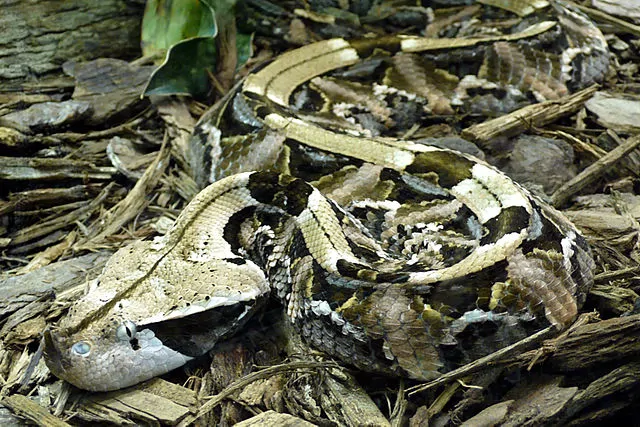 The product itself poses a problem: it has a limited shelf life and must be kept refrigerated, which proves difficult in remote areas without electricity… Furthermore, unlike scorpion or spider venom, snake venom contains about ten different toxins, and many antivenoms are effective against only a single species of snake.
Researchers are currently working to broaden their spectrum of action. The goal is to produce antibodies synthetically, using cells rather than animals, and to develop “universal” antivenom serums that are effective against a wide range of snake species across much of the world. Progress is slow—
due to a lack of funding
and the biological complexity of snake venoms—but steady. The most optimistic researchers hope to begin clinical trials within the next four years. But with astronomical development and production costs, these new serums will struggle to compete with the older ones—which remain far more affordable—and to win over manufacturers. This explains the differences of opinion among public health experts in Geneva last May. Hope might lie in a compromise between innovation and scaling up production of existing drugs, as is the case in Latin America.
Ultimately, an end to the antivenom shortage is not imminent, but the international community is beginning to take the problem seriously. Some observers believe that training local clinics on how to treat snakebite victims and administer treatments in a timely manner would also help reduce deaths. For others, couldn’t we simply provide farmers with boots to avoid viper attacks during the rainy season? Prevention is also an effective strategy! A doctor from Benin sums up the situation as follows: “We now have the capacity and the means to solve this public health problem. All we lack is the will to do so.”
It just goes to show: history repeats itself! Don’t we hear the same arguments regarding rabies around the world?
* http://www.nature.com/news/vipers-mambas-and-taipans-the-escalating-health-crisis-over-snakebites-1.20495
The product itself poses a problem: it has a limited shelf life and must be kept refrigerated, which proves difficult in remote areas without electricity… Furthermore, unlike scorpion or spider venom, snake venom contains about ten different toxins, and many antivenoms are effective against only a single species of snake.
Researchers are currently working to broaden their spectrum of action. The goal is to produce antibodies synthetically, using cells rather than animals, and to develop “universal” antivenom serums that are effective against a wide range of snake species across much of the world. Progress is slow—
due to a lack of funding
and the biological complexity of snake venoms—but steady. The most optimistic researchers hope to begin clinical trials within the next four years. But with astronomical development and production costs, these new serums will struggle to compete with the older ones—which remain far more affordable—and to win over manufacturers. This explains the differences of opinion among public health experts in Geneva last May. Hope might lie in a compromise between innovation and scaling up production of existing drugs, as is the case in Latin America.
Ultimately, an end to the antivenom shortage is not imminent, but the international community is beginning to take the problem seriously. Some observers believe that training local clinics on how to treat snakebite victims and administer treatments in a timely manner would also help reduce deaths. For others, couldn’t we simply provide farmers with boots to avoid viper attacks during the rainy season? Prevention is also an effective strategy! A doctor from Benin sums up the situation as follows: “We now have the capacity and the means to solve this public health problem. All we lack is the will to do so.”
It just goes to show: history repeats itself! Don’t we hear the same arguments regarding rabies around the world?
* http://www.nature.com/news/vipers-mambas-and-taipans-the-escalating-health-crisis-over-snakebites-1.20495
Technical constraints
Read next
Research & Diagnostics
10/09/2026
WHO sets new diagnostic targets for Echinococcus granulosus in humans, dogs and sheep
Research & Diagnostics
10/09/2026
Nipah virus in wastewater: promising for early warning?
Research & Diagnostics
10/01/2026
Commentaires
No comments yet.
Sign in to comment