

Back to articles
Research & Diagnostics
Animal health
Brucella melitensis
Brucellosis
Brucellosis Vaccine Prize
GALVmed
Goat Brucellosis
Sheep Brucellosis
Vaccine
Veterinary medicinal product
Zoonosis
Sheep and Goat Brucellosis: A Competition to Encourage the Development of a New Vaccine
V
Vetitude
11/25/2016
3 min read
0 comments
Share:
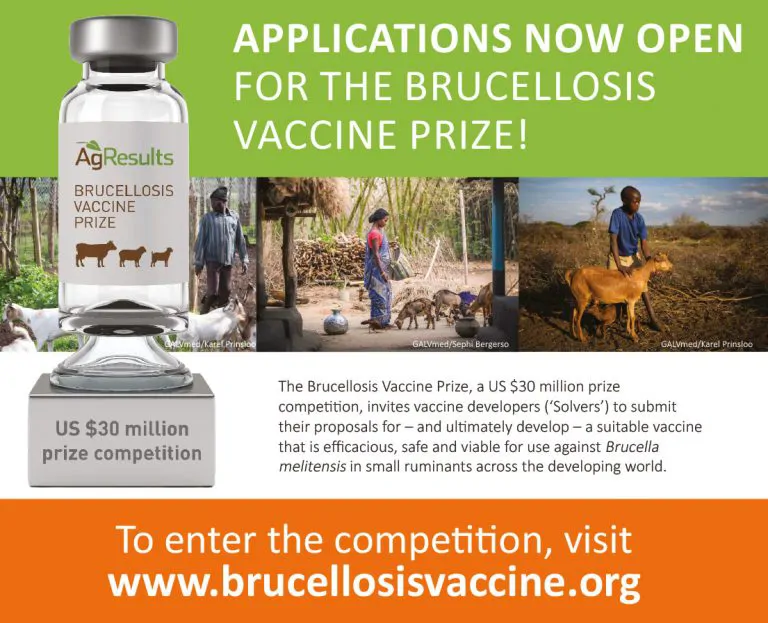
With a total prize fund of $30 million, the Brucellosis Vaccine Prize competition, launched on November 18, is managed by the Global Alliance for Livestock Veterinary Medicinal Products (GALVmed)*. To win this prize, animal health laboratories worldwide are invited to research and develop a vaccine against brucellosis, a zoonosis that continues to spread in developing countries despite currently available vaccines. The ultimate goal is to reduce the incidence of the disease in regions where it is endemic—or even to eradicate it—in order to improve the living conditions of small ruminant herders. Furthermore, controlling the infection in animals is the best way to prevent human brucellosis.
 The bacteria Brucella melitensis,
which infects sheep and goats, causes abortions, infertility, reduced milk production, and weight loss in affected animals. This contagious disease, which remains endemic across much of Africa, the Middle East, and Asia, has significant economic repercussions, affecting the livelihoods of some 600 million people in developing countries who depend on livestock for their livelihoods. Currently, countries in Central Asia and Southeast Asia are seeing the sharpest increase in the number of brucellosis cases. The impact on smallholder farmers in South Asia and sub-Saharan Africa is estimated at $500 million per year.
Furthermore, brucellosis is a zoonosis
that is easily transmitted to humans, further exacerbating productivity losses, income losses, and the vulnerability of affected smallholder farmers. Approximately 500,000 new human cases are reported each year. Transmission to humans most often occurs through
the consumption of raw milk from animals infected with the bacteria B. melitensis
. Veterinarians and livestock farmers are particularly at risk due
to their handling of infected animals, aborted fetuses, and placentas. Wild animals, meanwhile, act as reservoirs of infection, which complicates eradication efforts.
The goal of the
Brucellosis Vaccine Prize
is therefore to contribute to the development of an effective, safe, and viable vaccine against Brucella melitensis
in small ruminants, primarily for use in developing countries. The call for entries for the first phase of the competition (which offers ten prizes of $100,000) is now open
. Potential candidates who wish to take on the challenge are invited to submit their applications online by November 2017. Full details and contest rules are available on the website www.brucellosisvaccine.org.
The prize, one of the most significant of its kind, is funded by AgResults**, an organization created through a collaboration between the governments of Australia, Canada, the United Kingdom, the United States, and the Bill & Melinda Gates Foundation, with the goal of finding innovative, private-sector solutions to seemingly intractable development challenges (global food safety, improved productivity, etc.). Management of this pilot project, which is expected to last about ten years, has been entrusted to GALVmed, an international nonprofit organization that promotes the development of vaccines, medicines, and diagnostics for neglected livestock diseases in Africa and Asia.
Ideally, the winning vaccine will overcome all the constraints that currently hinder the effectiveness of brucellosis vaccines in developing countries. It must provide immunity against one or more strains that particularly affect goats and sheep, simplify the management of vaccinated animals, use an inactivated agent, and not require constant refrigeration.
The competition is divided into three phases, with milestone payments for eligible participants, totaling potentially more than $26 million for the ultimate winner. The prize is thus intended to offset the high research and development costs incurred by candidates in creating the new vaccine. All private-sector companies are eligible to compete (pharmaceutical, animal husbandry, biotechnology, and animal health companies), as well as academic and research institutions.
* Global Alliance for Livestock Veterinary Medicines (GALVmed), www.galvmed.org
**AgResults, http://agresults.org/en/316/Brucellosis-Vaccine-Pilot
The bacteria Brucella melitensis,
which infects sheep and goats, causes abortions, infertility, reduced milk production, and weight loss in affected animals. This contagious disease, which remains endemic across much of Africa, the Middle East, and Asia, has significant economic repercussions, affecting the livelihoods of some 600 million people in developing countries who depend on livestock for their livelihoods. Currently, countries in Central Asia and Southeast Asia are seeing the sharpest increase in the number of brucellosis cases. The impact on smallholder farmers in South Asia and sub-Saharan Africa is estimated at $500 million per year.
Furthermore, brucellosis is a zoonosis
that is easily transmitted to humans, further exacerbating productivity losses, income losses, and the vulnerability of affected smallholder farmers. Approximately 500,000 new human cases are reported each year. Transmission to humans most often occurs through
the consumption of raw milk from animals infected with the bacteria B. melitensis
. Veterinarians and livestock farmers are particularly at risk due
to their handling of infected animals, aborted fetuses, and placentas. Wild animals, meanwhile, act as reservoirs of infection, which complicates eradication efforts.
The goal of the
Brucellosis Vaccine Prize
is therefore to contribute to the development of an effective, safe, and viable vaccine against Brucella melitensis
in small ruminants, primarily for use in developing countries. The call for entries for the first phase of the competition (which offers ten prizes of $100,000) is now open
. Potential candidates who wish to take on the challenge are invited to submit their applications online by November 2017. Full details and contest rules are available on the website www.brucellosisvaccine.org.
The prize, one of the most significant of its kind, is funded by AgResults**, an organization created through a collaboration between the governments of Australia, Canada, the United Kingdom, the United States, and the Bill & Melinda Gates Foundation, with the goal of finding innovative, private-sector solutions to seemingly intractable development challenges (global food safety, improved productivity, etc.). Management of this pilot project, which is expected to last about ten years, has been entrusted to GALVmed, an international nonprofit organization that promotes the development of vaccines, medicines, and diagnostics for neglected livestock diseases in Africa and Asia.
Ideally, the winning vaccine will overcome all the constraints that currently hinder the effectiveness of brucellosis vaccines in developing countries. It must provide immunity against one or more strains that particularly affect goats and sheep, simplify the management of vaccinated animals, use an inactivated agent, and not require constant refrigeration.
The competition is divided into three phases, with milestone payments for eligible participants, totaling potentially more than $26 million for the ultimate winner. The prize is thus intended to offset the high research and development costs incurred by candidates in creating the new vaccine. All private-sector companies are eligible to compete (pharmaceutical, animal husbandry, biotechnology, and animal health companies), as well as academic and research institutions.
* Global Alliance for Livestock Veterinary Medicines (GALVmed), www.galvmed.org
**AgResults, http://agresults.org/en/316/Brucellosis-Vaccine-Pilot
Read next
Research & Diagnostics
10/09/2026
WHO sets new diagnostic targets for Echinococcus granulosus in humans, dogs and sheep
Research & Diagnostics
10/09/2026
Nipah virus in wastewater: promising for early warning?
Research & Diagnostics
10/01/2026
Commentaires
No comments yet.
Sign in to comment