

Back to articles
Research & Diagnostics
Bats
Bear
Crocidure
French Society for the Study and Protection of Mammals
Ibex
International Union for Conservation of Nature
IUCN
Mammal
Mink
MNHN
National Museum of Natural History
National Office for Hunting and Wildlife
Noctule
ONCFS
Otter
Pipistrelle
Red List
Scented Weasel
Serotine
SFEPM
Species
Sperm Whale
Wolf
Red List of Endangered Species: Several Mammal Species Are in Decline in France
V
Vetitude
11/19/2017
4 min read
0 comments
Share:
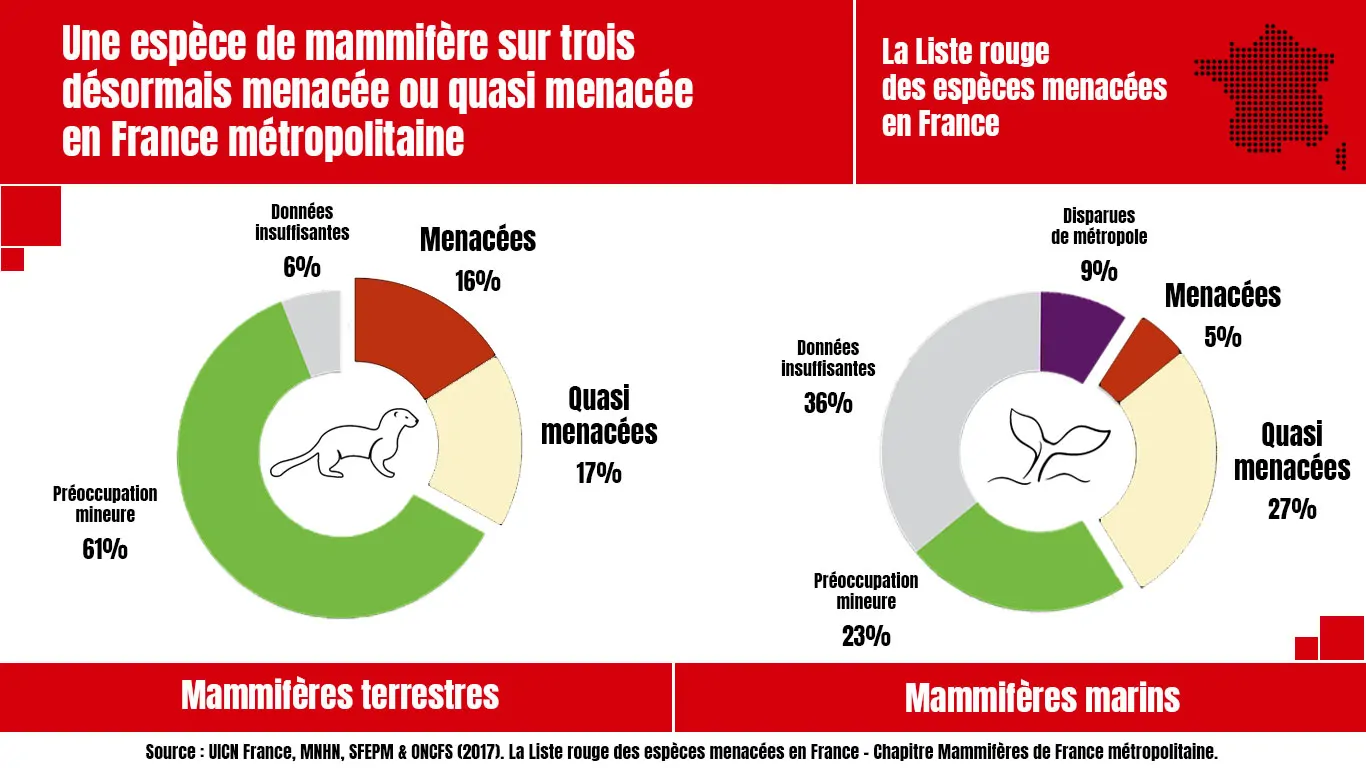
The latest update to France’s “Red List of Endangered Species” shows a deterioration in the situation, eight years after the first survey. A total of 125 mammal species native to mainland France were assessed. This assessment shows that 33% of terrestrial mammals (up 10% from 2009) and 32% of marine mammals (up 7% from 2009) are either threatened (17 species) or near threatened (24 species). The assessments involved some 40 specialists from the French Committee of the International Union for Conservation of Nature (IUCN) and the National Museum of Natural History (MNHN), as well as from the French Society for the Study and Protection of Mammals (SFEPM) and the ONCFS.
Of the 103 species of terrestrial mammals and 22 species of marine mammals included in the analysis, 11 species changed categories between 2009 and 2017.
Among them, only three saw their status improve (Iberian ibex, Euryale horseshoe bat, and greater horseshoe bat), while eight others experienced a significant deterioration (European mink and European polecat, common noctule, common serotine, common pipistrelle, Cestoni’s molossus, white-toothed bat, and Pyrenean desman).
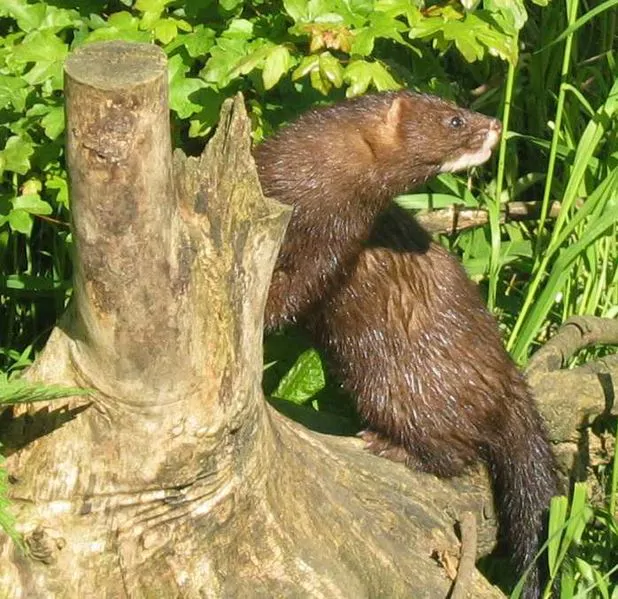 The European Mink Is on the Brink of Extinction
With an estimated population of fewer than 250 individuals, the European mink is now classified as “critically endangered.”
The species has been in continuous decline since the early 20th century, due to the destruction of wetlands, competition with the American mink, accidental trapping, road collisions, and indirect poisoning resulting from rodent control efforts. Despite the measures taken, this mustelid is one of the most endangered mammals in France.
Large Carnivores Still Threatened
The brown bear (“critically endangered”) and the gray wolf (“vulnerable”), as well as the Eurasian lynx (“endangered,” with a population of fewer than 150 individuals), remain threatened. Despite being protected, they remain targets of poaching (adults) and are victims of traffic collisions (juveniles).
A long-term strategy is needed, involving all relevant stakeholders, to achieve sustainable coexistence with human activities.
The European Mink Is on the Brink of Extinction
With an estimated population of fewer than 250 individuals, the European mink is now classified as “critically endangered.”
The species has been in continuous decline since the early 20th century, due to the destruction of wetlands, competition with the American mink, accidental trapping, road collisions, and indirect poisoning resulting from rodent control efforts. Despite the measures taken, this mustelid is one of the most endangered mammals in France.
Large Carnivores Still Threatened
The brown bear (“critically endangered”) and the gray wolf (“vulnerable”), as well as the Eurasian lynx (“endangered,” with a population of fewer than 150 individuals), remain threatened. Despite being protected, they remain targets of poaching (adults) and are victims of traffic collisions (juveniles).
A long-term strategy is needed, involving all relevant stakeholders, to achieve sustainable coexistence with human activities.
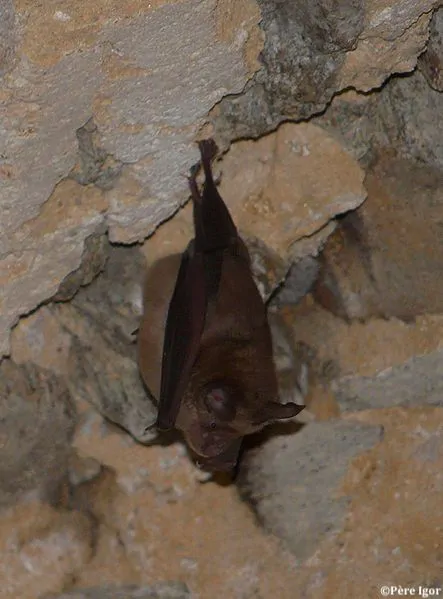 Bats and the “Climate Plan”
Following the intensification of agriculture and logging, new threats are affecting several bat species, which are impacted by building renovation and insulation projects that lead to the loss of their roosts. Migratory species, such as the common noctule—whose long-term status is of greatest concern—are also victims of collisions with wind turbine blades
. Other bat species, which are likely also endangered, are, however, too little known—such as the two-colored bat—to be removed from the “data deficient” category.
Marine Mammals Under Pressure
The sperm whale is classified as “vulnerable” due to its low population in French waters, primarily as a result of commercial whaling that continued until 1982. Other threats to the species include marine pollution—including chemical and noise pollution—maritime traffic, accidental entanglement in gillnets, and overfishing, which reduces food resources.
Again, more than one-third of cetacean species are still classified as “Data Deficient,” making it impossible to assess their status. Among pinnipeds, the harbor seal is in a vulnerable situation. Highly susceptible to viral diseases (morbilliviruses), it also faces competition from the expanding gray seal population and is often caught accidentally. However, even though its population remains small (between 400 and 500 individuals), the species is classified as “Near Threatened” in France because it benefits from exchanges with neighboring colonies—particularly those in Great Britain—and its population is currently trending upward.
Some Success Stories to Watch
Bats and the “Climate Plan”
Following the intensification of agriculture and logging, new threats are affecting several bat species, which are impacted by building renovation and insulation projects that lead to the loss of their roosts. Migratory species, such as the common noctule—whose long-term status is of greatest concern—are also victims of collisions with wind turbine blades
. Other bat species, which are likely also endangered, are, however, too little known—such as the two-colored bat—to be removed from the “data deficient” category.
Marine Mammals Under Pressure
The sperm whale is classified as “vulnerable” due to its low population in French waters, primarily as a result of commercial whaling that continued until 1982. Other threats to the species include marine pollution—including chemical and noise pollution—maritime traffic, accidental entanglement in gillnets, and overfishing, which reduces food resources.
Again, more than one-third of cetacean species are still classified as “Data Deficient,” making it impossible to assess their status. Among pinnipeds, the harbor seal is in a vulnerable situation. Highly susceptible to viral diseases (morbilliviruses), it also faces competition from the expanding gray seal population and is often caught accidentally. However, even though its population remains small (between 400 and 500 individuals), the species is classified as “Near Threatened” in France because it benefits from exchanges with neighboring colonies—particularly those in Great Britain—and its population is currently trending upward.
Some Success Stories to Watch
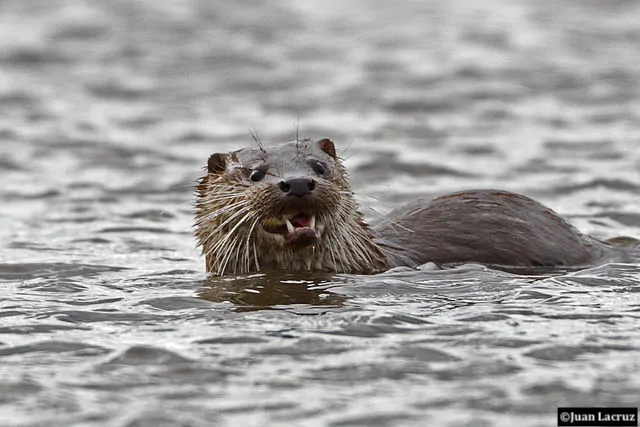 Despite the deterioration of the overall situation, certain conservation efforts have borne fruit. For example, although it was in a precarious situation a few decades ago, the European otter (“Least Concern”) has now recolonized vast areas in most French regions, and the Alpine ibex (“Near Threatened”),
after having nearly disappeared from the French Alpine arc, has repopulated several departments. As for the Iberian ibex (“Endangered”), thanks to reintroductions in the Pyrenees since 2014, it may soon be removed from the Red List. The threats it now faces are linked to climate-related risks or genetic factors. Indeed, high levels of inbreeding have been observed among the founding ibex, which all originated from the same reintroduced population of the victoriae
subspecies.
To reverse the overall trend, the assessors recommend halting the degradation of the natural environment, restoring wetlands and hedgerows, and maintaining extensive farming practices
. They also recommend “reconciling the energy transition with biodiversity conservation, in order to address the challenge of climate change while safeguarding species and their environments. For the most threatened mammals, targeted efforts must also be made to develop national action plans and strengthen those already underway.”
Despite the deterioration of the overall situation, certain conservation efforts have borne fruit. For example, although it was in a precarious situation a few decades ago, the European otter (“Least Concern”) has now recolonized vast areas in most French regions, and the Alpine ibex (“Near Threatened”),
after having nearly disappeared from the French Alpine arc, has repopulated several departments. As for the Iberian ibex (“Endangered”), thanks to reintroductions in the Pyrenees since 2014, it may soon be removed from the Red List. The threats it now faces are linked to climate-related risks or genetic factors. Indeed, high levels of inbreeding have been observed among the founding ibex, which all originated from the same reintroduced population of the victoriae
subspecies.
To reverse the overall trend, the assessors recommend halting the degradation of the natural environment, restoring wetlands and hedgerows, and maintaining extensive farming practices
. They also recommend “reconciling the energy transition with biodiversity conservation, in order to address the challenge of climate change while safeguarding species and their environments. For the most threatened mammals, targeted efforts must also be made to develop national action plans and strengthen those already underway.”
Read next
Research & Diagnostics
10/09/2026
WHO sets new diagnostic targets for Echinococcus granulosus in humans, dogs and sheep
Research & Diagnostics
10/09/2026
Nipah virus in wastewater: promising for early warning?
Research & Diagnostics
10/01/2026
Commentaires
No comments yet.
Sign in to comment