

Back to articles
Research & Diagnostics
Animal welfare
Bourgelat
Breed Standard
Canine Genetics
Canine Identification
Canine population
Canine Program
Cat Breed
Cat Breeder
Cat Breeding
Cat Love
Certificate of Confirmation
CGAAER
Chat
DGAL
Direction générale de l'alimentation
DMP
Dog
Dog breed
Dog breeder
Dog Breeding
Dog Confirmation
Dog Lovers
Dog Selection
Domestic carnivore
Dr. Veto
Epivet
European Cat
Feline Genetics
Feline Program
Francis Geiger
French Kennel Club
French Kennel Club studbook
French Stud Book
French Veterinary Academy
French-Speaking Society of Canine Training
General Food Council
Genetic defect
Genetic Testing
Hypertype
ICad
Inspector General of Public Health
Kitten
Livestock Management Software Developers
LOOF
Maryline Nau
Ministry of Agriculture
National Council of the Veterinary Order
National Registry for Domestic Carnivores
National Union of Private-Practice Veterinarians
Official Book of Feline Origins
Pedigree dog
Personal Medical Record
Puppy
Purebred cat
Purebred kitten
Purebred puppy
SCC
Selection Criteria
SFC
SNVEL
Studbook
Veterinarian
Veterinary Council
Veterinary Management Software
Veterinary practitioner
Veterinary public health inspector
Veterinary Software Developers
Vetocom
Purebred Dogs: The Evolution of the French Kennel Club (SCC) Requires a Revolution in Breed Management
V
Vetitude
11/10/2015
13 min read
0 comments
Share:
For several weeks now, the report by the General Council for Food, Agriculture, and Rural Areas (CGAAER) on the situation of purebred cats and pedigree dogs has been causing a stir among various professional organizations. This is not the first time a ministerial task force has concluded that there are shortcomings or an inability to properly manage dog breeding. But this time, the paths to progress are clearly outlined, and the language used is straightforward—a far cry from the diplomatic jargon of previous reports. The political and technical opportunities appear to be highly sought after.
The investigation commissioned by the Direction générale de l'alimentation (DGAL) and entrusted to Francis Geiger and Maryline Nau—inspectors general of public health within the CGAAER—was launched on June 5, 2013, following recurring criticism voiced for years by several organizations. They sought to understand why the French Kennel Club has been unable to reform itself. The example of the amendment to the bylaws, initiated in 2008, clearly illustrates the underlying issues. But beyond the association’s internal workings, the objective was to provide as comprehensive an overview as possible of the overhaul of the genetics of domestic carnivores, proposed as early as 2010 in a previous report. This work therefore also addressed the Official Book of Feline Origins (LOOF).
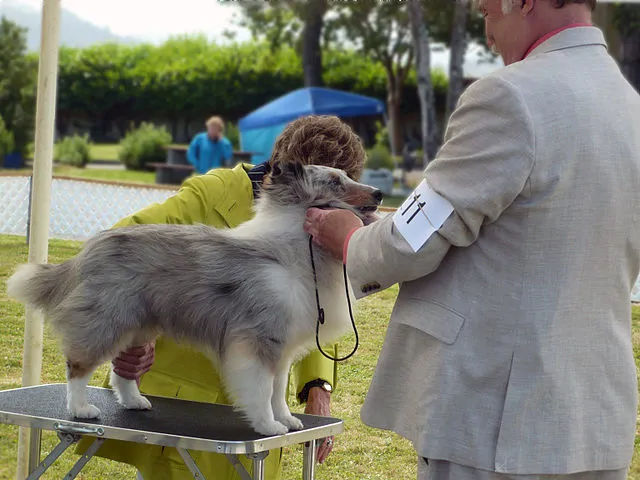 The total canine population is estimated at 7.42 million dogs, of which only 375,000 are pedigree dogs. This proportion is even lower among cats: 2.5%, or 258,000 purebred cats out of 11.41 million cats in France. The trends are opposite: while the canine population has declined by 2.24% over three years, the feline population has grown by 4.11%.
This does not mean that the French population consists mainly of mixed-breed animals. While 70% of cats—or 8.25 million—are European breeds
and therefore not registered with the LOOF, the situation is different for dogs. Seventy percent of dogs belong to a recognized dog breed or are related to one, totaling 5.2 million
dogs.
The real problem lies in the percentage of dogs permanently registered in the French Kennel Club studbook—that is, those with confirmed pedigrees. There are now only 375,000 such dogs, or 5% of the population. And when we add to this the fact that three-quarters of the dogs bred in France come from non-French Kennel Club studbook breeding stock,
the SCC’s representativeness in the world of dog breeding is seriously called into question. How can we even talk about managing canine genetics in such a context?
The report also takes issue with the very principle of conformation. Not only does it fail to provide a scientific basis for assessing the genetic qualities of the dogs shown—and thus potential future breeding stock—but this “funnel” concept also drastically reduces the number of potential breeding dogs and consequently depletes the genetic reserves of each dog breed.
As for the selection criteria established by various breed clubs, they appear to be rarely used by pedigree dog breeders: 1.7% of dogs registered in the French Kennel Club studbook are rated, and 7% of dogs have been shown
. This is far from the 10% required to identify an elite group.
The total canine population is estimated at 7.42 million dogs, of which only 375,000 are pedigree dogs. This proportion is even lower among cats: 2.5%, or 258,000 purebred cats out of 11.41 million cats in France. The trends are opposite: while the canine population has declined by 2.24% over three years, the feline population has grown by 4.11%.
This does not mean that the French population consists mainly of mixed-breed animals. While 70% of cats—or 8.25 million—are European breeds
and therefore not registered with the LOOF, the situation is different for dogs. Seventy percent of dogs belong to a recognized dog breed or are related to one, totaling 5.2 million
dogs.
The real problem lies in the percentage of dogs permanently registered in the French Kennel Club studbook—that is, those with confirmed pedigrees. There are now only 375,000 such dogs, or 5% of the population. And when we add to this the fact that three-quarters of the dogs bred in France come from non-French Kennel Club studbook breeding stock,
the SCC’s representativeness in the world of dog breeding is seriously called into question. How can we even talk about managing canine genetics in such a context?
The report also takes issue with the very principle of conformation. Not only does it fail to provide a scientific basis for assessing the genetic qualities of the dogs shown—and thus potential future breeding stock—but this “funnel” concept also drastically reduces the number of potential breeding dogs and consequently depletes the genetic reserves of each dog breed.
As for the selection criteria established by various breed clubs, they appear to be rarely used by pedigree dog breeders: 1.7% of dogs registered in the French Kennel Club studbook are rated, and 7% of dogs have been shown
. This is far from the 10% required to identify an elite group.
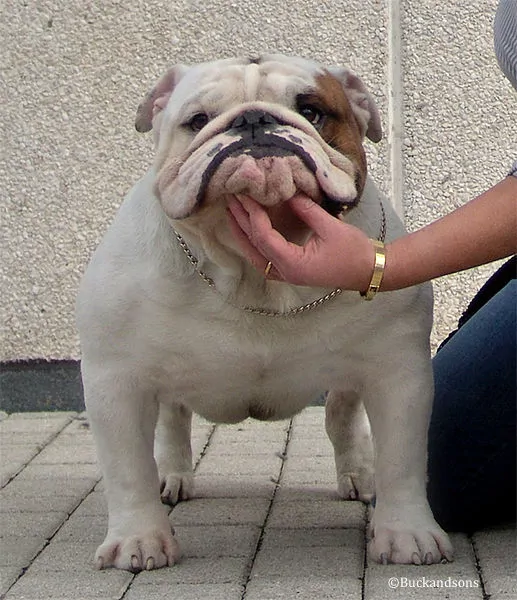 The report’s authors were surprised by the prominence of genetic research in the two species covered by the mission. While the LOOF has engaged in partnerships and published fact sheets, the SCC’s policy remains in its infancy. The report’s authors specifically mention the well-known working group created in 2008 to address genetic testing, which met only once that year. Information sheets were also published but were never distributed to potential stakeholders. This is a far cry from practices in the United States, for example, where some $2 million is allocated to the
American Kennel Club Canine Health Foundation
, or in the United Kingdom, which allocates 1 million pounds to the Kennel Club
Foundation.
During a session at the French Veterinary Academy in April 2012, two scientists, Catherine André and Jocelyn Plassais, concluded their presentation as follows: “Scientists agree that the evolution of pedigree dog breeds has led to the selection of gene alleles to meet desired criteria—primarily morphological characteristics—and has, in fact, to the accumulation of ‘adverse’ alleles, resulting in numerous genetic diseases in nearly all dog breeds. These same scientists are surprised by the limited resources allocated to research on this issue in France, a situation that is all the more regrettable given that dogs represent a unique model for studying spontaneously occurring diseases associated with many human clinical conditions of genetic origin. ”
The authors then emphasize that cat and dog breeding is characterized by:
The report’s authors were surprised by the prominence of genetic research in the two species covered by the mission. While the LOOF has engaged in partnerships and published fact sheets, the SCC’s policy remains in its infancy. The report’s authors specifically mention the well-known working group created in 2008 to address genetic testing, which met only once that year. Information sheets were also published but were never distributed to potential stakeholders. This is a far cry from practices in the United States, for example, where some $2 million is allocated to the
American Kennel Club Canine Health Foundation
, or in the United Kingdom, which allocates 1 million pounds to the Kennel Club
Foundation.
During a session at the French Veterinary Academy in April 2012, two scientists, Catherine André and Jocelyn Plassais, concluded their presentation as follows: “Scientists agree that the evolution of pedigree dog breeds has led to the selection of gene alleles to meet desired criteria—primarily morphological characteristics—and has, in fact, to the accumulation of ‘adverse’ alleles, resulting in numerous genetic diseases in nearly all dog breeds. These same scientists are surprised by the limited resources allocated to research on this issue in France, a situation that is all the more regrettable given that dogs represent a unique model for studying spontaneously occurring diseases associated with many human clinical conditions of genetic origin. ”
The authors then emphasize that cat and dog breeding is characterized by:
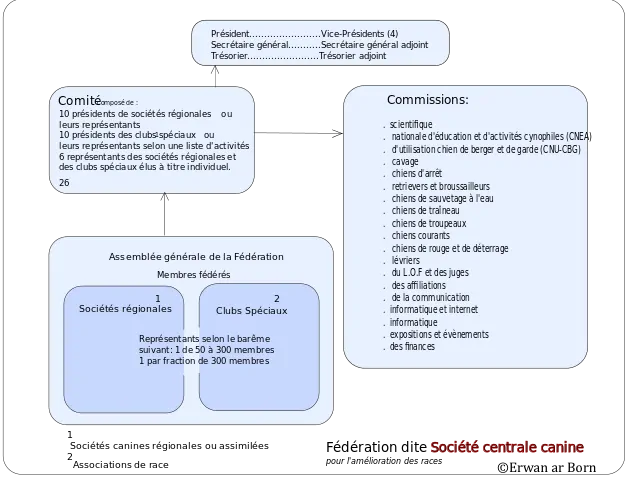 The rapporteurs also outlined how the dog and cat breeding communities operate. Regarding the SCC, its varied and profitable activities include maintaining the studbook for pedigree dogs, the French Kennel Club studbook, which accounts for 76% of its revenue (€9,850,000 for only 200,000 pedigree dog births per year). The “conformation show” activity accounts for nearly 20% of the revenue from “maintaining the studbook,” even though conformation shows do not contribute to the reliability of pedigree data.
It is also emphasized that the articles of incorporation and bylaws do not reflect the association’s primary mission: they prioritize regional canine societies (55) at the expense of breed clubs (110) and working dog clubs (1,200).
Finally, they conclude that there is confusion between the activities carried out as a recognized public-benefit association and those carried out as part of the public service mission delegated by the State. Similarly, “the lack of rigor reported in the management of the French Kennel Club studbook is evident.” The State has no leverage over the rates charged by the SCC, as the public service mission was delegated without a formal agreement. Maintaining the principle of granting approval to operators responsible for maintaining studbooks must necessarily be contingent upon the signing ofan agreement specifying the delegatee’s duties and granting the delegating authority the right to review the pricing of services resulting from the delegation of the public service mission in light of the service provided.”
Another point that has been raised—and frequently criticized—for years is that the SCC affiliates only one club per breed. Dissident breed clubs complain about their lack of official recognition and their inability to organize shows with officially recognized awards. However, Article D214-8 provides for the possibility of granting approval to the most representative specialized association for each dog breed or group of breeds. This approval is the responsibility of the Ministry of Agriculture, a duty it has almost never fulfilled. The two rapporteurs found no record of such approval for many dog breed clubs. They conclude this chapter as follows: “The affiliation of a single breed club appears to be contrary to the principle of freedom of association.”
The rapporteurs also outlined how the dog and cat breeding communities operate. Regarding the SCC, its varied and profitable activities include maintaining the studbook for pedigree dogs, the French Kennel Club studbook, which accounts for 76% of its revenue (€9,850,000 for only 200,000 pedigree dog births per year). The “conformation show” activity accounts for nearly 20% of the revenue from “maintaining the studbook,” even though conformation shows do not contribute to the reliability of pedigree data.
It is also emphasized that the articles of incorporation and bylaws do not reflect the association’s primary mission: they prioritize regional canine societies (55) at the expense of breed clubs (110) and working dog clubs (1,200).
Finally, they conclude that there is confusion between the activities carried out as a recognized public-benefit association and those carried out as part of the public service mission delegated by the State. Similarly, “the lack of rigor reported in the management of the French Kennel Club studbook is evident.” The State has no leverage over the rates charged by the SCC, as the public service mission was delegated without a formal agreement. Maintaining the principle of granting approval to operators responsible for maintaining studbooks must necessarily be contingent upon the signing ofan agreement specifying the delegatee’s duties and granting the delegating authority the right to review the pricing of services resulting from the delegation of the public service mission in light of the service provided.”
Another point that has been raised—and frequently criticized—for years is that the SCC affiliates only one club per breed. Dissident breed clubs complain about their lack of official recognition and their inability to organize shows with officially recognized awards. However, Article D214-8 provides for the possibility of granting approval to the most representative specialized association for each dog breed or group of breeds. This approval is the responsibility of the Ministry of Agriculture, a duty it has almost never fulfilled. The two rapporteurs found no record of such approval for many dog breed clubs. They conclude this chapter as follows: “The affiliation of a single breed club appears to be contrary to the principle of freedom of association.”
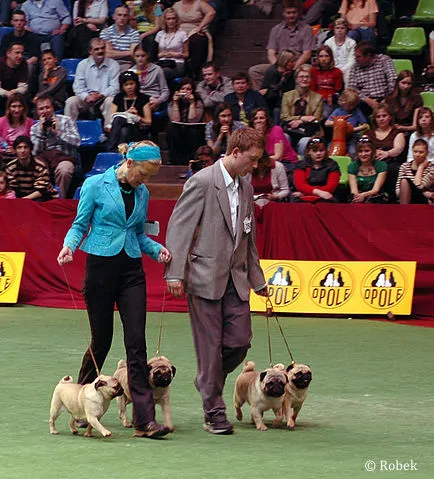 This is likely the most logical scenario, both scientifically and structurally. It aligns with the shift toward e-health in the dog and cat breeding industry. The only fly in the ointment: it could reopen old wounds—those stemming from years of negotiations in a toxic atmosphere between the SCC and the National Union of Veterinarians in Private Practice (SNVEL). This scenario implies that ICad will play an increasingly prominent role in the selection and breeding of dog breeds and cat breeds.
The benefits, however, are clear, particularly in terms of animal welfare. This arrangement would also restore a legitimate—though until now underestimated—role to the practising veterinarian, rather than the veterinary scientist. This distinction is not without consequences. It is, in fact, the position that the Francophone Society of Cynology (SFC) has advocated for years.
In practical terms, this would entail:
This is likely the most logical scenario, both scientifically and structurally. It aligns with the shift toward e-health in the dog and cat breeding industry. The only fly in the ointment: it could reopen old wounds—those stemming from years of negotiations in a toxic atmosphere between the SCC and the National Union of Veterinarians in Private Practice (SNVEL). This scenario implies that ICad will play an increasingly prominent role in the selection and breeding of dog breeds and cat breeds.
The benefits, however, are clear, particularly in terms of animal welfare. This arrangement would also restore a legitimate—though until now underestimated—role to the practising veterinarian, rather than the veterinary scientist. This distinction is not without consequences. It is, in fact, the position that the Francophone Society of Cynology (SFC) has advocated for years.
In practical terms, this would entail:
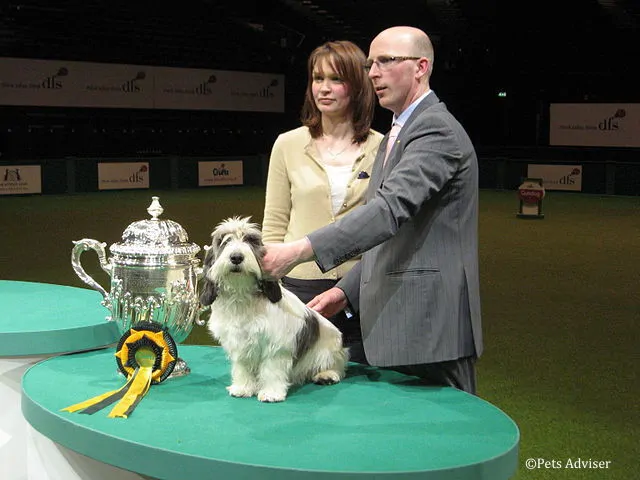
Pedigree dogs account for 5% of the French canine population
Genetic policies are undermining the health of pedigree dogs
- selection based primarily on beauty standards;
- the medicalization of breeding animals, which keeps alive those that pass on harmful alleles;
- assisted reproduction, which artificially maintains the reproductive capacity of breeding animals that have difficulty fulfilling this function;
- inbreeding necessary to maintain a standard, leading to the depletion of genetic reserves;
- a drift toward the “hypertype,” observed in many dog breeds and cat breeds, with the concomitant emergence of genes—and even diseases—linked to this selection process.
The Current Management Framework: Confusion and Criticism
Is the government responsible for this mess?
Another noteworthy aspect of this report is the brief legal analysis conducted by the rapporteurs. It reveals that the government is no longer responsible for the genetic improvement of dogs and cats; it merely recognizes studbooks. At the same time, neither the SCC nor the LOOF has the necessary legislative and regulatory foundations to be recognized as breeding organizations. This report also refers to the 2005 Coperci report, which criticized the SCC’s internal operations. Frédéric Geiger and Maryline Nau show that the mindset has changed little. There is still no cost accounting, but rather a lack of rigor, with services offered well below market price—such as DNA testing—and so on. They also note that “this association must absolutely evolve to keep up with the times.” Sic! This stands in contrast to the assessment made regarding the LOOF.The four proposed scenarios with the government at the center of the plan
> Scenario 1: Strengthening the approval requirements for operators maintaining studbooks. The aim is to give the government the means to oversee the delegation of authority. It relies primarily on a regulatory change:- the publication of a decree rewriting Articles D214-8 through D214-15 of Book II of the Rural Code, stipulating the requirement to accredit operators responsible for maintaining studbooks;
- the publication of an order setting forth the procedures for maintaining studbooks (specifications detailing the conditions for data management, processing, and access, as well as the issuance of pedigree documents, and requiring the accredited operator to be certified by a certifying body);
- the selection of candidates based on an application that meets the specifications;
- the signing of an agreement and the publication of decrees granting approval to the managers of the studbooks.
- rewriting Articles D214-8 through D214-15 would establish the conditions for recognizing studbooks;
- a new decree would establish the procedures for recognizing studbooks, rather than their maintenance as was previously the case;
- the review and processing of applications for recognition;
- the final publication of decrees recognizing studbooks, rather than the administrators of those studbooks.
- always issuing an amending decree that defines the studbook as a section of the national identification registry for domestic carnivores and requires operators authorized to transmit pedigree data to obtain approval;
- publishing the approval requirements for operators authorized to transmit pedigree data to the national identification registry for domestic carnivores;
- selecting candidates based on the specifications;
- publish the approvals of the selected operators.
Another Approach: The Personal Medical Record
This solution advocates a return to the basics:- high-quality, healthy, and well-balanced dogs and cats;
- a broadening of the breeding pool;
- traceability throughout the entire canine and feline industry, for puppies and kittens whether or not they are registered with the French Kennel Club studbook or LOOF.
- create a unique identification number to develop a new system for data processing;
- revise the indexing of breeding animals through dynamic management of these animals;
- adopt an approach that considers both the individual breeding animal and the breeding operation;
- place the veterinarian responsible for the breeding operation at the center of the selection process.
Read next
Research & Diagnostics
10/09/2026
WHO sets new diagnostic targets for Echinococcus granulosus in humans, dogs and sheep
Research & Diagnostics
10/09/2026
Nipah virus in wastewater: promising for early warning?
Research & Diagnostics
10/01/2026
Commentaires
No comments yet.
Sign in to comment