

Back to articles
Research & Diagnostics
Cancer
Perfluoroalkyl compounds
Persistent Pollutants
PFAS
Pollution
Polyfluoroalkylated
Sentinel
Thyroid
Toxicity
Persistent Pollutants: Dogs and Horses as Indicators of PFAS Exposure
V
Vetitude
08/24/2023
2 min read
0 comments
Share:
The University of North Carolina identified high levels of perfluoroalkyl and polyfluoroalkyl substances (PFAS) in the blood of 31 dogs and 32 horses tested in a U.S. state known for its high levels of industrial pollution. As with human health, the kidney and liver health of pets is likely to be affected by long-term exposure to PFAS.
As part of the discovery of high concentrations of “forever chemicals” in blood samples collected from these 63 animals, it was found that dogs had significantly higher contamination levels than horses. In total, 20 of the 33 perfluoroalkyl and polyfluoroalkyl substances tested for were detected! All of the animals had at least one substance from this family in their blood, and more than half of them had at least 12 of the 20 types of PFAS tested for. These dogs and horses living in North Carolina were all exposed to contaminated drinking water. But even samples from dogs that drank only bottled water contained 16 of the 20 chemicals in question! This confirms the existence of other sources of contamination within the home, such as dust or food.
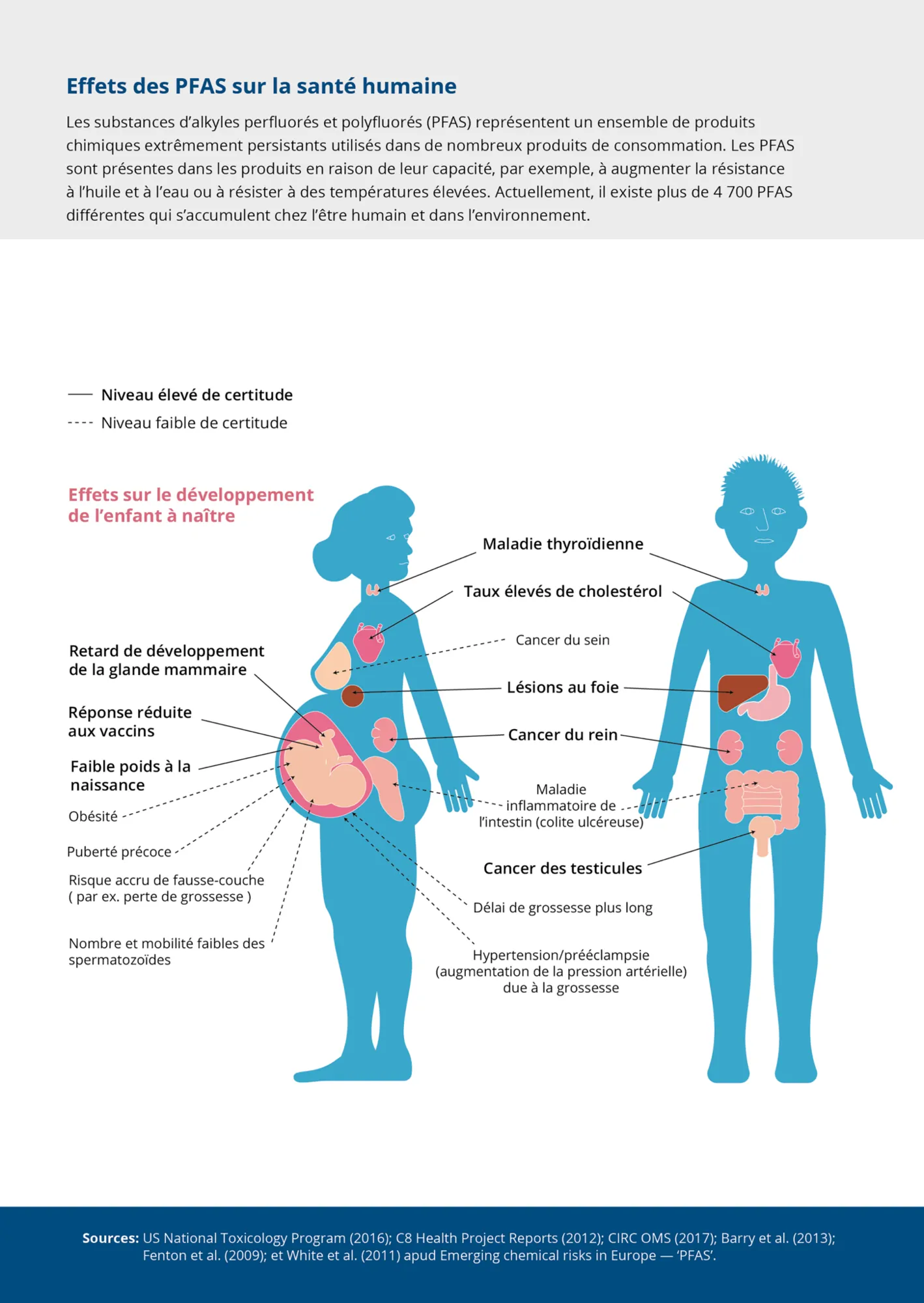
This makes these two animal species sentinels for human health, specifically regarding the risk of environmentally related diseases (kidney or testicular cancer, thyroid diseases, etc.). The biomarkers identified in this study are identical to the biological indicators used to assess dysfunction in the human liver and kidneys—the organs most affected by PFAS toxicity in humans. The kidney and liver health of domestic animals is also sensitive to long-term exposure to PFAS. Furthermore, it was noted that canine samples contained PFAS concentrations similar to those found in children, highlighting the importance of monitoring these levels in dogs to track the impact of household pollutants.
As a reminder, PFAS persist for a long time in both the body and the environment. They are found in industrial waste as well as in firefighting foams and various household products. This is yet another example of the importance of adopting a “One Health” strategy for the prevention and monitoring of environmentally related diseases.
Read next
Research & Diagnostics
10/09/2026
WHO sets new diagnostic targets for Echinococcus granulosus in humans, dogs and sheep
Research & Diagnostics
10/09/2026
Nipah virus in wastewater: promising for early warning?
Research & Diagnostics
10/01/2026
Commentaires
No comments yet.
Sign in to comment