

Back to articles
Olfactory system: Human sense of smell can rival that of other mammals
V
Vetitude
05/15/2017
4 min read
0 comments
Share:
According to recent research, the human nose may be able to detect more than a trillion different odors—certainly far more than the 10,000 commonly accepted until the 20th century. While dogs have a higher concentration of olfactory receptors than humans, for certain odors such as amyl acetate (the odor-producing molecule in bananas), the human sense of smell is more sensitive. Thus, human olfactory abilities have been largely underestimated until now and are just as capable as those of other mammals, such as dogs and rodents, according to neuroscientist John McGann in the journal *Science*.
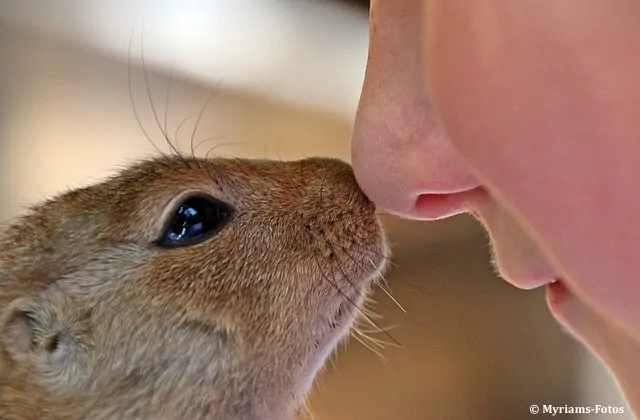 At first glance, when it comes to detecting odors, human abilities have always been considered weak and limited compared to those of dogs or rats, for example. But this long-held belief is increasingly being challenged. A recent study even argues that the human sense of smell has not only been vastly underestimated but is actually capable of rivaling that of dogs and rodents. The study’s author, a neuroscientist at the University of New Jersey, reached this unexpected conclusion after spending fourteen years studying the olfactory system of mammals.
According to his research, it was Paul Broca
, a pioneering French physician in 19th-century brain research, who is believed to have introduced the notion of inferior human olfaction into the scientific literature. This anatomist had observed that the olfactory bulb in humans is smaller, relative to the total volume of the brain, than in dogs or rats.
This discovery inspired the theory that the evolution of free will (linked to the enlargement of the human frontal lobe) occurred at the expense of the sense of smell. This supposed olfactory atrophy notably influenced Sigmund Freud, who saw a link between it and human mental illness.
Conversely, John McGann has shown that, in absolute terms, the human olfactory bulb is larger and more complex than that of many mammalian species believed to possess a superior sense of smell. A review of the literature on the subject further revealed that the absolute number of olfactory neurons remains remarkably similar across 24 mammalian species, including humans. Human neurobiological and sensory capabilities would thus fall within the average range.
These analyses also served to refute other data that supported the idea of a limited human sense of smell. For example, since humans have approximately 1,000 genes encoding olfactory receptors, compared to
1,100 in mice, some had concluded that mice have superior olfactory abilities. However, other studies suggest that there is no correlation between the number of genes involved in olfaction and the ability to perceive odors
. For instance, one study revealed that cows have 2,000 of these genes—far more than dogs.
John McGann acknowledges that dogs have 60 times more olfactory receptor neurons than humans,
which likely explains their more highly developed ability to detect certain odorous molecules, such as those emitted by explosives. However, humans, for their part, are more sentient beings than dogs when it comes to certain odors—for example, amyl acetate (the odor-producing molecule in bananas)—likely because detecting ripe fruit was important to our ancestors but of no interest to dogs. Similarly, humans are better than mice at detecting a foul-smelling compound in human blood. Humans can detect and distinguish a wide range of odors, are capable of following a scent trail just like dogs, and their olfactory environment influences their behavioral and emotional states.
While the findings of this study on the superiority of human olfaction have convinced some scientists, others remain more skeptical. Alexandra Horowitz, who studies canine olfaction at Barnard College
in New York, notes that dogs are capable of tracking many different scents, detecting the presence of drugs or weapons, and screening for ovarian cancer in plasma samples, whereas most humans are barely capable of picking up a few unpleasant odors or identifying certain pleasant scents—and nothing more. The fact that there are specialists in olfaction—such as “noses” among perfumers or sommeliers—indicates, she says, that while humans may be able to decipher more olfactory messages and reach a much higher level, they cannot claim to rival a dog’s sense of smell.
A dog’s perception of the world differs from ours, which relies primarily on sight. For dogs, on the other hand, smell takes precedence over sight; they perceive their surroundings first and foremost with their noses** and derive a wealth of information from this—not only about what is present in the immediate vicinity, but also about what has passed by and in which direction, and even what is about to round the corner...
* John P. McGann: “Poor human olfaction is a 19th-century myth,” Science, May 2017, http://science.sciencemag.org/content/356/6338/eaam7263
** http://ed.ted.com/lessons/how-do-dogs-see-with-their-noses-alexandra-horowitz
At first glance, when it comes to detecting odors, human abilities have always been considered weak and limited compared to those of dogs or rats, for example. But this long-held belief is increasingly being challenged. A recent study even argues that the human sense of smell has not only been vastly underestimated but is actually capable of rivaling that of dogs and rodents. The study’s author, a neuroscientist at the University of New Jersey, reached this unexpected conclusion after spending fourteen years studying the olfactory system of mammals.
According to his research, it was Paul Broca
, a pioneering French physician in 19th-century brain research, who is believed to have introduced the notion of inferior human olfaction into the scientific literature. This anatomist had observed that the olfactory bulb in humans is smaller, relative to the total volume of the brain, than in dogs or rats.
This discovery inspired the theory that the evolution of free will (linked to the enlargement of the human frontal lobe) occurred at the expense of the sense of smell. This supposed olfactory atrophy notably influenced Sigmund Freud, who saw a link between it and human mental illness.
Conversely, John McGann has shown that, in absolute terms, the human olfactory bulb is larger and more complex than that of many mammalian species believed to possess a superior sense of smell. A review of the literature on the subject further revealed that the absolute number of olfactory neurons remains remarkably similar across 24 mammalian species, including humans. Human neurobiological and sensory capabilities would thus fall within the average range.
These analyses also served to refute other data that supported the idea of a limited human sense of smell. For example, since humans have approximately 1,000 genes encoding olfactory receptors, compared to
1,100 in mice, some had concluded that mice have superior olfactory abilities. However, other studies suggest that there is no correlation between the number of genes involved in olfaction and the ability to perceive odors
. For instance, one study revealed that cows have 2,000 of these genes—far more than dogs.
John McGann acknowledges that dogs have 60 times more olfactory receptor neurons than humans,
which likely explains their more highly developed ability to detect certain odorous molecules, such as those emitted by explosives. However, humans, for their part, are more sentient beings than dogs when it comes to certain odors—for example, amyl acetate (the odor-producing molecule in bananas)—likely because detecting ripe fruit was important to our ancestors but of no interest to dogs. Similarly, humans are better than mice at detecting a foul-smelling compound in human blood. Humans can detect and distinguish a wide range of odors, are capable of following a scent trail just like dogs, and their olfactory environment influences their behavioral and emotional states.
While the findings of this study on the superiority of human olfaction have convinced some scientists, others remain more skeptical. Alexandra Horowitz, who studies canine olfaction at Barnard College
in New York, notes that dogs are capable of tracking many different scents, detecting the presence of drugs or weapons, and screening for ovarian cancer in plasma samples, whereas most humans are barely capable of picking up a few unpleasant odors or identifying certain pleasant scents—and nothing more. The fact that there are specialists in olfaction—such as “noses” among perfumers or sommeliers—indicates, she says, that while humans may be able to decipher more olfactory messages and reach a much higher level, they cannot claim to rival a dog’s sense of smell.
A dog’s perception of the world differs from ours, which relies primarily on sight. For dogs, on the other hand, smell takes precedence over sight; they perceive their surroundings first and foremost with their noses** and derive a wealth of information from this—not only about what is present in the immediate vicinity, but also about what has passed by and in which direction, and even what is about to round the corner...
* John P. McGann: “Poor human olfaction is a 19th-century myth,” Science, May 2017, http://science.sciencemag.org/content/356/6338/eaam7263
** http://ed.ted.com/lessons/how-do-dogs-see-with-their-noses-alexandra-horowitz
Read next
Research & Diagnostics
10/09/2026
WHO sets new diagnostic targets for Echinococcus granulosus in humans, dogs and sheep
Research & Diagnostics
10/09/2026
Nipah virus in wastewater: promising for early warning?
Research & Diagnostics
10/01/2026
Commentaires
No comments yet.
Sign in to comment