

Back to articles
Research & Diagnostics
Clam
Climate
Climate change
Crab
Crustacean
Domoic acid
Ecosystem
Neurotoxin
Ocean
Otter
Toxin
Warming
Ocean Warming: A Toxin Threatens Sea Otters
MR
Mia Rozenbaum
04/08/2021
3 min read
0 comments
Share:
With climate change and ocean warming, domoic acid is accumulating at increasingly high levels in ocean food webs. This neurotoxin has disastrous consequences for marine life. Exposure to this amino acid, in particular, increases the risk of fatal heart disease in sea otters by a factor of 1.7. And this trend is not expected to slow down—quite the contrary.
The year 2020 is a grim milestone in terms of climate change. According to the World Meteorological Organization, it was the third-hottest year on record. Carbon dioxide concentrations reached record levels, and ocean temperatures were 0.075° higher than the average for the 1950–2010 period.
On its own, this figure may seem small, but what appears to be a minor increase is actually a massive change on such a vast scale. In fact, for such a temperature to be reached, the oceans had to absorb an increase of approximately 228 sextillion joules (or 228,000,000,000,000,000,000,000). By comparison, the atomic bomb that devastated Hiroshima released 63,000,000,000,000 joules of energy.
The amount of heat added to the world’s oceans over the past twenty-five years is therefore equivalent to 3.6 billion atomic explosions, the researchers explain. This comparative image is all the more striking when scaled down to a single year. In 2019, the oceans reportedly absorbed heat equivalent to 5 atomic bombs exploding every second, day and night, for all 365 days of the year. It’s as if each of the 7.5 billion people on Earth were simultaneously and continuously pointing a hair dryer at the ocean...
But water isn’t the only thing experiencing this warming. The ocean is a complex ecosystem. However, marine flora and fauna cannot adapt quickly enough to this rise in temperature, which threatens their survival. As a result, mortality rates are rising among fish, birds, and marine mammals.
Researchers have focused in particular on the increasing presence of domoic acid in food webs. This neurotoxin is produced by harmful algal blooms, which intensify when the water is exceptionally warm. This acid poisons crabs and clams, among other species,
which has significant consequences for associated ecosystems, particularly those of their predators.
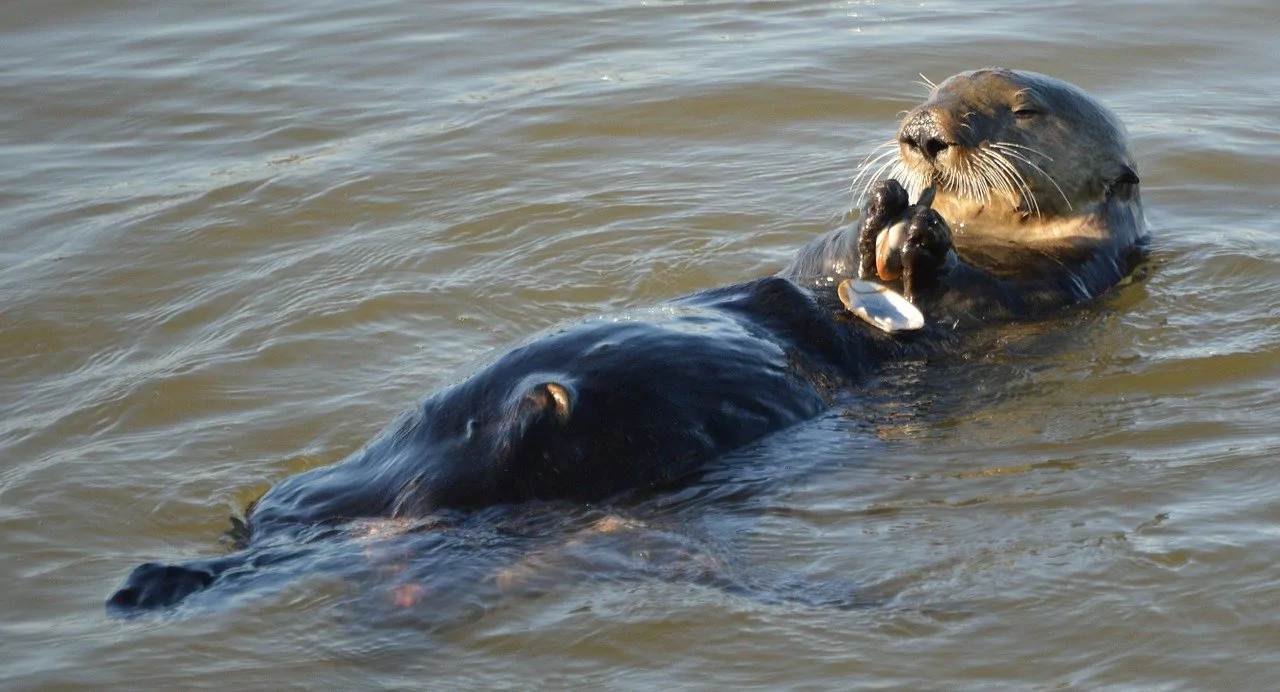
Sea otters, which regularly consume these crustaceans, suffer cardiovascular effects from exposure to domoic acid in marine ecosystems. In fact, researchers were able to show that exposure to the neurotoxin increases the risk of sea otters dying from heart disease by a factor of 1.7.
The risk is even 2.5 times higher in animals whose diet consists largely of crabs and clams.
The study is the first to reveal a concerning and unexpected trend: exposure to domoic acid is particularly harmful to adult sea otters, whose survival is vital for reproduction and population growth. This does not bode well for this already endangered species.
Given their unique biology and specialized diet, sea otters are extremely vulnerable to toxic algal blooms. They serve as sentinels of the coastal environment and as remarkable indicators of the presence of domoic acid with high toxicity, which is likely to accumulate further in the coming years and harm not only marine animals but also human populations.
Read next
Research & Diagnostics
10/09/2026
WHO sets new diagnostic targets for Echinococcus granulosus in humans, dogs and sheep
Research & Diagnostics
10/09/2026
Nipah virus in wastewater: promising for early warning?
Research & Diagnostics
10/01/2026
Commentaires
No comments yet.
Sign in to comment