

Back to articles
Neonicotinoids: The harmful effects of these pesticides go far beyond bees
B
bertrand-neveux
04/22/2015
3 min read
0 comments
Share:
Thirteen independent experts from the European Academies’ Science Advisory Council (EASAC) reviewed more than 100 recent studies on the impact of neonicotinoids on ecosystems. According to their report*, submitted in Brussels on April 13, 2015, the preventive use of these neurotoxic insecticides has “serious harmful effects” on non-target organisms, such as pollinators, natural predators of pests, and soil organisms.
According to European experts at EASAC, the focus on honeybees has distorted the debate surrounding neonicotinoids. Evidence is mounting: it is now clear that their widespread use has harmful repercussions on a wide range of organisms that provide essential services to agriculture—such as pollination and natural pest control—as well as on biodiversity.
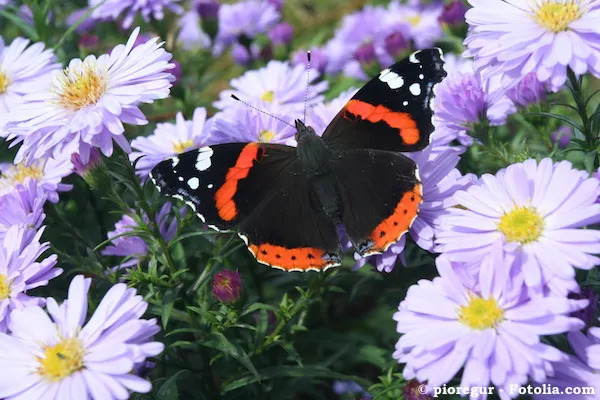
While honeybee colonies decimated by neonicotinoids have been the focus of attention, many other pollinator species—such as bumblebees, wild bees, hoverflies, butterflies, and moths have also seen their populations decline across Europe in recent decades. Protecting bees alone is therefore not enough to ensure sustainable agriculture. Studies also show that pollinator diversity can improve crop yields or fruit quality. Restoring and maintaining this diversity is therefore crucial not only for farmland but also for natural vegetation.
 However, intensive agriculture has become dependent on neonicotinoids, with its proponents arguing that phasing them out would have serious implications both economically and in terms of food safety.
Nevertheless, EASAC notes that recent research calls into question the benefits of systematically treating seeds against pests. In some cases, in fact, the use of neonicotinoids has even exacerbated infestation problems by eliminating insects that act as antiparasitic predators.
Furthermore, the prophylactic use of these insecticides is incompatible with the basic principles of integrated pest management adopted by the European Union in 2009**.
As EASAC acknowledges, all pesticides involve a balance between the desired effect on food production and the risk of collateral damage to non-target species and the environment. In the case of neonicotinoids, advances in scientific knowledge over the past two years require a reassessment of this risk-benefit balance. Their sublethal effects, in particular, must be taken into account in the approval procedures for plant protection products within the EU.
The European Commission must therefore, in light of this report’s findings, reexamine its decision—adopted in May 2013 to protect bees—to ban the use of three neonicotinoids (clothianidin, imidacloprid, and thiamethoxam). Fipronil will also be included in this review
.
The broader and longer-term risks to the environment and the sustainability of agriculture must be considered alongside the short-term impacts on the economy and food safety, concludes EASAC.
* Ecosystem services, agriculture, and neonicotinoids, EASAC, April 2015, http://www.easac.eu/fileadmin/Reports/Easac_15_ES_web_complete_01.pdf** Directive 2009/128/EC of the European Parliament and of the Council, October 21, 2009, establishing a framework for Community action to achieve the sustainable use of pesticides.
However, intensive agriculture has become dependent on neonicotinoids, with its proponents arguing that phasing them out would have serious implications both economically and in terms of food safety.
Nevertheless, EASAC notes that recent research calls into question the benefits of systematically treating seeds against pests. In some cases, in fact, the use of neonicotinoids has even exacerbated infestation problems by eliminating insects that act as antiparasitic predators.
Furthermore, the prophylactic use of these insecticides is incompatible with the basic principles of integrated pest management adopted by the European Union in 2009**.
As EASAC acknowledges, all pesticides involve a balance between the desired effect on food production and the risk of collateral damage to non-target species and the environment. In the case of neonicotinoids, advances in scientific knowledge over the past two years require a reassessment of this risk-benefit balance. Their sublethal effects, in particular, must be taken into account in the approval procedures for plant protection products within the EU.
The European Commission must therefore, in light of this report’s findings, reexamine its decision—adopted in May 2013 to protect bees—to ban the use of three neonicotinoids (clothianidin, imidacloprid, and thiamethoxam). Fipronil will also be included in this review
.
The broader and longer-term risks to the environment and the sustainability of agriculture must be considered alongside the short-term impacts on the economy and food safety, concludes EASAC.
* Ecosystem services, agriculture, and neonicotinoids, EASAC, April 2015, http://www.easac.eu/fileadmin/Reports/Easac_15_ES_web_complete_01.pdf** Directive 2009/128/EC of the European Parliament and of the Council, October 21, 2009, establishing a framework for Community action to achieve the sustainable use of pesticides.
Read next
Research & Diagnostics
10/09/2026
WHO sets new diagnostic targets for Echinococcus granulosus in humans, dogs and sheep
Research & Diagnostics
10/09/2026
Nipah virus in wastewater: promising for early warning?
Research & Diagnostics
10/01/2026
Commentaires
No comments yet.
Sign in to comment