

Back to articles
Research & Diagnostics
Anchovies
Bacteria
Cosmetics
Cycloolefinic
Food chain
Guillemot
Gyre
Heavy Metals
Microplastic
Pathogenic
Plankton
Plastic
Pollution
Polymers
Squid
Textiles
Virus
Waste
Microplastic Pollution: Serious Consequences for Animal Health… and Human Health
BN
Bertrand Neveux
11/27/2022
7 min read
0 comments
Share:
The seventh continent has become infamous in recent years. It consists largely of five plastic gyres scattered around the world. The consequences for marine flora and fauna are dramatic. Early scientific studies are sounding the alarm about the consequences for human health.
“It’s marine snow—a ceaseless drizzle of death and debris falling from the surface into the depths of the sea…” Thus begins Sabrina Imbler’s article published in April 2022 in The New York Times. “This snow begins as particles that aggregate into dense flakes, which gradually sink and drift until they reach the mouths of scavengers below. But even when devoured, the marine snow will most likely become snow again, for the gut of a squid is merely a stopover on this long descent into the abyss.”
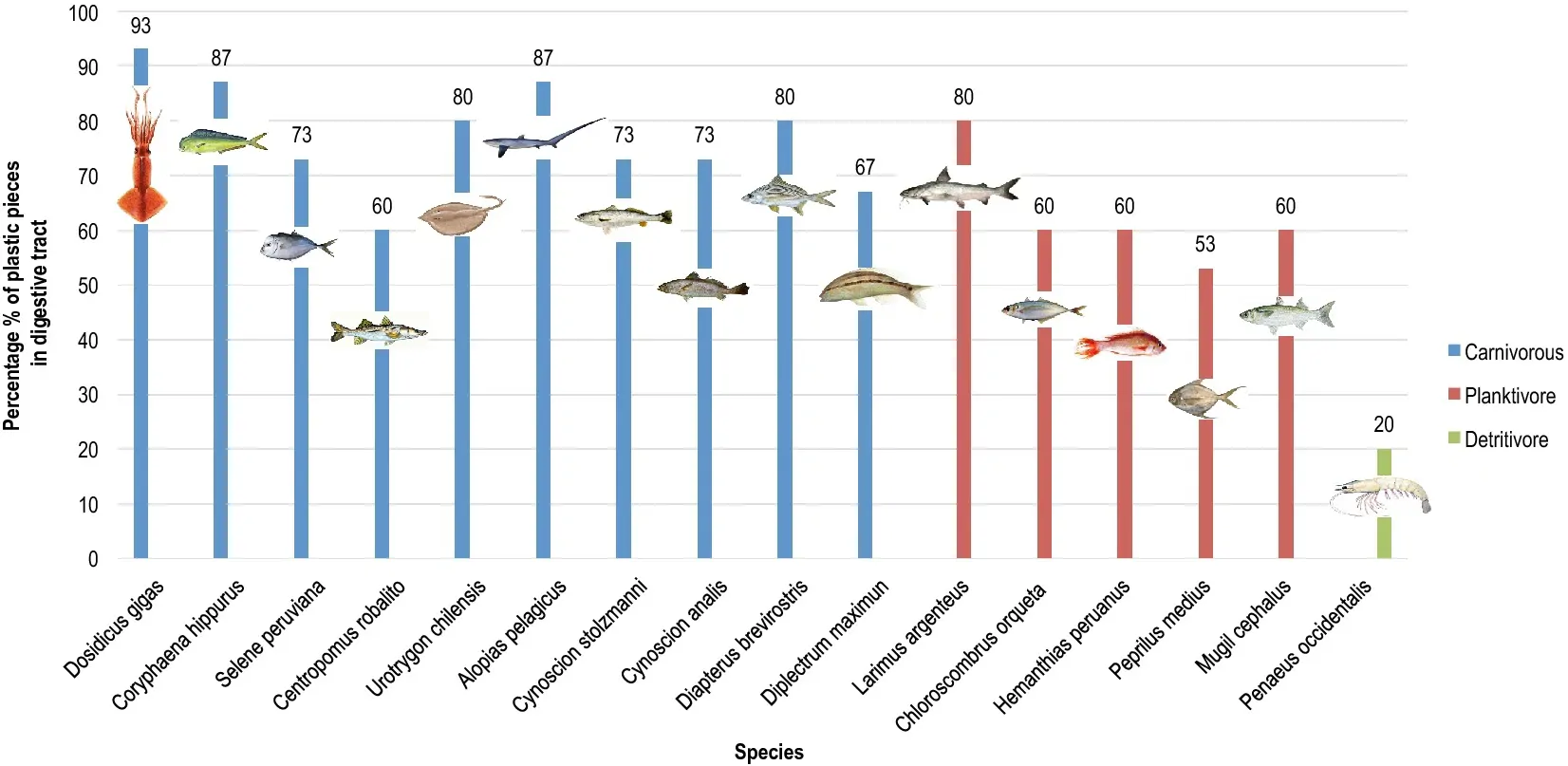 The microplastic particles found in 16 different marine species intended for human consumption were purchased from the most representative ports along Ecuador’s Pacific coast[/caption]
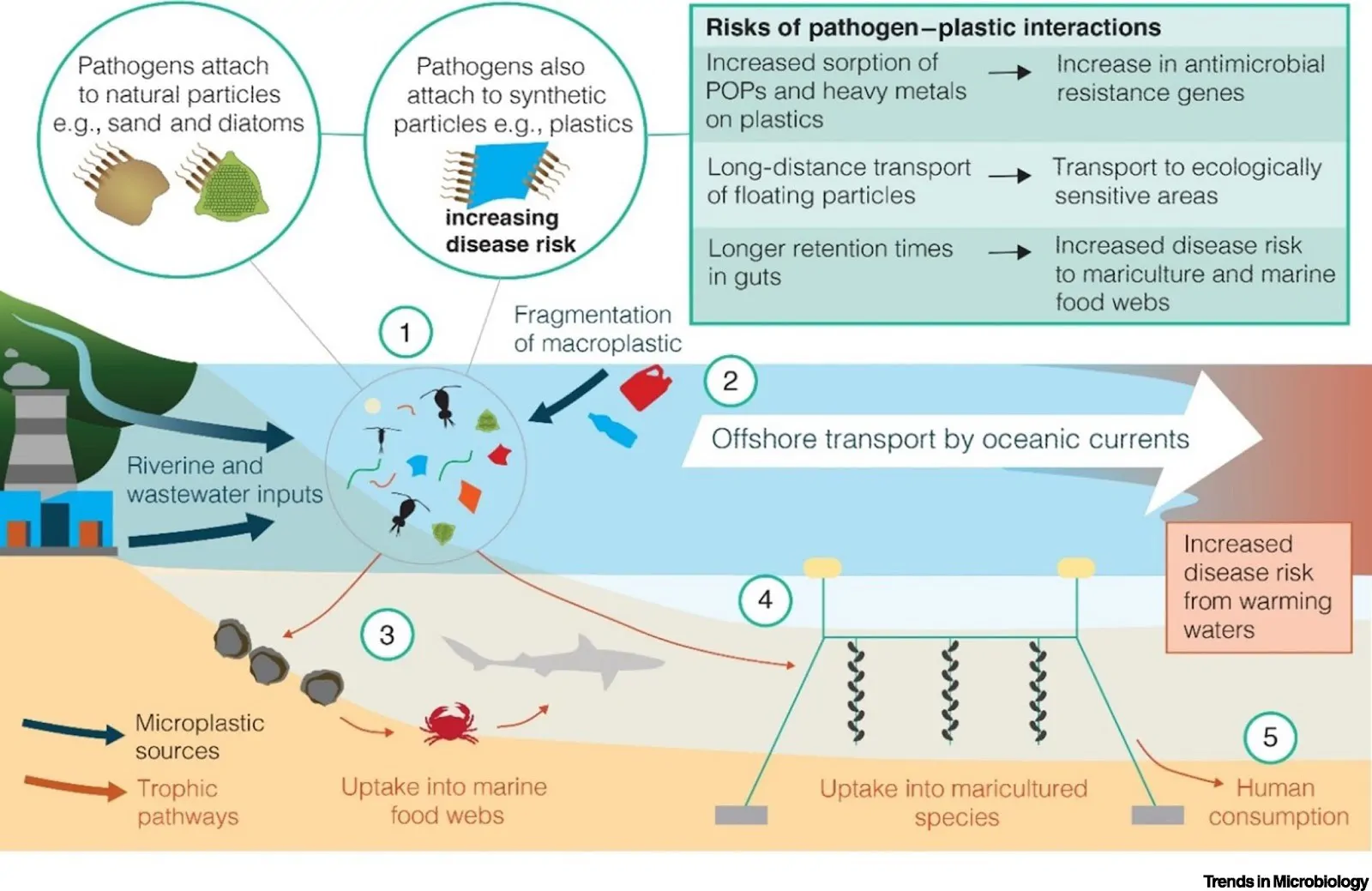
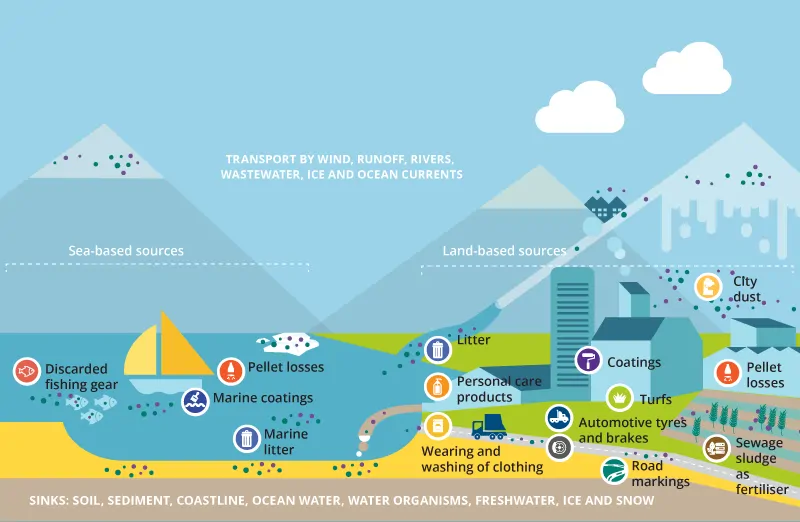 Sources of microplastics, release pathways, and sinks[/caption]
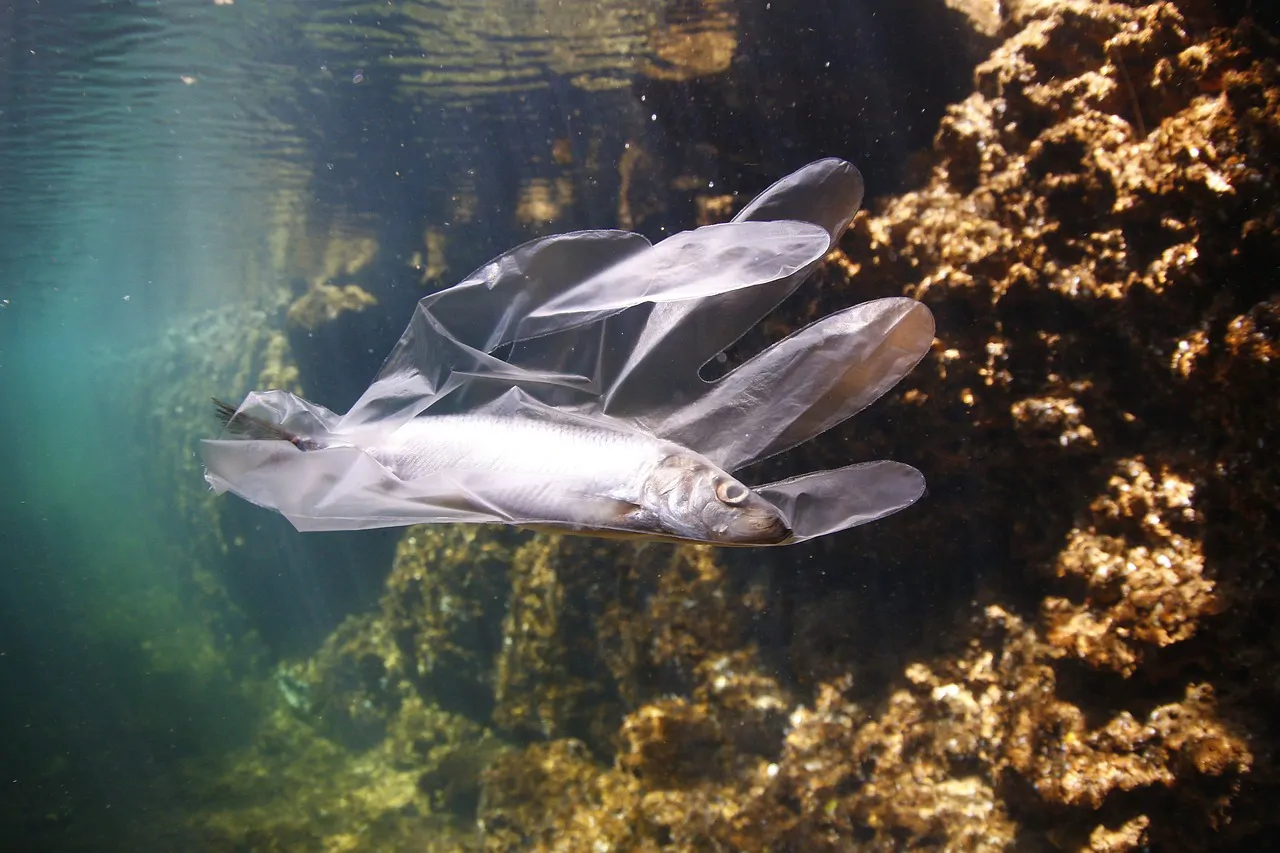
Microplastics: These “plastic soups” the size of a continent
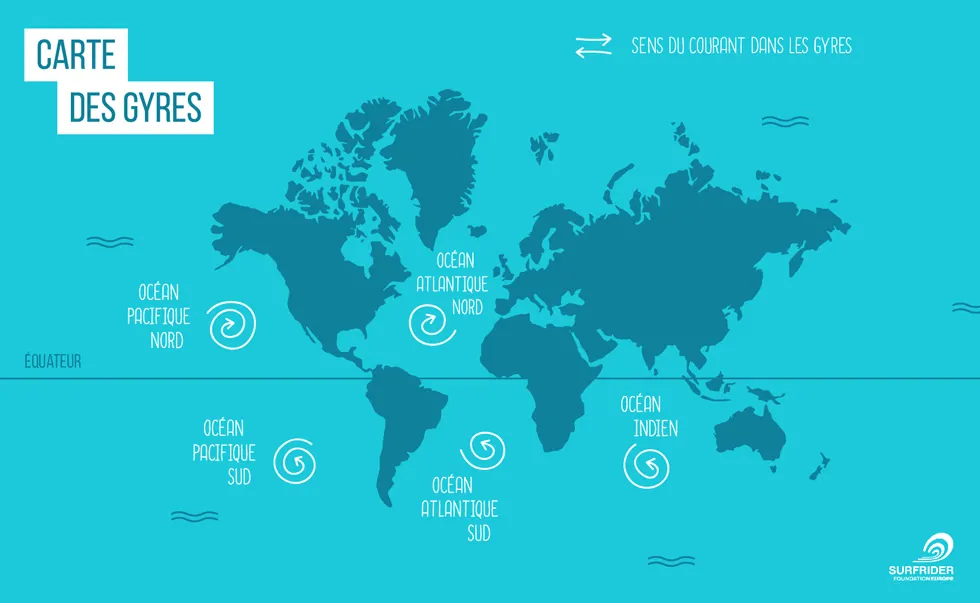
These “plastic soups”—the ocean gyres—are the result of eddies and ocean currents that accumulate plastic waste within five subtropical regions of the globe. The largest—and most infamous—gyre is the North Pacific Gyre, which spans 3.43 million square kilometers (equivalent to one-third of Europe or six times the size of France) and extends to a depth of 10 to 30 meters! Each year, of the 8 million metric tons of debris that accumulates in the oceans, 70% sinks to the depths and 30% remains on the surface. According to a 2020 study, surface estimates may actually represent only 1% of the plastic actually present in the oceans. The spatial distribution and ultimate fate of microplastics are believed to be strongly influenced by deep-sea currents. Yet these so-called thermohaline currents are known to supply oxygen and nutrients to deep-sea fauna… Another study from 2017 provides an assessment of plastic flow: according to the simulations conducted, 99.8% of the plastic introduced into the oceans since 1950 is currently at a depth of 100 m, comprising 83.7% macroplastics, 13.8% microplastics, and 2.5% nanoplastics (less than 0.335 mm).Contamination Starting at the Very Top of the Food Chain
The volume of plastic dumped into the oceans is estimated at some 5,000 billion particles. The main sources of microplastic pollution are cosmetics, textiles, tires, coatings (including paint), and residues. Nanoplastics are primarily produced by the degradation of plastics already present in the marine environment. The long-distance and vertical migration of these microplastics contributes to the contamination of marine ecosystems from the earliest links in the food web all the way up to top predators, facilitates the spread of invasive or pathogenic agents (heavy metals, cycloolefin polymers, etc.) and causes poisoning in living marine organisms through ingestion. The toxicological effects of microplastics are well documented: of 6,000 plankton samples analyzed, 60% were found to be contaminated. Beyond the risks to individual organisms, there is the issue of disruption to the food web, as contaminated zooplankton consume fewer prey items. For example, in copepods, this can reduce the ingested carbon biomass by 40%, leading to energy loss, smaller egg size, reduced hatching rates, decreased reproduction, and diminished mobility—not to mention the emergence of developmental and growth abnormalities. These findings do not take into account the damage caused to living organisms by organic pollutants, aromatic hydrocarbons, heavy metals, and other polychlorinated biphenyls.Microplastics also affect predators
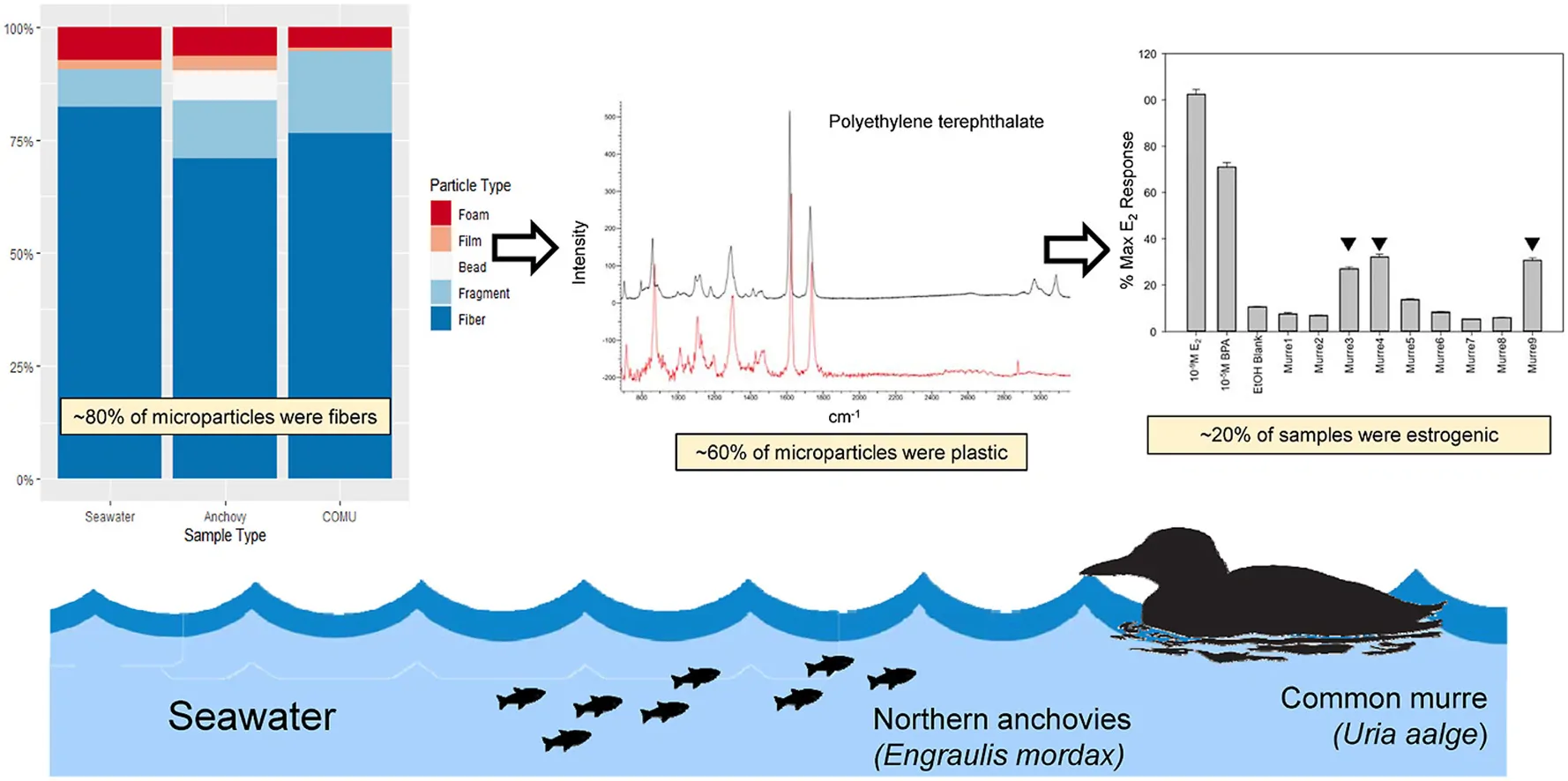
A study on microplastic pollution in Monterey Bay, California, reveals widespread contamination of seawater by this waste, which has been found in the digestive tracts of anchovies and, consequently, in guillemots—seabirds that feed on these fish. Scientists found that all of these animals were contaminated with microplastics and that 23% of them contained particles with estrogenic activity. In short, these plastic nanoparticles are potential endocrine disruptors for the entire food chain, causing cascading effects on the reproduction and immune systems of marine wildlife. The study revealed that 58% of the anchovies and 100% of the guillemots had microparticles smaller than 5 mm in their digestive tracts, 78% of which consisted of fibers (cotton or polyester) and 57% plastic. Seawater samples contained approximately two microparticles per 1,000 liters. Because of their diet, anchovies concentrate these microparticles by filtering plankton, making them a source of poisoning for the guillemots that feed on them. Furthermore, this study focused only on microplastics. However, it is well established that seabirds also consume relatively large pieces of plastic. This pollution has a real impact on health, as many chemicals associated with plastics are recognized as endocrine disruptors.Microplastics: Vectors of Pathogens
A CNRS unit in Bordeaux highlights the importance of plastic pollution in the spread of viral and bacterial diseases. It has focused on microplastics as vectors for pathogens, particularly viruses and bacteria. Once in the aquatic environment, microplastics are rapidly colonized by microorganisms that produce biofilms, thereby creating environments protected by an extracellular polysaccharide matrix. The risk of bacteria developing there is very real. The risk of promoting genetic mutations and inducing “natural” antibiotic resistance is just as real. Resistant bacteria have been found in concentrations 100 to 5,000 times higher on the microplastic biofilm than in the surrounding seawater. Compared to a piece of wood, microplastics’ properties of diffusion and ingestion make them a significant host for viruses and bacteria within marine ecosystems. A study from the University of Queensland goes a step further by demonstrating the ability of these tiny particles to transport and spread viruses. Scientists observed the ability of an Escherichia coli bacteriophage to survive on these microplastics. The result: 98% of the viruses penetrated the plastic environment, and more than half were still detectable ten days later—much longer than if the viral particles had been floating freely in the water. Furthermore, exposure to sunlight and the size of the microplastics appear to promote viral survival, thereby increasing the likelihood that they will be carried by living organisms as they drift with ocean currents. According to the study, “the dose required to infect humans varies depending on the types of viruses harbored by microplastics, but it is sometimes sufficient to cause a potential infection.” It could be risky to consume seafood harvested from areas contaminated with microplastics… [caption id="attachment_10544" align="aligncenter" width="1652"]All species are affected
A study published in 2021 in *Nature* sought to determine the impact of microplastics on a 4,000-km zone in the tropical eastern Pacific and the Galápagos Archipelago, covering 453,000 km². All samples were contaminated. Along the mainland coast, sixteen species of fish, squid, and shrimp—commonly consumed by humans—were collected: 100% of the organisms contained microplastics, primarily ranging from 150 to 500 µm. Furthermore, as the New York Times article points out, marine animals such as squid drive vertical upwelling and downwelling currents over a 24-hour period, depending on their predatory movements. Researchers have also observed that pelagic squid ingest microplastics by feeding on contaminated fish and copepods, whereas vampire squid, which live in deep waters, had much higher levels of plastic in their stomachs. They conclude that this so-called “plastic snow” mentioned above is the primary factor linking the various food webs in the oceans. [caption id="attachment_10545" align="aligncenter" width="800"]The Urgency of Tackling This Invisible Pollution
Last March, the European Environment Agency published a report on the textile industry and its environmental impact. It recommended that textiles and plastics be included in the value chain of the European Union’s action plan for the circular economy. In May 2021, an article in Frontiers provided an overview of the key regulations and policy measures adopted by Mediterranean countries to control and manage microplastic pollution in the Mediterranean Sea. But there is enormous room for improvement. It is estimated that nearly 1,400 containers are lost at sea each year. Of the 2 billion units of waste (plastic and other materials) produced annually, landfilling remains the primary method of waste management (70%), far ahead of recycling or composting (19%) and incineration (11%)…Read next
Research & Diagnostics
10/09/2026
WHO sets new diagnostic targets for Echinococcus granulosus in humans, dogs and sheep
Research & Diagnostics
10/09/2026
Nipah virus in wastewater: promising for early warning?
Research & Diagnostics
10/01/2026
Commentaires
No comments yet.
Sign in to comment