

Back to articles
Research & Diagnostics
Basal membrane
Cathy McGowan
Cushing
Endocrine laminitis
Equine
Hooped base
Horse
Hyperinsulinemia
Inflammation
Insulin
Laminitis
Overweight
Sepsis
Sris
Laminitis in Horses: New Clinical Strategies Are Emerging
V
Vetitude
01/05/2018
2 min read
0 comments
Share:
What if we needed to rethink our approach to laminitis in equines? That’s what the University of Liverpool is proposing. Laminitis remains one of the most debilitating and painful conditions in equines, often leading to euthanasia. Until recently, research focused on laminitis caused by inflammation. But it is now considered a clinical syndrome associated with a systemic disease. Studies on spontaneous endocrine laminitis and models of hyperinsulinemia have changed the understanding of this condition, warranting a reassessment of clinical management and a reorientation of research efforts.
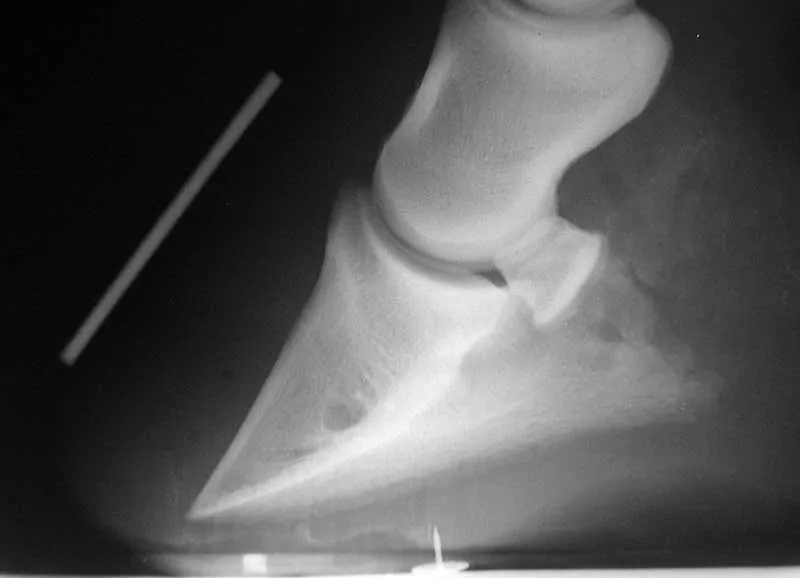 We now know that insulin is responsible for laminitis resulting from an endocrine disorder. It plays a role in regulating glucose derived from food. This discovery paves the way for new therapeutic approaches to laminitis. Research conducted notably by veterinarian Cathy McGowan has led to the development of three key areas for improving our understanding of this condition:
- laminitis is now considered a clinical sign of a systemic condition such as an endocrine disorder (particularly Cushing’s disease and equine metabolic syndrome), sepsis, systemic inflammatory response syndrome (SIRS), or obesity;
- laminitis associated with an endocrine disorder is recognized as the predominant form in horses and ponies that primarily exhibit lameness;
- in histology, endocrine-related laminitis is associated with stretching of the lamellar cells rather than damage to the basement membrane. A variable subclinical phase has been identified in some horses, as evidenced by the development of rings on the hoof wall, associated with other changes such as a widened white line and a convex sole. It remains to be determined how hyperinsulinemia leads to the stretching of lamellar epithelial cells, a key early lesion in the pathophysiology of the disease.
Read next
Research & Diagnostics
10/09/2026
WHO sets new diagnostic targets for Echinococcus granulosus in humans, dogs and sheep
Research & Diagnostics
10/09/2026
Nipah virus in wastewater: promising for early warning?
Research & Diagnostics
10/01/2026
Commentaires
No comments yet.
Sign in to comment