

Back to articles
Research & Diagnostics
Animal Behavior
Canine
Canine Behavior
Canine Obesity
Dog breed
Flat-Coated Retriever
Guide dog
Hunting dog
Labrador
Labrador Retriever
Pedigree dog
Pet dog
Veterinarian
Working dog
Labrador: A gene may explain this dog breed's tendency toward obesity
V
Vetitude
05/08/2016
3 min read
0 comments
Share:
British researchers have identified a specific genetic mutation in Labrador Retrievers that is believed to be responsible for their inability to regulate their appetite and their tendency to be overweight. This mutation appears to be significantly more common in Labradors bred to become assistance dogs than in their counterparts raised as future companion dogs.
In developed countries, canine obesity affects 34 to 59 percent of dogs. This excess weight, associated with reduced life expectancy and mobility, is the cause—as in humans—of numerous diseases such as diabetes, cancer, and heart disease. However, Labradors’ predisposition to overeating and being overweight appears to be much more common than in other breeds, suggesting the influence of genetic factors.
 In their study*, published in the journal *Cell Metabolism*, the authors included 310 dogs—both companion and assistance dogs—who were weighed and underwent a veterinary examination to assign each a body condition score. They then screened for mutations in three candidate genes associated with obesity. The dogs’ interest in food was also assessed using a questionnaire in which their owners described their pets’ eating behavior.
Researchers at the University of Cambridge discovered that a variant of one of these genes—known as the pro-opiomelanocortin (POMC), was particularly linked to overweight and obesity, as well as to appetite in Labradors and Flat-Coated Retrievers. According to the researchers, approximately one in four dogs (23%) carries at least one copy of this genetic mutation. In both breeds, each copy of the mutation in this gene results in an average excess weight of 1.9 kg. This finding is particularly significant given that animal owners otherwise control their pets’ food intake and exercise levels.
The affected gene is known to play an important role in the sensation of hunger and the feeling of fullness after a meal. However, its mutation—which is common in Labradors—has a notable effect on their near-obsessive love of food and their marked tendency toward obesity. The researchers believe that a better understanding of the underlying mechanisms of the POMC gene—which is also present in humans—could have therapeutic implications for both animal health and human health. Genetic mutations affecting the POMC gene in humans are also associated with body weight, and in rare cases of obesity, the pro-opiomelanocortin deficiency appears very similar to the POMC gene deletion in dogs.
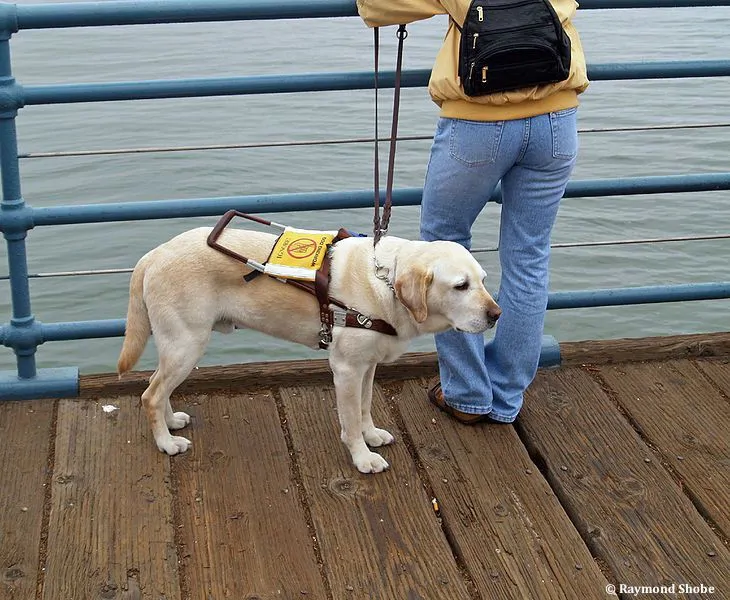
The genetic mutation was found in 76% of the 81 assistance dogs included in the study (versus 23% for the total cohort). Temperament and trainability are the main selection criteria for guide or assistance dogs, and the use of positive reinforcement, using food rewards, is one of the cornerstones of puppy training. The authors therefore suggest that dogs carrying the mutation are more likely to be selected as working dogs, and even that the selection process has favored this locus, unbeknownst to breeders.
But this is a double-edged sword, because while dogs carrying the mutation are easier to train and motivated by food rewards, the risk of them becoming obese increases accordingly. Labrador owners should be made aware of this so they can regularly monitor their dog’s weight and closely supervise its diet.
* Eleanor Raffan et al.: A deletion in the canine POMC gene is associated with weight and appetite in obesity-prone Labrador Retriever dogs, *Cell Metabolism*, May 3, 2016, http://www.cell.com/cell-metabolism/fulltext/S1550-4131%2816%2930163-2
In their study*, published in the journal *Cell Metabolism*, the authors included 310 dogs—both companion and assistance dogs—who were weighed and underwent a veterinary examination to assign each a body condition score. They then screened for mutations in three candidate genes associated with obesity. The dogs’ interest in food was also assessed using a questionnaire in which their owners described their pets’ eating behavior.
Researchers at the University of Cambridge discovered that a variant of one of these genes—known as the pro-opiomelanocortin (POMC), was particularly linked to overweight and obesity, as well as to appetite in Labradors and Flat-Coated Retrievers. According to the researchers, approximately one in four dogs (23%) carries at least one copy of this genetic mutation. In both breeds, each copy of the mutation in this gene results in an average excess weight of 1.9 kg. This finding is particularly significant given that animal owners otherwise control their pets’ food intake and exercise levels.
The affected gene is known to play an important role in the sensation of hunger and the feeling of fullness after a meal. However, its mutation—which is common in Labradors—has a notable effect on their near-obsessive love of food and their marked tendency toward obesity. The researchers believe that a better understanding of the underlying mechanisms of the POMC gene—which is also present in humans—could have therapeutic implications for both animal health and human health. Genetic mutations affecting the POMC gene in humans are also associated with body weight, and in rare cases of obesity, the pro-opiomelanocortin deficiency appears very similar to the POMC gene deletion in dogs.
The genetic mutation was found in 76% of the 81 assistance dogs included in the study (versus 23% for the total cohort). Temperament and trainability are the main selection criteria for guide or assistance dogs, and the use of positive reinforcement, using food rewards, is one of the cornerstones of puppy training. The authors therefore suggest that dogs carrying the mutation are more likely to be selected as working dogs, and even that the selection process has favored this locus, unbeknownst to breeders.
But this is a double-edged sword, because while dogs carrying the mutation are easier to train and motivated by food rewards, the risk of them becoming obese increases accordingly. Labrador owners should be made aware of this so they can regularly monitor their dog’s weight and closely supervise its diet.
* Eleanor Raffan et al.: A deletion in the canine POMC gene is associated with weight and appetite in obesity-prone Labrador Retriever dogs, *Cell Metabolism*, May 3, 2016, http://www.cell.com/cell-metabolism/fulltext/S1550-4131%2816%2930163-2
Read next
Research & Diagnostics
10/09/2026
WHO sets new diagnostic targets for Echinococcus granulosus in humans, dogs and sheep
Research & Diagnostics
10/09/2026
Nipah virus in wastewater: promising for early warning?
Research & Diagnostics
10/01/2026
Commentaires
No comments yet.
Sign in to comment