

Back to articles
Research & Diagnostics
Animal species
Antechine
Antelope
Bats
Bonobo
Cephalophus
Chimpanzee
Desman
Endangered species
Equus quagga
Gorilla
Gorilla beringei
Hunting
IUCN
Koala
Monkey
Nyctalus lasiopterus
Onychogale
Orangutan
Poaching
Primate
Red List
Traffic
Zebra
IUCN Red List: Bleak Prognosis for Great Apes, Zebras, and African Antelopes
V
Vetitude
09/05/2016
5 min read
0 comments
Share:
All over the world, flora and fauna are disappearing at an unprecedented rate, notes the International Union for Conservation of Nature (IUCN) with concern, having just updated its Red List of Endangered Species*. This comprehensive inventory of life, updated by a global network of approximately 10,000 experts, was released on September 4 by the IUCN as part of its World Conservation Congress, which is being held in Hawaii (United States) through September 10. The IUCN has determined that more than a quarter of the world’s animal and plant species are now endangered.
 No region of the world is immune to the decline of biodiversity. Of the 82,954 animal and plant species assessed by the IUCN, 23,928 are “threatened with extinction” (nearly 30%). Of these, 5,107 are classified as “critically endangered” (populations have declined by 80 to 90 percent over the past 10 years or three generations), 7,602 are “endangered” (with populations declining by 50 to 70 percent), and 11,219 are considered “vulnerable” (with populations reduced by 30 to 50 percent). Thus, more than 2,000 species of amphibians are endangered, nearly 1,000 species of snakes and insects, some 2,300 species of fish, 1,300 species of birds, approximately 11,600 species of plants, and so on.
Among mammals, several of the 1,208 endangered species are being driven toward extinction by illegal hunting or habitat loss
—two major threats.
No region of the world is immune to the decline of biodiversity. Of the 82,954 animal and plant species assessed by the IUCN, 23,928 are “threatened with extinction” (nearly 30%). Of these, 5,107 are classified as “critically endangered” (populations have declined by 80 to 90 percent over the past 10 years or three generations), 7,602 are “endangered” (with populations declining by 50 to 70 percent), and 11,219 are considered “vulnerable” (with populations reduced by 30 to 50 percent). Thus, more than 2,000 species of amphibians are endangered, nearly 1,000 species of snakes and insects, some 2,300 species of fish, 1,300 species of birds, approximately 11,600 species of plants, and so on.
Among mammals, several of the 1,208 endangered species are being driven toward extinction by illegal hunting or habitat loss
—two major threats.
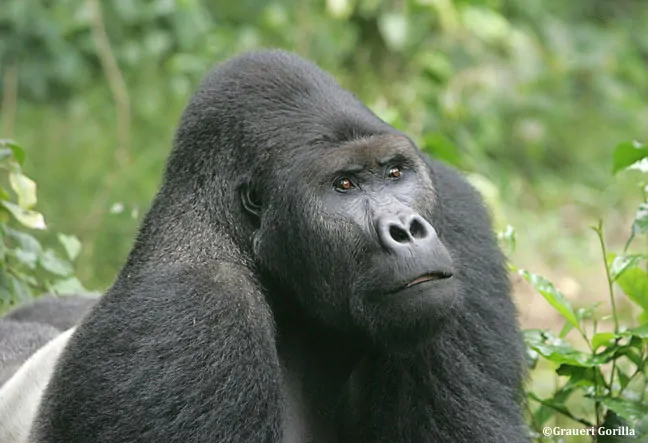
- This is the case for the largest living primate, the eastern gorilla (Gorilla beringei), which has been reclassified as “critically endangered.” Its current population, estimated at fewer than 5,000 individuals living primarily in the Democratic Republic of the Congo, has declined by 70% over the past twenty years. Now, of the six great ape species, four (Eastern and Western gorillas, the Bornean and Sumatran orangutans) are classified as “critically endangered,” and the other two (chimpanzees and bonobos), classified as “endangered,” face a serious threat.
- Similarly, the quagga (Equus quagga) has been reclassified from “least concern” to “near threatened” status. Its population, once estimated at some 660,000 individuals, now barely exceeds 500,000 (a 24% decline over 14 years). In many countries, the species is found only in protected areas. Outside these areas, the plains zebra is threatened by hunting for its meat and hide.
- Three African antelopes—the dorsal-striped duiker (Cephalophus dorsalis), the white-bellied duiker (Cephalophus leucogaster), and the yellow-backed duiker (Cephalophus silvicultor), have also been reclassified as “near threatened” species. Within protected areas, their populations are relatively stable, but everywhere else they are in decline, again due to illegal hunting and habitat destruction.
Conservation efforts for the giant panda (Ailuropoda melanoleuca) have paid off: this iconic Chinese species, previously classified as “endangered,” has been reclassified as “vulnerable.” Its population has grown over the past two decades thanks to reforestation and habitat protection. However, the species’ numbers are expected to decline again due to the negative effects of ongoing climate change: more than a third of bamboo forests could disappear by the end of the century.
- Similarly, conservation efforts for the Tibetan antelope (Pantholops hodgsonii) have helped downgrade the species by two categories, from “endangered” to “near threatened.” Its population, which originally numbered nearly one million individuals, had dwindled to only 65,000 to 72,000 in the 1980s and 1990s due to poaching for its wool, which is used to make shawls. Its numbers have since rebounded to approximately 100,000 to 150,000 individuals.
- The architect rat (Leporillus conditor), endemic to Australia, is another conservation success story, thanks in particular to reintroductions and introductions into predator-free areas. This nest-building rodent—the last of its kind since the extinction of a smaller, related species (Leporillus apicalis)—has been downgraded from “vulnerable” to “near threatened.”
- Also endemic to Australia and previously “endangered,” the bridled onychogale (Onychogalea fraenata) is doing better and is now classified as “vulnerable.” Its population declined sharply in the 19th and 20th centuries, decimated by invasive species and habitat loss. A conservation program involving relocation to protected areas has allowed the species to gradually recover.
Read next
Research & Diagnostics
10/09/2026
WHO sets new diagnostic targets for Echinococcus granulosus in humans, dogs and sheep
Research & Diagnostics
10/09/2026
Nipah virus in wastewater: promising for early warning?
Research & Diagnostics
10/01/2026
Commentaires
No comments yet.
Sign in to comment