

Back to articles
Research & Diagnostics
Anisakiasis
Anisakidae
Anisakis
Copepod
Fish
Fishing
Human health
Nematode
Parasite
Pseudoterranova
See
Zoonosis
Internal parasites: Marine fish are not immune to roundworms
V
Vetitude
01/12/2019
4 min read
0 comments
Share:
The number of parasites in wild fish has increased 90-fold. This rise in parasitism poses risks to human health and to economies that depend on fishing. In particular, nematodes of the Anisakidae family (Anisakis and Pseudoterranova) infest marine fish and can cause anisakiasis in humans. Researchers at the University of Washington in Seattle have adopted a new approach to track the proliferation of these marine parasites over time. To document changes in infestations over the past few decades, they examined archives and specimens preserved at the Burke Museum.
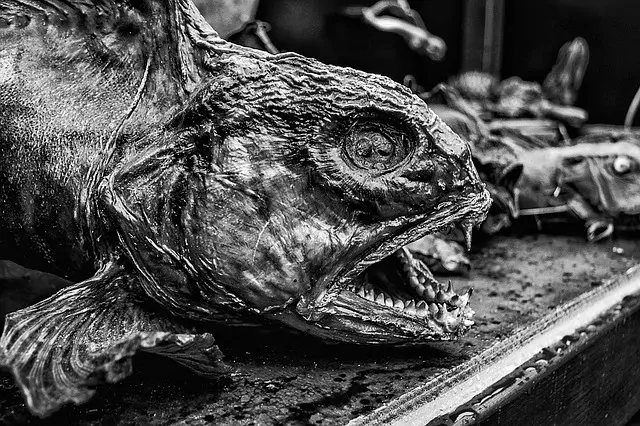 Nematodes are among the most widespread organisms on the planet. Many of them are parasitic and live within the tissues of other organisms. In wild marine fish, their numbers are rising sharply,
and they are responsible for anisakiasis, a parasitic disease in humans caused by the ingestion of certain infested raw fish.
In France, reported human cases are rare (about ten per year), but can sometimes be severe, leading to stomach perforation or peritonitis.
Given the risk of zoonosis, American researchers studied the long-term trends of two genera of parasitic worms—the nematodes Anisakis
and Pseudoterranova
—which infect many marine animals, including fish, crustaceans, mollusks, whales, and seals
. The team found that the average number of Anisakis
per fish had increased 90-fold between 1962 and 2015,
and that the number of Pseudoterranova
had nearly doubled between 1978 and 2015. This significant increase in parasitic load makes the consumption of raw or undercooked seafood and fish more risky today. But the worms also have a significant impact on their marine hosts, causing disease and organ damage in infested fish.
To go even further back in time, the team examined the fish collection preserved at the University of Washington Museum—a sort of time capsule where parasites are preserved alongside their hosts and remain detectable. This makes it possible to determine what parasites from a fish dating back to 1888 looked like! Some 300 English gudgeons were subjected to a parasitology examination, and the researchers discovered
that
the number of Clavinema mariae
nematodes had increased eightfold since the 1930s. Although this parasite does not infect humans, it affects the economic value of fishery products: no one wants to eat a fish full of worms. As for the historical prevalence of C. mariae
in wild fish—estimated based on archival records—it was, on average, 48.7% lower than the current prevalence.
Nematodes are among the most widespread organisms on the planet. Many of them are parasitic and live within the tissues of other organisms. In wild marine fish, their numbers are rising sharply,
and they are responsible for anisakiasis, a parasitic disease in humans caused by the ingestion of certain infested raw fish.
In France, reported human cases are rare (about ten per year), but can sometimes be severe, leading to stomach perforation or peritonitis.
Given the risk of zoonosis, American researchers studied the long-term trends of two genera of parasitic worms—the nematodes Anisakis
and Pseudoterranova
—which infect many marine animals, including fish, crustaceans, mollusks, whales, and seals
. The team found that the average number of Anisakis
per fish had increased 90-fold between 1962 and 2015,
and that the number of Pseudoterranova
had nearly doubled between 1978 and 2015. This significant increase in parasitic load makes the consumption of raw or undercooked seafood and fish more risky today. But the worms also have a significant impact on their marine hosts, causing disease and organ damage in infested fish.
To go even further back in time, the team examined the fish collection preserved at the University of Washington Museum—a sort of time capsule where parasites are preserved alongside their hosts and remain detectable. This makes it possible to determine what parasites from a fish dating back to 1888 looked like! Some 300 English gudgeons were subjected to a parasitology examination, and the researchers discovered
that
the number of Clavinema mariae
nematodes had increased eightfold since the 1930s. Although this parasite does not infect humans, it affects the economic value of fishery products: no one wants to eat a fish full of worms. As for the historical prevalence of C. mariae
in wild fish—estimated based on archival records—it was, on average, 48.7% lower than the current prevalence.
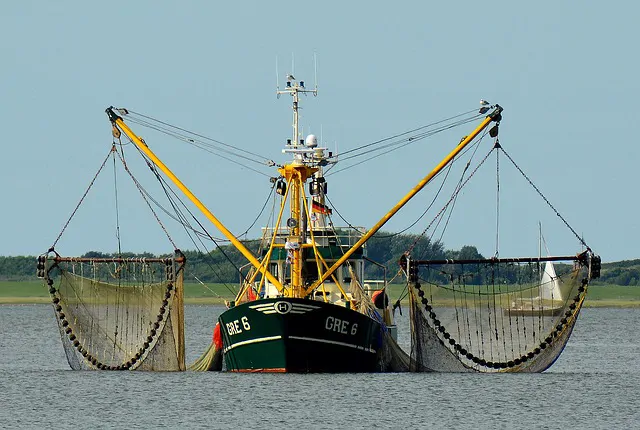 Against a backdrop of rapid and dramatic changes in parasitism, long-term data on parasite abundance are essential for establishing a baseline for effective management of natural resources within marine ecosystems. While the exact causes of changes in parasitic load in fish remain unknown, human activities have likely played a role. In the case of the English carlottin, for example, agricultural runoff has likely contributed to an increase in the population of copepods
—small marine crustaceans that serve as both hosts for nematodes and a food source for fish.
Parasites respond differently to changes in their environment. For example, in areas where fishing exerts heavy pressure on the marine ecosystem, parasites with complex life cycles involving multiple hosts tend to decline, while those with simpler life cycles tend to increase. A better understanding of how environmental changes affect parasites—
even those that do not typically infect humans—should make it possible to predict their future evolution, as well as the repercussions of such adaptation on the entire marine food web.
The study’s dual approach (samples and archives) provided consistent estimates of parasite prevalence over time. These results suggest that examining museum specimens is a promising method for reconstructing a detailed chronology of variations in a parasite’s abundance, which is useful for more accurately characterizing past infestation levels in a given ecosystem, thereby enabling better-targeted antiparasitic control and the adaptation of natural resource management policies
.
For more information:
https://www.anses.fr/fr/system/files/BIORISK2016SA0071Fi.pdf
Against a backdrop of rapid and dramatic changes in parasitism, long-term data on parasite abundance are essential for establishing a baseline for effective management of natural resources within marine ecosystems. While the exact causes of changes in parasitic load in fish remain unknown, human activities have likely played a role. In the case of the English carlottin, for example, agricultural runoff has likely contributed to an increase in the population of copepods
—small marine crustaceans that serve as both hosts for nematodes and a food source for fish.
Parasites respond differently to changes in their environment. For example, in areas where fishing exerts heavy pressure on the marine ecosystem, parasites with complex life cycles involving multiple hosts tend to decline, while those with simpler life cycles tend to increase. A better understanding of how environmental changes affect parasites—
even those that do not typically infect humans—should make it possible to predict their future evolution, as well as the repercussions of such adaptation on the entire marine food web.
The study’s dual approach (samples and archives) provided consistent estimates of parasite prevalence over time. These results suggest that examining museum specimens is a promising method for reconstructing a detailed chronology of variations in a parasite’s abundance, which is useful for more accurately characterizing past infestation levels in a given ecosystem, thereby enabling better-targeted antiparasitic control and the adaptation of natural resource management policies
.
For more information:
https://www.anses.fr/fr/system/files/BIORISK2016SA0071Fi.pdf
Read next
Research & Diagnostics
10/09/2026
WHO sets new diagnostic targets for Echinococcus granulosus in humans, dogs and sheep
Research & Diagnostics
10/09/2026
Nipah virus in wastewater: promising for early warning?
Research & Diagnostics
10/01/2026
Commentaires
No comments yet.
Sign in to comment