

Back to articles
Human-Animal Communication: Dogs Can Distinguish Words and the Intonation of Human Speech
V
Vetitude
08/30/2016
2 min read
0 comments
Share:
A recent study on language, published in the American journal *Science*, shows that humans may have only one monopoly: that of creativity in the use of words. This is because dogs, just like us, are capable of interpreting words from our vocabulary, as well as analyzing the intonation of our voices. This is not exclusive to the human brain.
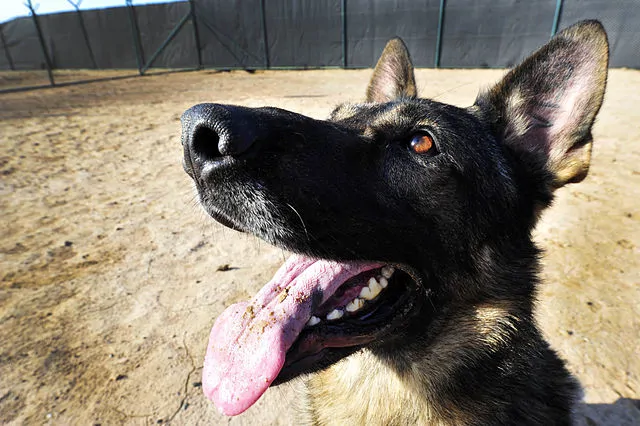 This study did not limit itself to observing dogs’ reactions to different words and intonations. It examined brain regions—similar to those in humans—that are involved in language perception. This is an important discovery: the left hemisphere of the canine brain interprets what we say, while the right hemisphere analyzes how we say it. Dogs, just like humans, thus integrate both types of information to make sense of what is being said—on the one hand by interpreting the spoken words and on the other by analyzing the intonation of the voice. Furthermore, only soft, pleasant-sounding words, accompanied by the right intonation, activate the pleasure center of the canine brain.
The neural mechanisms involved in interpreting words are therefore not unique to the human brain. The study shows that in a speech-rich environment, representations of the meaning of the words used can develop even in the brains of animals incapable of speech. Vocabulary acquisition is not a human skill linked to the emergence of language, but rather a more deeply rooted neural capacity that links arbitrary sound sequences to meanings.
Words are the building blocks of human language. Furthermore, intonation is another way of understanding the information conveyed through speech. Together, these two processes enable humans to understand one another. The published research, which shows that dogs function in the same way, should facilitate communication and cooperation between humans and dogs. It remains to be seen whether, over the course of canine domestication, selection and the environment may have favored the emergence of the brain structure that underlies this ability in dogs. However, such a rapid evolution of hemispheric asymmetries related to speech is unlikely.
This study did not limit itself to observing dogs’ reactions to different words and intonations. It examined brain regions—similar to those in humans—that are involved in language perception. This is an important discovery: the left hemisphere of the canine brain interprets what we say, while the right hemisphere analyzes how we say it. Dogs, just like humans, thus integrate both types of information to make sense of what is being said—on the one hand by interpreting the spoken words and on the other by analyzing the intonation of the voice. Furthermore, only soft, pleasant-sounding words, accompanied by the right intonation, activate the pleasure center of the canine brain.
The neural mechanisms involved in interpreting words are therefore not unique to the human brain. The study shows that in a speech-rich environment, representations of the meaning of the words used can develop even in the brains of animals incapable of speech. Vocabulary acquisition is not a human skill linked to the emergence of language, but rather a more deeply rooted neural capacity that links arbitrary sound sequences to meanings.
Words are the building blocks of human language. Furthermore, intonation is another way of understanding the information conveyed through speech. Together, these two processes enable humans to understand one another. The published research, which shows that dogs function in the same way, should facilitate communication and cooperation between humans and dogs. It remains to be seen whether, over the course of canine domestication, selection and the environment may have favored the emergence of the brain structure that underlies this ability in dogs. However, such a rapid evolution of hemispheric asymmetries related to speech is unlikely.
Read next
Research & Diagnostics
10/09/2026
WHO sets new diagnostic targets for Echinococcus granulosus in humans, dogs and sheep
Research & Diagnostics
10/09/2026
Nipah virus in wastewater: promising for early warning?
Research & Diagnostics
10/01/2026
Commentaires
No comments yet.
Sign in to comment