

Back to articles
Horse Racing: Is Cobalt Supplementation Beneficial or Harmful?
B
bertrand-neveux
03/14/2015
3 min read
0 comments
Share:
The use of cobalt in racehorses appears to be spreading. This trace element is believed to enhance the performance of horses given the supplement. However, its effects—whether positive or negative—are currently poorly understood.
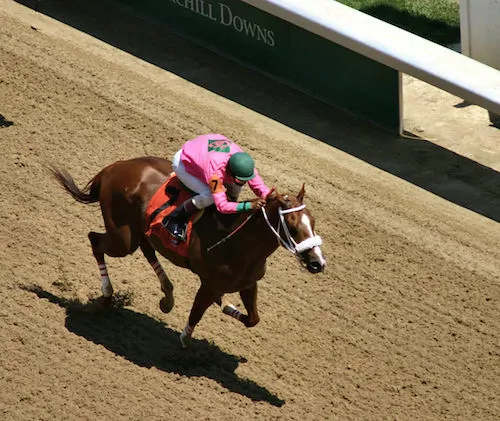 Since last year, horse racing officials around the world have been taking an interest in a seemingly harmless substance: cobalt. This trace element, which is a component of vitamin B12 (cobalamin), is essential for the proper functioning of the body, in both humans and equines. But for some owners, cobalt supplementation gives their horses an edge over their competitors. And the practice is becoming widespread at racecourses.
Until recently, researchers had not evaluated the beneficial or harmful effects of cobalt supplementation in horses. However, since this practice has drawn the attention of racing authorities, research on the subject has seen a resurgence of interest.
Thus, in 2014, Heather Knych (University of California, Davis) and her colleagues conducted a study to evaluate how cobalt is distributed and acts within horses’ bodies following an intravenous injection of a single dose comparable to that used on the racetrack. They obtained several key findings:
Since last year, horse racing officials around the world have been taking an interest in a seemingly harmless substance: cobalt. This trace element, which is a component of vitamin B12 (cobalamin), is essential for the proper functioning of the body, in both humans and equines. But for some owners, cobalt supplementation gives their horses an edge over their competitors. And the practice is becoming widespread at racecourses.
Until recently, researchers had not evaluated the beneficial or harmful effects of cobalt supplementation in horses. However, since this practice has drawn the attention of racing authorities, research on the subject has seen a resurgence of interest.
Thus, in 2014, Heather Knych (University of California, Davis) and her colleagues conducted a study to evaluate how cobalt is distributed and acts within horses’ bodies following an intravenous injection of a single dose comparable to that used on the racetrack. They obtained several key findings:
- serum cobalt levels are very low, at less than 1 ppb (parts per billion);
- maximum serum concentrations following cobalt administration are extremely high;
- the substance’s half-life is approximately six and a half days, allowing for the conduct of anti-doping tests;
- serum concentrations ten days after administration remain high, between 20 and 50 ppb, which also allows for testing;
- no effects on erythropoietin levels or red blood cell counts in the blood have been reported, nor have any adverse effects at the injected dose.
Read next
Research & Diagnostics
10/09/2026
WHO sets new diagnostic targets for Echinococcus granulosus in humans, dogs and sheep
Research & Diagnostics
10/09/2026
Nipah virus in wastewater: promising for early warning?
Research & Diagnostics
10/01/2026
Commentaires
No comments yet.
Sign in to comment