

Back to articles
Homeopathy in Animals: The Opinion of the French Veterinary Academy
MR
Mia Rozenbaum
07/07/2021
9 min read
0 comments
Share:
Despite controversial scientific data and questionable evidence regarding the true effectiveness of homeopathic products—for both humans and animals—some veterinarians continue to prescribe these holistic treatments. Committed to upholding ethical standards and the quality of veterinary medicine in France, the French Veterinary Academy (AVF) has reviewed the current state of homeopathy based on scientific research and has concluded that its effectiveness has not been proven.
The effectiveness of homeopathy has been a subject of debate for years now. The general public’s interest in this therapy shows no sign of waning, despite the lack of scientific evidence supporting its effectiveness. According to an Ipsos poll conducted in October 2018, 70% of French people who are potential animal owners use homeopathy to relieve their pets’ initial symptoms, 74% believe that homeopathic remedies are effective, and 71% think that homeopathy is a good complement to conventional treatments. However, after analyzing 800 studies on patient benefits, top health authorities recently concluded that these granules are no more effective than a placebo. Since they were deemed ineffective by health authorities, as of January 1, 2021, homeopathic remedies for humans are no longer covered by insurance. Following this decision, the AVF conducted a review of homeopathy in veterinary medicine and is sharing its findings.
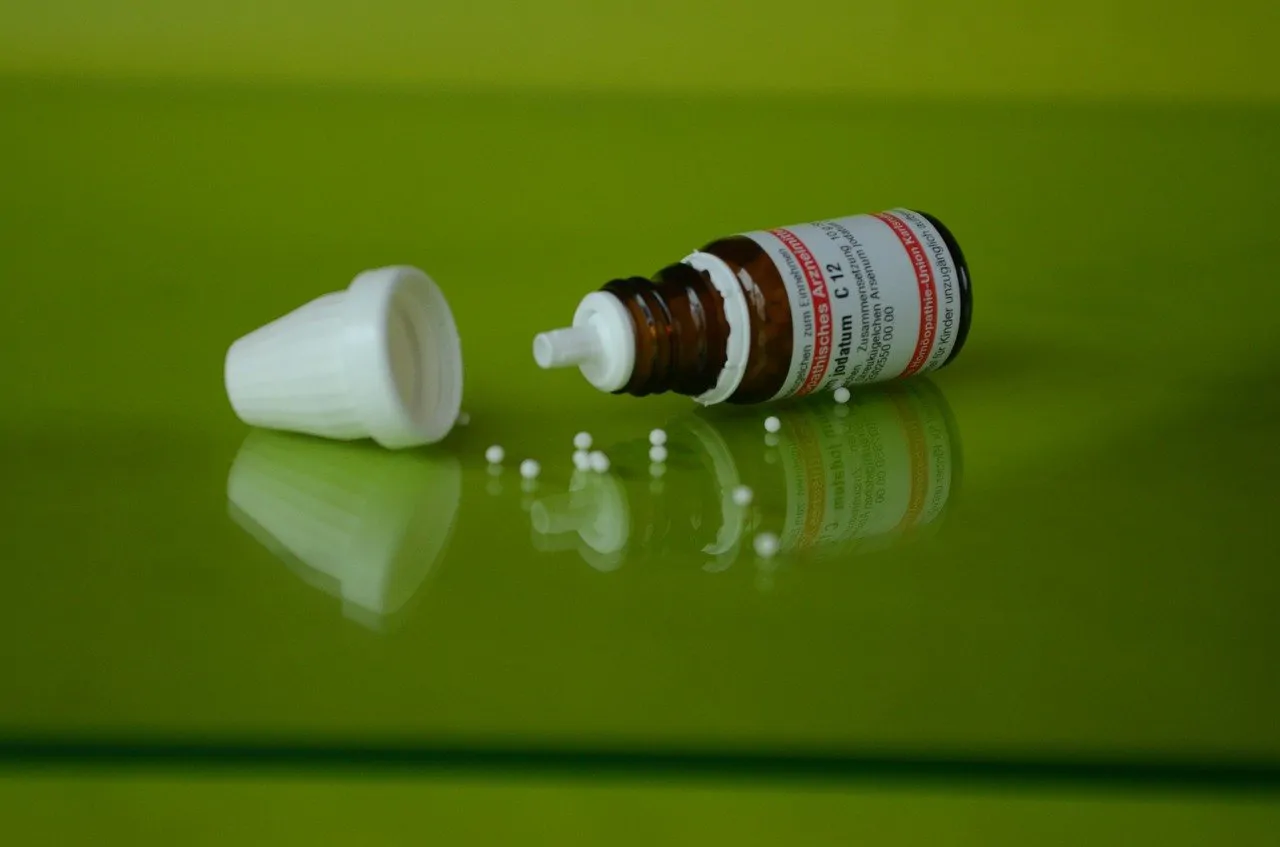
Homeopathy Applied to Animals
Homeopathy, introduced in the late 18th century by Samuel Hahnemann, a German physician, is based on three principles. The first, the law of similars, posits that a substance causing a series of symptoms in a healthy person can cure a patient exhibiting those same symptoms. Thus, diluted caffeine is said to prevent insomnia, and even a small amount of bee venom is considered effective against insect stings. The second principle recommends diluting the substance as much as possible to minimize its toxicity and increase its effectiveness. Finally, according to the so-called law of individualization, treatment must be tailored to each person’s mental and emotional state. Homeopathy thus adopts a holistic approach, which means that two people suffering from the same condition may be prescribed different treatments. This last requirement, in fact, long excluded homeopathic treatments from the field of veterinary medicine. Samuel Hahnemann rejected this practice as absurd. He could not imagine being able to ask a cow about its ailments. The first person to consider treating animals with homeopathic remedies was a veterinarian from Leipzig, J.J.W. Lux, who had been converted to homeopathy by Hahnemann himself. Between 1831 and 1840, he published five volumes of a compilation on the effects of medicines and poisons administered to healthy animals, including a section on veterinary homeopathy, extrapolating the pathogeneses established for healthy humans to animals—another principle that is disregarded in veterinary homeopathy. Indeed, a cat’s metabolism differs in many ways from that of a cow. Their bodies do not react in the same way to different substances. However, homeopaths directly transpose all the medicinal characteristics of human homeopathy to animals, undermining the theoretical credibility of veterinary homeopathy. It is, however, very difficult to compare alopecia in an animal to human baldness, for example. Furthermore, veterinary homeopathic medicinal products are most often administered orally, as they are for humans. But their fate differs depending on the digestive mechanisms of each species. Despite these significant biases, the support of the aristocracy and large landowners for homeopathy during this period encouraged the rise of this new form of medicine. In the early 19th century, the new therapeutic approach rapidly gained followers. In France, François Perrussel presented his work to the Commission on Equine Health at the Ministry of War: “Homeopathy, or the Medicine of Analogy: A Proposal for a Fundamental Reform of Veterinary Medicine.” Starting in the 1950s, a revival of homeopathy was observed. Numerous authors published treatises and guides on homeopathy for various species.The Efficacy of Veterinary Homeopathy Called into Question
The first widespread and institutional doubts about the effectiveness of veterinary homeopathy and its scientific validity followed a few years after questions arose regarding human homeopathy. In France, this skepticism emerged in the 1980s. In fact, scientific studies have failed to find any scientific basis for this practice, which dilutes active substances to an extreme degree. The scientific community recognizes that medical decisions must be based on solid evidence provided by research and on the practitioner’s experience. And there is no such solid evidence. Today, the scientific community is even unanimous on this point, and there is no longer any real controversy regarding the lack of evidence. However, the debate persists within the medical and veterinary communities, and even more so among the general public. Yet, in both human medicine and veterinary medicine, no clinical study provides sufficient scientific evidence to support the therapeutic efficacy of homeopathic preparations. The theorized mechanisms of action do not constitute sufficient evidence to justify the use of homeopathy. Like any treatment, homeopathy must demonstrate its efficacy and clinical effectiveness through rigorous and standardized evaluation. An analysis of the scientific literature by the American Veterinary Medical Association (AVMA) concludes that studies claiming a benefit from homeopathic products are either anecdotal or flawed in their experimental design or analysis. It finds no clinical evidence to support the use of homeopathic preparations to treat or prevent diseases in animals. The Merck Veterinary Manual states that no clinical study has been able to demonstrate the efficacy of homeopathic remedies compared to a placebo, regardless of the analytical method used. To date, scientific studies therefore agree that the effects of homeopathy in humans are attributable to the placebo effect, whereas in animals, the contextual effect is the only plausible—and sufficient—explanation for the benefits of homeopathy given the current state of science. No study supports the efficacy of homeopathy as a veterinary practice. And this lack of solid, reproducible scientific evidence poses an ethical problem in the context of veterinary medicine that aims to be modern and effective. Thus, the legitimacy of homeopathy as a recognized specialty is called into question, as is the framework for veterinary education and continuing education. Yet, enthusiasm for it shows no sign of waning.Veterinary homeopathy continues to gain momentum
There is very little data on the use of homeopathy in animals. It is nevertheless possible to state that today, despite advances in veterinary medicine and the questioning of the practice, homeopathy remains as relevant as ever. Demand is high, both for pets and in equine and animal production practices. Yet the French homeopaths interviewed by the AVF identify themselves first and foremost as veterinarians who practice conventional medicine, with homeopathic treatment serving as a complementary practice. As such, they are unanimous in stating that their homeopathic practice has limitations. In their view, homeopathic treatments have no direct indication for infectious or parasitic diseases and can under no circumstances replace vaccinations. But the reality of practice is quite different. Some even cite homeopathy as a medical tool in the fight against antimicrobial resistance, for example. Consequently, the use of homeopathic remedies is on the rise for farm animals, primarily in organic farms, since they can be administered with a zero withdrawal period for meat or milk. And the regulations do not prohibit this. In fact, the EU regulation on organic farming and the corresponding French implementing measures recommend that “products such as homeopathy be used in preference to synthetic allopathic chemical drugs or antibiotics.” However, it is specified that “these products may be used only if they have a genuine therapeutic effect on the animal species in question and on the condition for which treatment is intended.” And this therapeutic effect has not yet been demonstrated. Nevertheless, in France, 60% of the farmers surveyed use homeopathy. A study shows that among 42 farmers who have been certified organic for more than five years, 11 treat their herds exclusively with homeopathy. In the United Kingdom, homeopathy is the primary alternative to antibiotics in organic farming, accounting for half of all mastitis treatments. It is therefore clear that homeopathy in organic livestock farming is often practiced today in the form of self-medication by farmers, without any real evidence of its effectiveness, which is not without health risks or impacts on animal welfare. The Academies of Sciences, Medicine, Pharmacy, and Technology issue a strong and serious warning against these practices.Recommendations from the French Veterinary Academy
With this resurgence in the use of homeopathic practices, the AVF wished to reiterate a few crucial points and issue recommendations regarding their use in animals. It emphasizes that homeopathy must prove its efficacy like any other discipline, in both veterinary medicine and human medicine. In the absence of scientific proof of efficacy, the utmost caution must be exercised in presenting homeopathy—particularly as a branch of medicine. Veterinary medicine remains grounded in facts and evidence. Thus, every veterinarian must question the ethical soundness of treating animals based on unknown physical or physicochemical phenomena that have yet to be fully explored. The AVF therefore recommends that homeopathy, in veterinary medicine—just as is the case in human medicine—should not be recognized nor claimed at this time as an exclusive veterinary medical practice. Consequently, no university degree in homeopathy may be dispensed, and training in this practice may only be provided if it takes into account the realities of the scientific method. The AVF also recommends that, to ensure the accurate information necessary for obtaining informed consent, the prescription of a homeopathic preparation be accompanied by a statement indicating that, based on current scientific knowledge, veterinary homeopathy is considered to have a contextual effect. Furthermore, it recommends that the term “homeopathic medicine” be replaced with “homeopathic preparation,” and that it be specified that “the efficacy of the preparation has not been demonstrated according to current standards.” In this way, it hopes to curb the use of this therapy, which has not been proven effective.Read next
Research & Diagnostics
10/09/2026
WHO sets new diagnostic targets for Echinococcus granulosus in humans, dogs and sheep
Research & Diagnostics
10/09/2026
Nipah virus in wastewater: promising for early warning?
Research & Diagnostics
10/01/2026
Commentaires
No comments yet.
Sign in to comment