

Back to articles
Research & Diagnostics
Animal Research
Avian influenza
Biotechnology
BSE
Cas9
CRISPR
Dysgenetic and Respiratory Syndrome
Genetically Modified
Genomics editing
GMOs
H5N1
NBT
New Breeding Techniques
SDRP
Swine Fever
Transgenesis
Veterinary Academy
Genomics: Should we be concerned about the emergence of transgenic animals?
MR
Mia Rozenbaum
11/16/2021
8 min read
0 comments
Share:
For 25 years now, advances in biotechnology have accelerated the development of genetically modified animals. But the widespread use of these techniques has also reignited the debate over the manipulation of living organisms. Primarily used in biomedical research, transgenic Livestock are now taking center stage and could soon be available on the market. More nutritious, healthier, more resilient, and more profitable, they could be the solution for achieving food and health independence in Europe. As a first step, the French Veterinary Academy (AVF) aims to update regulations to benefit French research in the field of genomics.
Genetically modified animals are not new. They have been an integral part of the research community for several decades. They provide crucial information on the molecular and cellular biology of the fundamental mechanisms of life and pathogenic phenotypes. The genetically modified mouse is the star of the laboratory, but other animals have begun to attract interest in recent years. This is the case with pigs, which are more similar to humans physiologically and anatomically. Farm animals, such as cattle and small ruminants, can also be modified to improve specific traits.
For example, to study mechanisms of resistance to diseases or physiological dysfunctions, researchers at the Technical University of Munich have generated Cas9 chickens and pigs with integrated genetic scissors. All it takes is the introduction of guide RNAs to genetically modify various organs in animals efficiently and at will, at any stage of development. Researchers are now able to introduce specific gene mutations into a target organ or even correct existing genes without having to create new animal models for each target gene. By significantly accelerating and simplifying genetic modification processes and making current models more relevant, this increases the relevance of discoveries while reducing the number of animals needed for research.
[caption id="attachment_10330" align="aligncenter" width="1280"]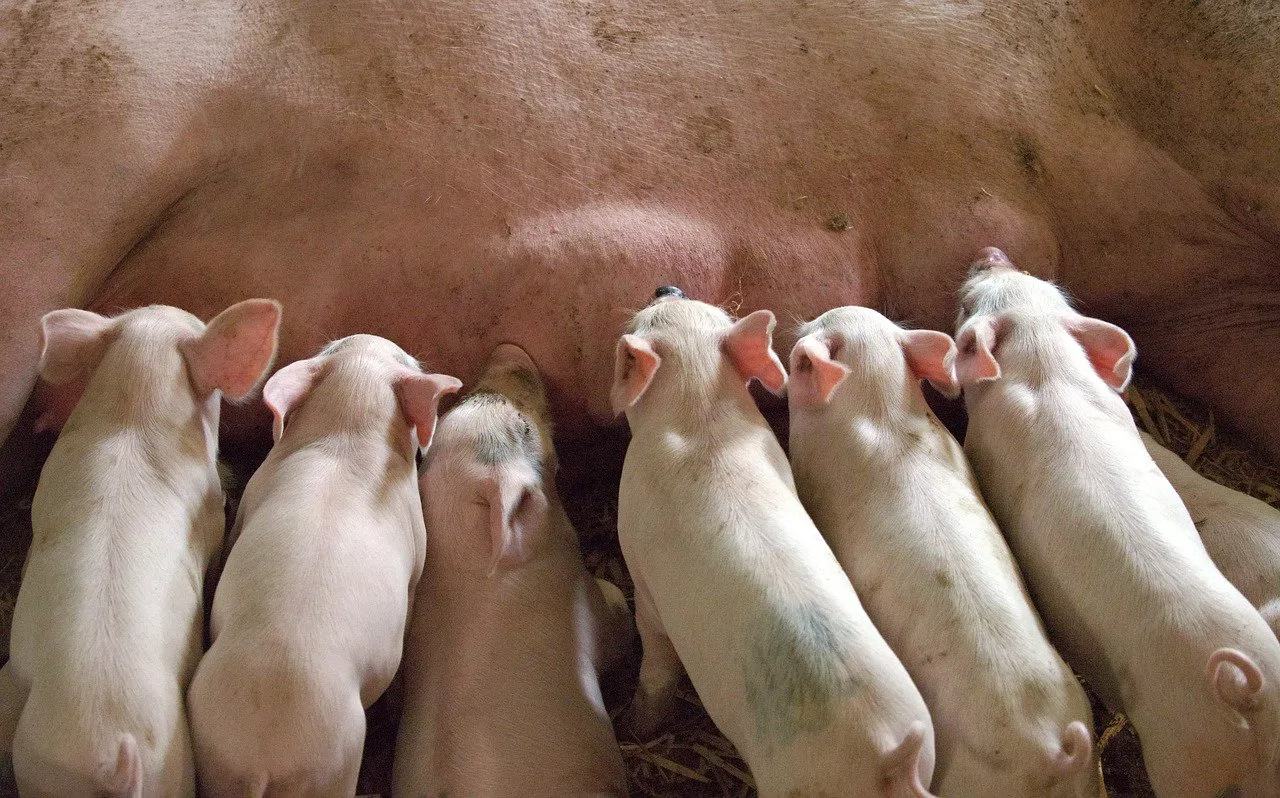 Compared to the genetically modified mouse—the star of the lab—the pig has the advantage of being more physiologically and anatomically similar to humans ©pixabay[/caption]
Thus, a genetically modified pig can help us better understand the mechanism of carcinogenesis in humans. Cas9 transgenic animals, for example, make it possible to specifically inactivate genes relevant to tumors and simulate the development of cancer. Potential new treatments for humans can also be tested on animal models. Cas9 pigs and chickens, as well as other genetically modified organisms, allow researchers to test genes that may be involved in the development of traits such as disease resistance directly in the animal, with significant implications for the fight against inflammatory or infectious diseases, for example. There have been millions of discoveries made using genetically modified animals, benefiting not only humans but also other animals.
For now, most research on genetically modified livestock is aimed at medical research or is still in the conceptual stage, but this could change rapidly in the near future. Researchers are already envisioning animals modified to be more resistant to disease. However, modifications driven by more economic interests—to benefit the agri-food industry—could also emerge, particularly to increase growth rates, meat quality, nutritional value, milk composition, disease resistance, and survival rates.
While it is possible to genetically modify animals to better understand certain diseases, it is also possible to modify them to obtain physical and physiological characteristics that meet the agri-food industry’s expectations. Livestock species could thus be “improved,” with enhanced reproductive capabilities, faster growth, higher nutritional value, or greater disease resistance. With a constantly growing global population and climate change, these effective methods for increasing food production are becoming increasingly attractive. The use of transgenic tools in livestock farming would greatly improve the efficiency, productivity, and profitability of animal production.
For now, in Europe, these animals remain confined to research laboratories. But within a few years, grocery store shelves could well feature products derived from these animals. Tests are already underway. Pigs that grow faster, produce more and higher-quality meat, and also have increased longevity, reduced risk of infectious diseases, and a strengthened immune system have already been developed. In 2017, the United States, China, and the United Kingdom produced pigs resistant to the porcine reproductive and respiratory syndrome (PRRS) virus, which causes an estimated $2.5 billion in annual global losses. In 2018, Chinese researchers also produced pigs resistant to the classical swine fever virus. Similarly, sheep have been genetically modified to improve their immunity and wool production. As for chickens, success in increasing their growth has been limited so far, as conventional breeding has already pushed this trait to its biological limits. However, this has not prevented scientists from seeking to improve their disease resistance—against the H5N1 virus, for example—or the survival rate of chicks after hatching. For cattle, the improved traits mainly concern their overall health, as well as that of their udders. Cows resistant to bovine spongiform encephalopathy (BSE) have also been developed.
In addition, transgenesis has made it possible to improve the nutritional value of farm animals, which could be a significant benefit to human health. Fish with higher levels of omega-3 fatty acids could thus help reduce the incidence of coronary heart disease in humans. With this in mind, transgenic pigs containing high levels of omega-3 fatty acids were produced in 2006. The production of less fatty and more nutritious animal products through transgenesis could help improve public health. Consequently, the number of genetically modified livestock and fish developed in laboratories is on the rise. However, for now, the number of species poised to enter the market remains low.
[caption id="attachment_10331" align="aligncenter" width="1280"]
Compared to the genetically modified mouse—the star of the lab—the pig has the advantage of being more physiologically and anatomically similar to humans ©pixabay[/caption]
Thus, a genetically modified pig can help us better understand the mechanism of carcinogenesis in humans. Cas9 transgenic animals, for example, make it possible to specifically inactivate genes relevant to tumors and simulate the development of cancer. Potential new treatments for humans can also be tested on animal models. Cas9 pigs and chickens, as well as other genetically modified organisms, allow researchers to test genes that may be involved in the development of traits such as disease resistance directly in the animal, with significant implications for the fight against inflammatory or infectious diseases, for example. There have been millions of discoveries made using genetically modified animals, benefiting not only humans but also other animals.
For now, most research on genetically modified livestock is aimed at medical research or is still in the conceptual stage, but this could change rapidly in the near future. Researchers are already envisioning animals modified to be more resistant to disease. However, modifications driven by more economic interests—to benefit the agri-food industry—could also emerge, particularly to increase growth rates, meat quality, nutritional value, milk composition, disease resistance, and survival rates.
While it is possible to genetically modify animals to better understand certain diseases, it is also possible to modify them to obtain physical and physiological characteristics that meet the agri-food industry’s expectations. Livestock species could thus be “improved,” with enhanced reproductive capabilities, faster growth, higher nutritional value, or greater disease resistance. With a constantly growing global population and climate change, these effective methods for increasing food production are becoming increasingly attractive. The use of transgenic tools in livestock farming would greatly improve the efficiency, productivity, and profitability of animal production.
For now, in Europe, these animals remain confined to research laboratories. But within a few years, grocery store shelves could well feature products derived from these animals. Tests are already underway. Pigs that grow faster, produce more and higher-quality meat, and also have increased longevity, reduced risk of infectious diseases, and a strengthened immune system have already been developed. In 2017, the United States, China, and the United Kingdom produced pigs resistant to the porcine reproductive and respiratory syndrome (PRRS) virus, which causes an estimated $2.5 billion in annual global losses. In 2018, Chinese researchers also produced pigs resistant to the classical swine fever virus. Similarly, sheep have been genetically modified to improve their immunity and wool production. As for chickens, success in increasing their growth has been limited so far, as conventional breeding has already pushed this trait to its biological limits. However, this has not prevented scientists from seeking to improve their disease resistance—against the H5N1 virus, for example—or the survival rate of chicks after hatching. For cattle, the improved traits mainly concern their overall health, as well as that of their udders. Cows resistant to bovine spongiform encephalopathy (BSE) have also been developed.
In addition, transgenesis has made it possible to improve the nutritional value of farm animals, which could be a significant benefit to human health. Fish with higher levels of omega-3 fatty acids could thus help reduce the incidence of coronary heart disease in humans. With this in mind, transgenic pigs containing high levels of omega-3 fatty acids were produced in 2006. The production of less fatty and more nutritious animal products through transgenesis could help improve public health. Consequently, the number of genetically modified livestock and fish developed in laboratories is on the rise. However, for now, the number of species poised to enter the market remains low.
[caption id="attachment_10331" align="aligncenter" width="1280"] The transgenic “super salmon” developed by AquaBounty is capable of reaching its adult size four times faster than normal. ©Pixabay[/caption]
The first genetically modified animal approved for human consumption was brought to market in 2015 by the U.S. Food and Drug Administration (FDA). The transgenic “super salmon” developed by AquaBounty is capable of reaching full size four times faster than normal. At the time, it had already been the subject of much media coverage and sparked numerous debates. But the Americans have just repeated the experiment by obtaining, in December 2020, marketing authorization for the release of a genetically modified pig for human consumption—this time for therapeutic use. Called GalSafe and developed by the company Revivicor, this pig is modified so that its cells no longer contain alpha-gal (galactose-alpha) sugar, which can sometimes cause allergies. GalSafe pigs could potentially provide a source of “materials” for manufacturing human medical products, such as heparin or collagen, that are free of detectable alpha-gal. GalSafe pigs could also serve as a source of tissues and organs for human transplantation. The production of these pigs is still under discussion and is currently limited to 1,000 animals per year. There is still a long way to go before they reach the European and French markets. But that does not prevent researchers from considering this possibility in order to prepare for their arrival.
The transgenic “super salmon” developed by AquaBounty is capable of reaching its adult size four times faster than normal. ©Pixabay[/caption]
The first genetically modified animal approved for human consumption was brought to market in 2015 by the U.S. Food and Drug Administration (FDA). The transgenic “super salmon” developed by AquaBounty is capable of reaching full size four times faster than normal. At the time, it had already been the subject of much media coverage and sparked numerous debates. But the Americans have just repeated the experiment by obtaining, in December 2020, marketing authorization for the release of a genetically modified pig for human consumption—this time for therapeutic use. Called GalSafe and developed by the company Revivicor, this pig is modified so that its cells no longer contain alpha-gal (galactose-alpha) sugar, which can sometimes cause allergies. GalSafe pigs could potentially provide a source of “materials” for manufacturing human medical products, such as heparin or collagen, that are free of detectable alpha-gal. GalSafe pigs could also serve as a source of tissues and organs for human transplantation. The production of these pigs is still under discussion and is currently limited to 1,000 animals per year. There is still a long way to go before they reach the European and French markets. But that does not prevent researchers from considering this possibility in order to prepare for their arrival.
A Call to Update Regulations
In Europe, regulations have been in place since March 12, 2001, regarding the deliberate release of genetically modified organisms. Recently, however, there has been discussion about updating Directive 2001/18/EC of the European Parliament, which some consider obsolete. In particular, the French Veterinary Academy (AVF) sent a letter to Ursula von der Leyen denouncing the outdated directive. It urges the Commission to update this regulation to take animal production into account, in order to facilitate essential research within the European Union on genomics in farm animals. The goal is to break European research out of its current impasse in this field. Jean-Pierre Jégou, president of the AVF, explains: “At this stage, the goal is to safeguard European and French research, particularly in the field of genomics. It has become a very small fraction (10%) of global research, and this intolerable situation jeopardizes Europe’s competitiveness and its independence in the agri-food and health sectors. This would be a way to make the EU’s economy sustainable, invest in environmentally friendly technologies, and support innovation as we emerge from the COVID-19 health crisis.” Many people do not understand the reluctance toward this technology. Animal biotechnology has existed in one form or another since the beginning of animal domestication. For thousands of years, breeders have selected livestock to produce increasingly nutritious, healthy, and profitable products. For Georges Freyssinet, president of the French Association for Plant Biotechnology, the new genome-editing techniques—collectively known as NBT (New Breeding Techniques)—are simply a continuation of this selective breeding, but a more efficient one. Genetically modified organisms are produced through transgenesis, that is, the introduction of a complete gene. With NBTs, however, no external genes are introduced; instead, the existing genome is modified. The main objective is to accelerate the process of selecting natural variants that are currently introduced through lengthy crossbreeding. According to Georges Freyssinet, “the mutations that appear could also emerge in nature.” It would therefore be impossible to distinguish a genetically modified organism from one whose genes have interbred over time. Nevertheless, NBTs continue to fuel a multifaceted debate encompassing economic, scientific, societal, and ecological dimensions, among others. The AVF therefore recommends that EU legislation tailored to the case of genetically modified domestic animals be enacted quickly, to establish a regulatory framework based on the type of genetic modification and taking into account the rapid evolution of technology in this field, in order to promote innovation. This legislation must take into account the fact that most research aimed at producing animals whose genomes have undergone targeted modifications is only of interest to the extent that it actually provides a significant benefit in terms of health, animal welfare, or economic value.Read next
Research & Diagnostics
10/09/2026
WHO sets new diagnostic targets for Echinococcus granulosus in humans, dogs and sheep
Research & Diagnostics
10/09/2026
Nipah virus in wastewater: promising for early warning?
Research & Diagnostics
10/01/2026
Commentaires
No comments yet.
Sign in to comment